Matthew Regis
Intro
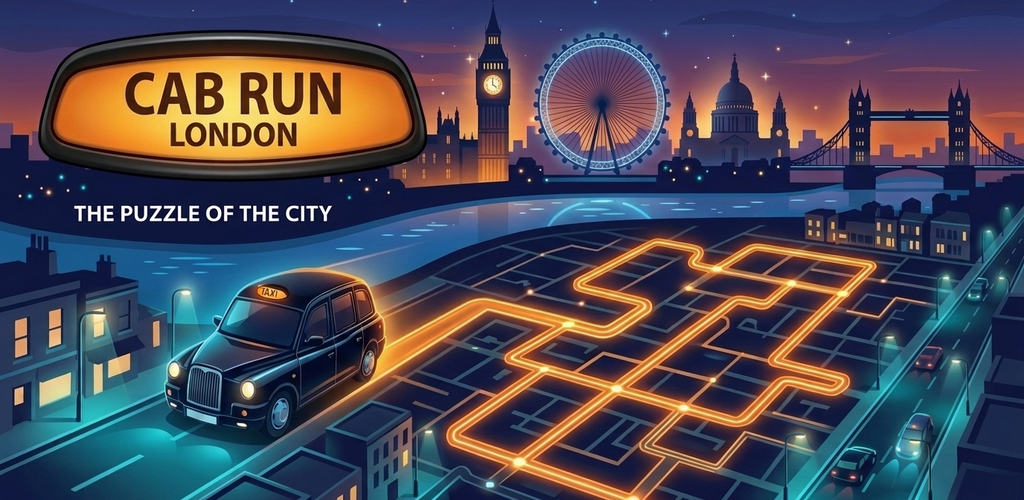
After shipping Game Archive with 60 classic board games in Flutter, I fancied building something completely original from scratch—still puzzle-focused, still playable offline in quick sessions, just not another turn-based board.
I wanted to build a puzzle game and liked having London as a backdrop—a place I often visit. Turning its streets, one-way systems, and landmarks (The Knowledge) into a fast route-deduction game in a black cab felt like a brilliant premise.
There was just one catch: your cab has no brakes.
🚕 How It Plays
Once a shift starts, your Hackney Carriage keeps rolling through Central London on its own. Before you hit each junction or roundabout, you have to read the streets ahead and pre-signal your next turn—Left, Straight, or Right—by swiping, tapping the outgoing road arrow, or toggling on-screen steering buttons.
You're juggling a tight shift clock, yellow speed cameras, passenger preferences (some want scenic landmark detours, others hate turbo boosting), and building tip streaks across multiple fares in a row.
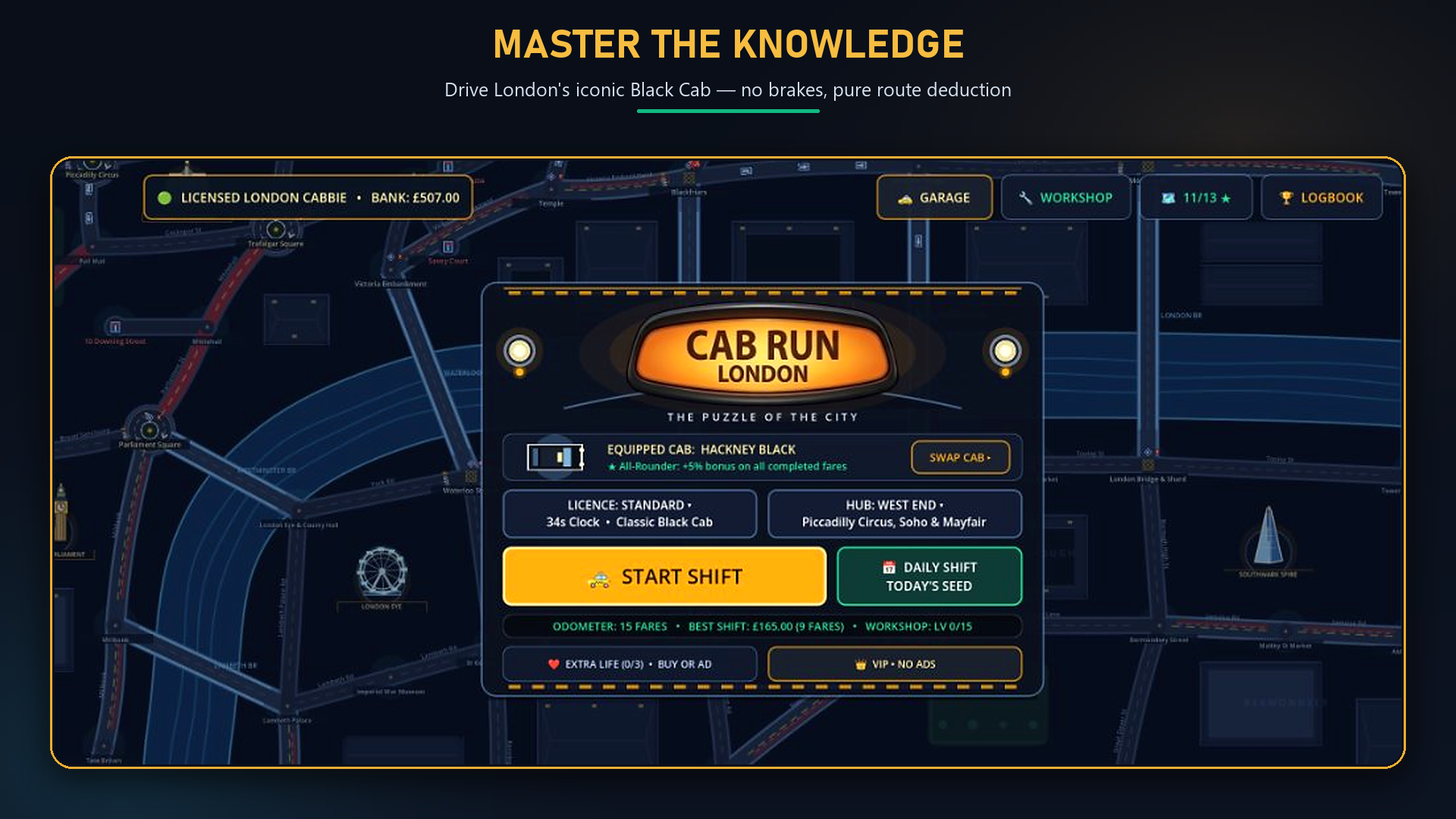
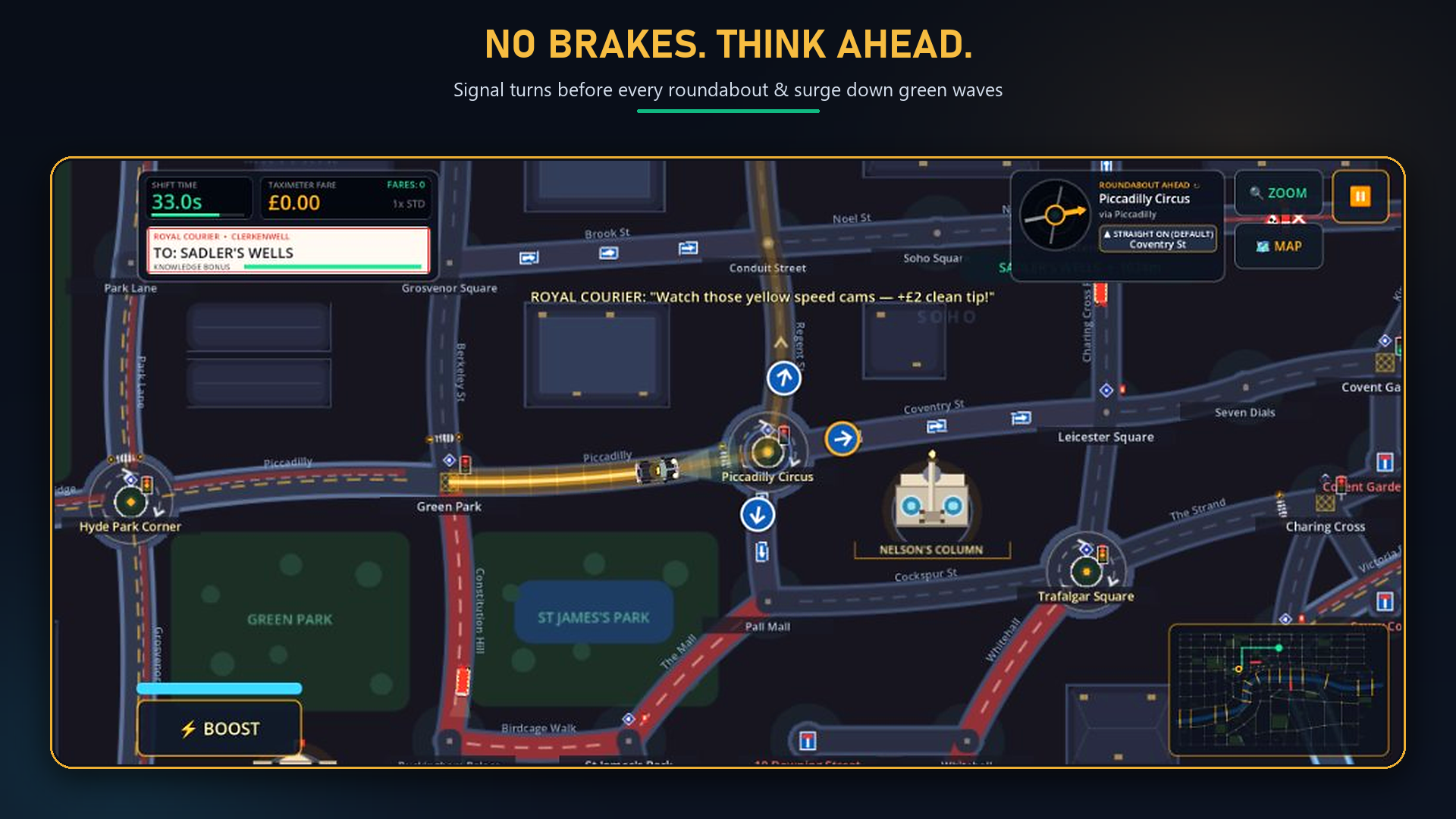
🗺️ Building Central London (220+ Junctions)
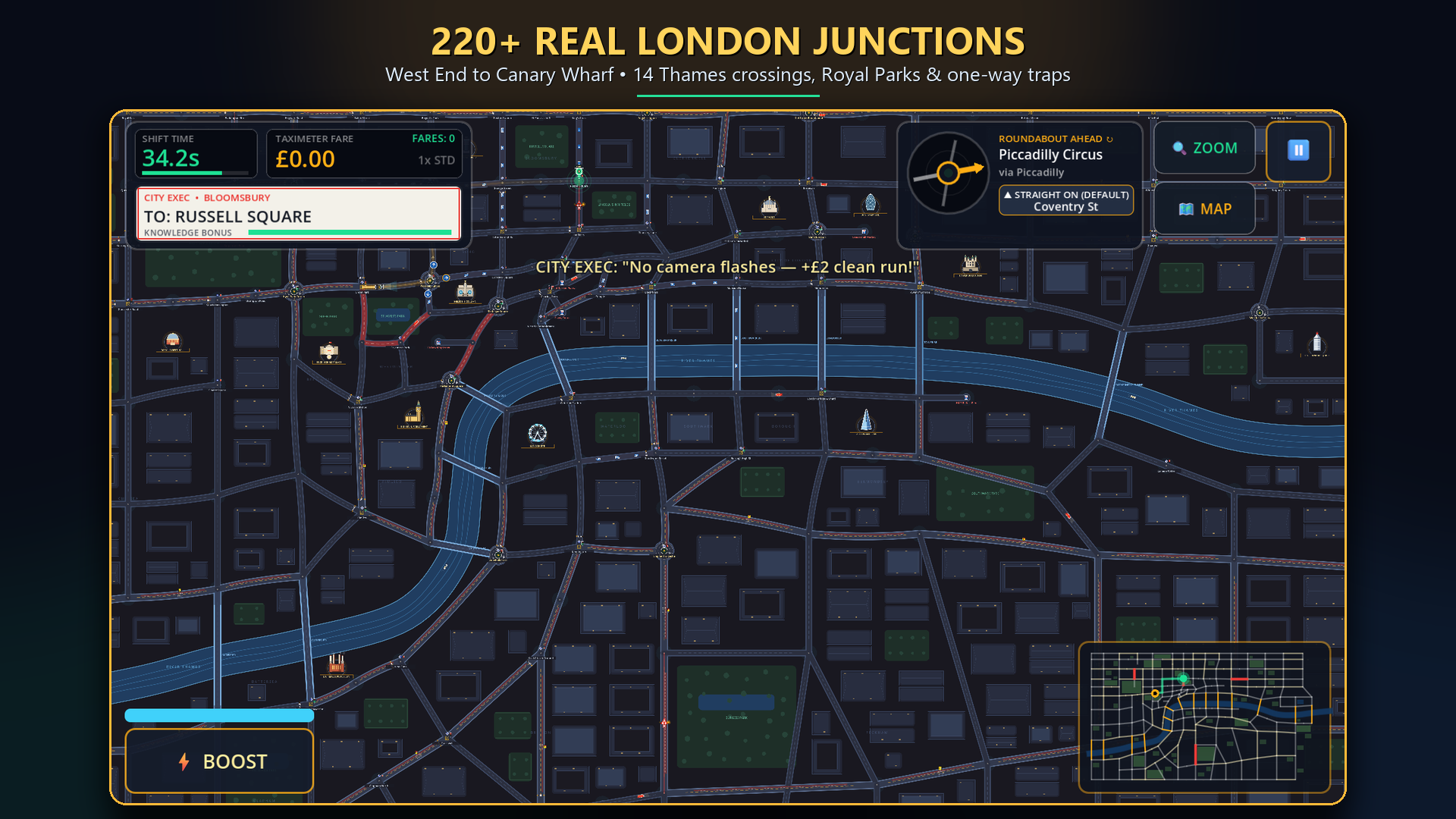
I didn't want a tiny abstract grid—it needed to actually feel like weaving across London. The map spans 220+ connected junctions across West End, Westminster, Soho, Mayfair, The City, Camden, South Bank, and Canary Wharf, linked by 14 River Thames crossings and 13 illustrated London landmarks (Big Ben, London Eye, Nelson's Column, St Paul's, Tower of London, and more).
To keep the map readable at speed, it uses a dark twilight blueprint style where A-road arterials, side streets, parks, one-way arrows, speed cameras, and roadworks stand out clearly at a glance.
🧠 Puzzle Race & Rival Cabs
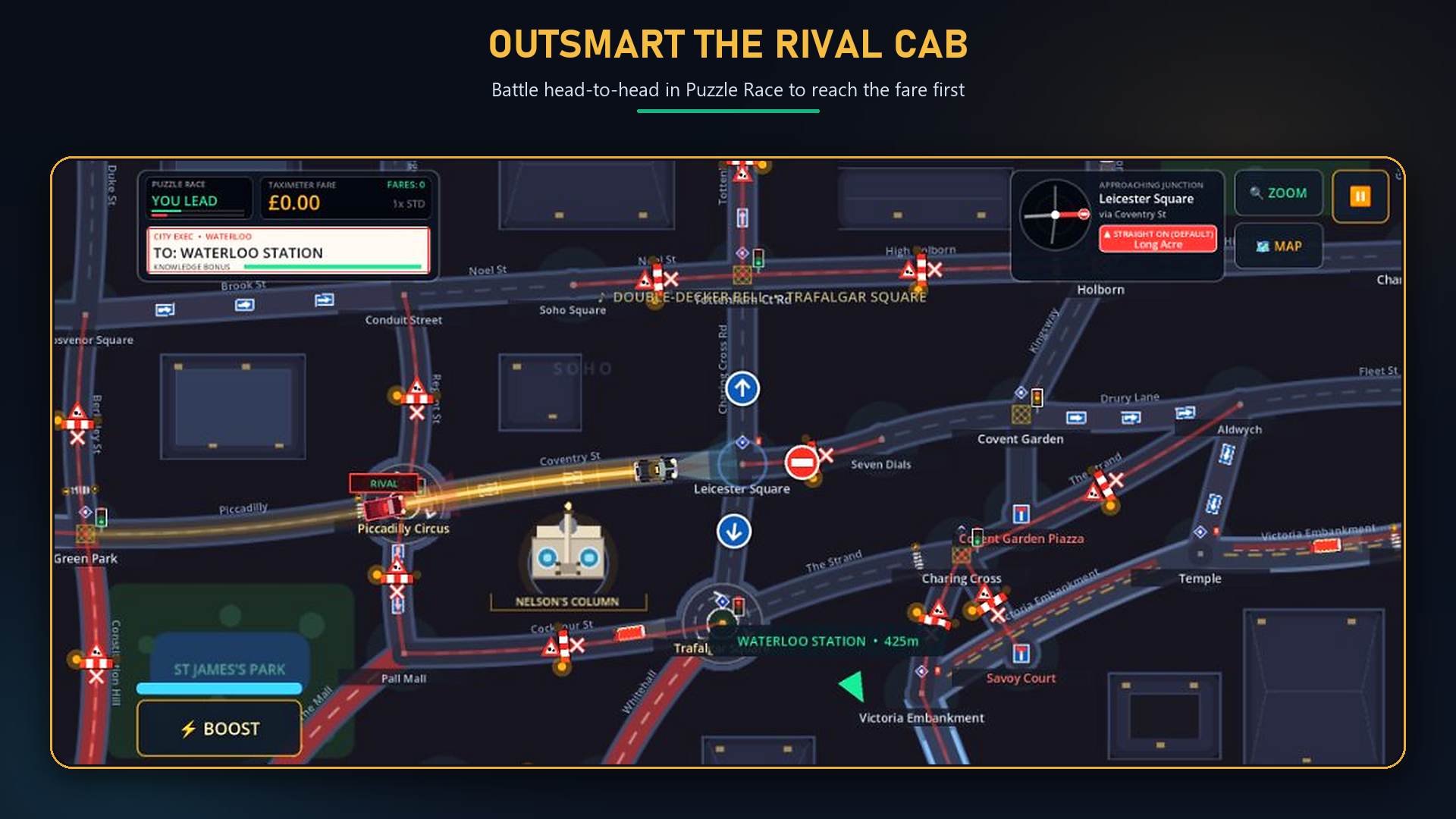
Alongside Standard, Rush Hour, Relaxed, and timer-free Explore modes, my favourite addition is Puzzle Race.
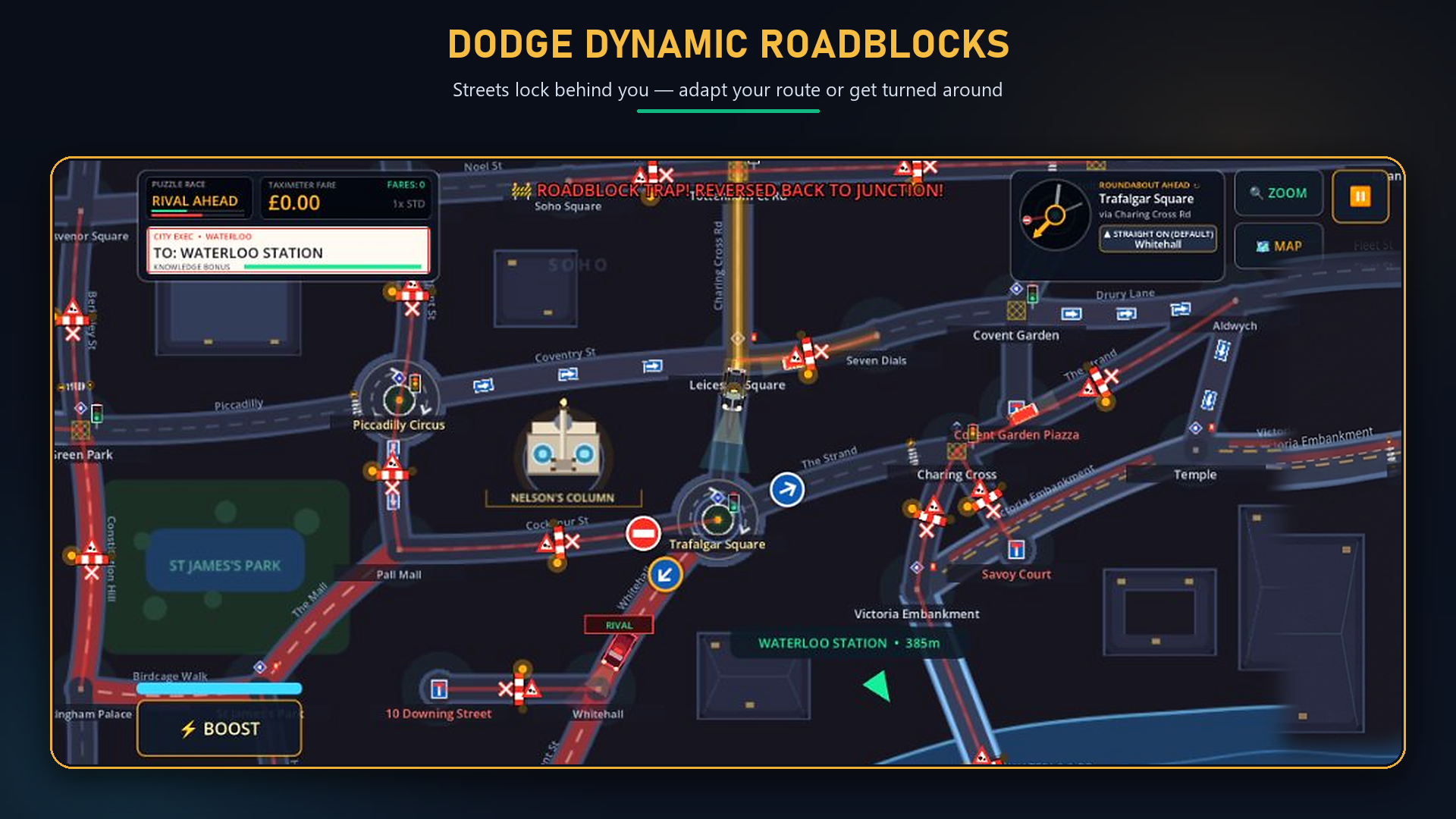
In Puzzle Race, Sat-Nav disappears, roadworks narrow the city down to clever routes, streets lock shut with roadblocks behind you, and an AI Rival Cab is racing to steal your fare. Every junction actually matters because you can't just loop back the way you came.
🛠️ Why Godot 4 + C# (.NET 9)
Coming from a .NET background—and having already tried MAUI and Flutter on earlier projects—this time I picked Godot 4.7 with C# (.NET 9).
Using C# let me keep the core map graph, routing, fare economy, and game loop cleanly isolated in pure domain code with fast xUnit tests (dotnet test), while Godot handles the 2D canvas rendering, animations, audio, and Android Gradle builds.
A few fun engineering lessons along the way:
- 60fps on Android TV (NVIDIA Shield): Drawing 220+ roads, labels, parks, and river bends dynamically every frame was choking low-power TV GPUs. Baking the static city geometry into cached
SubViewporttiles and throttling minimap/HUD redraws turned sluggish frames into a locked 60fps. - Designing beyond phones: I hooked up full controller / D-pad support plus a virtual cursor hand for Android TV so you don't need a touchscreen to navigate menus or queue turns.
📲 Download Cab Run: London
Cab Run: London is live now on Google Play for Android and Android TV—free to download and playable offline!
If you try a few shifts or have a favourite London landmark you think deserves a stamp in the Knowledge Passport, feel free to let me know!