Matthew Regis
From a Pun to a 5,000-Year Archive: Showcasing All 60 Games
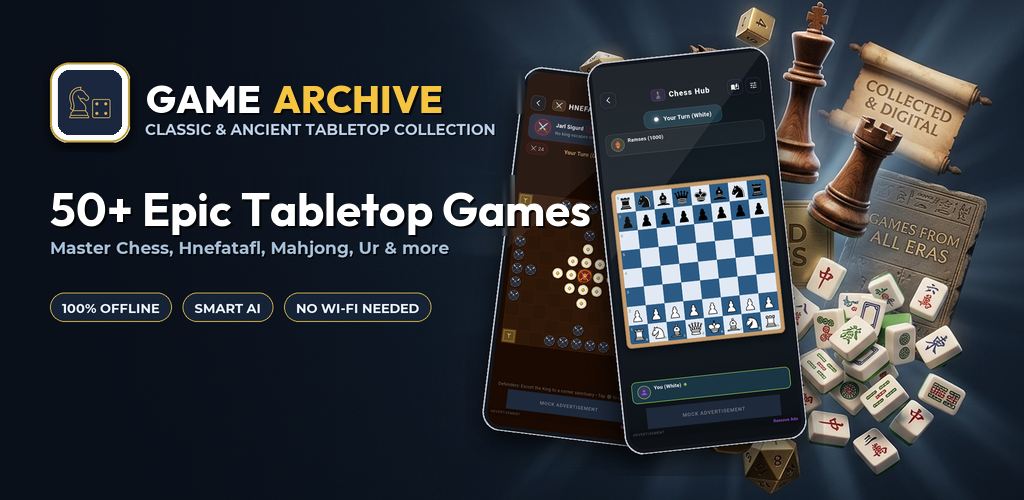
A couple of months ago, I published a post titled Coding a 4,500-Year-Old Game: Why I Dropped .NET MAUI for Flutter to Build Bored Games.
In that post, I talked about how the project originally started as a pun: Bored Games (a play on "board games"). My initial goal was really simple: I watched Irving Finkel at the British Museum play the Royal Game of Ur against Tom Scott on YouTube, thought it was cool that a game from 2600 BCE was still playable, and wanted an app where I could play both Chess and the Royal Game of Ur without having to download a bunch of separate apps loaded with ads.
Since I couldn't find one, I started building it myself.
At the time, the plan was just to add Chess, Ur, maybe Checkers and Mancala, and leave it at that.
Instead, I got addicted to adding new games.
🎲 Finding More Games to Add
Once the core app was running smoothly in Flutter, I started looking around to see what other games I could add. That's when I really got into it. Every time I finished adding one game, I found myself searching for the next one.
To be honest, I hardly knew about most of the games I ended up adding. Aside from Chess, Checkers, and what I had seen in that Royal Game of Ur video, most of them were completely new to me. But through the process of looking for games and implementing them, I got to learn about how each one worked, dig into its history, and play a few good games along the way.
It ended up combining two interests of mine: history and games.
What started out as a small app with just a couple of games eventually turned into 60. As the collection grew, referring to it as Game Archive felt more fitting than just a simple minigame app.
🕹️ Not My Usual Coding Post
Most of the articles on this blog are about coding, .NET, microservice architectures, or technical migrations.
This post isn't like that. I'm skipping the code snippets and architectural breakdowns this time around. Instead, I just wanted to showcase the app and all 60 games I've added so far, along with a little background on each one.
If you have some time and want to give any of them a try, feel free to check out the app. It's completely free, works offline, and supports local pass-and-play as well as AI opponents.
🏛️ Quick Era Navigation
Jump to any era to browse the games:
🏺 Bronze Age (~3500 – 1000 BCE)
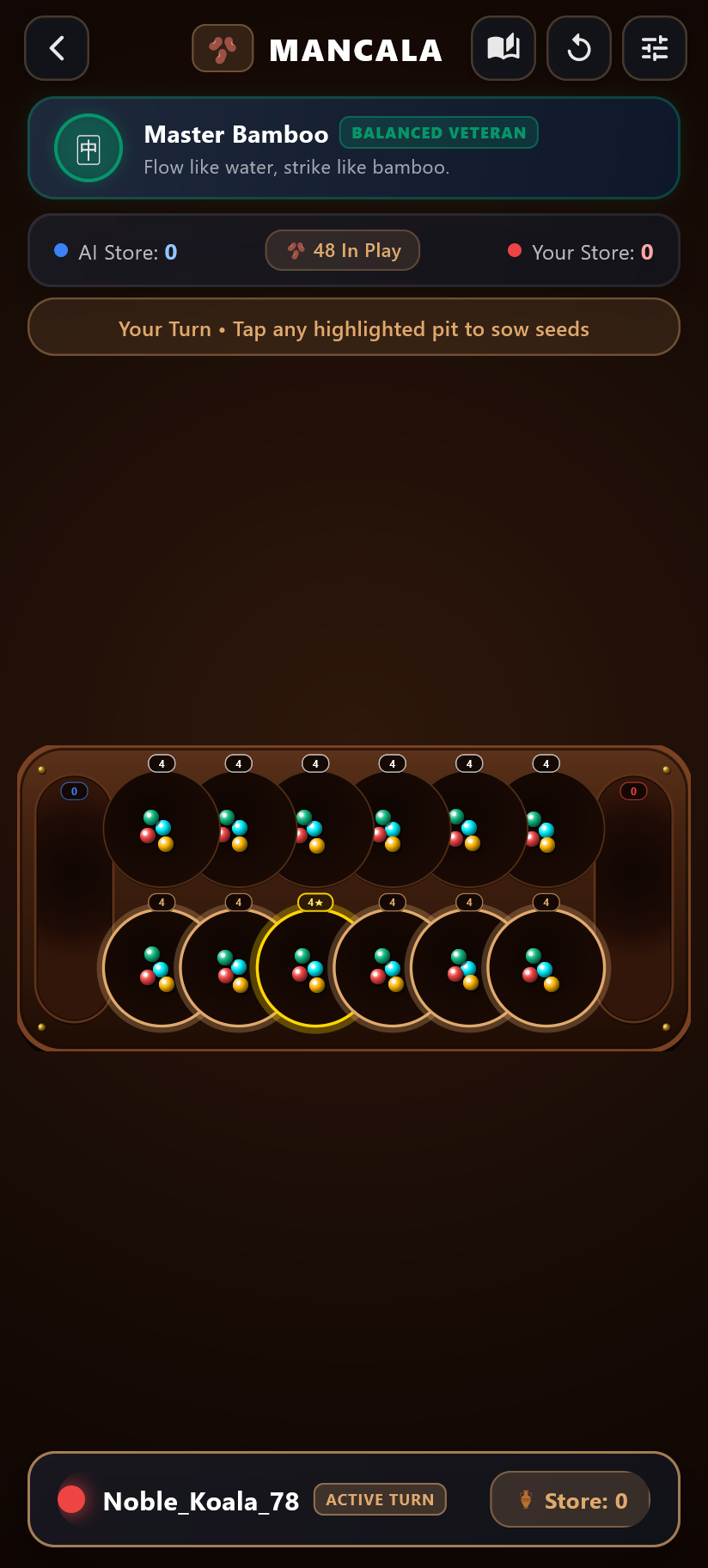
Mancala (Kalah)
One of humanity's oldest mathematical counting games. Players distribute seeds around two rows of carved wooden pits, calculating sowings to score bonus turns and capture opponent storehouses.
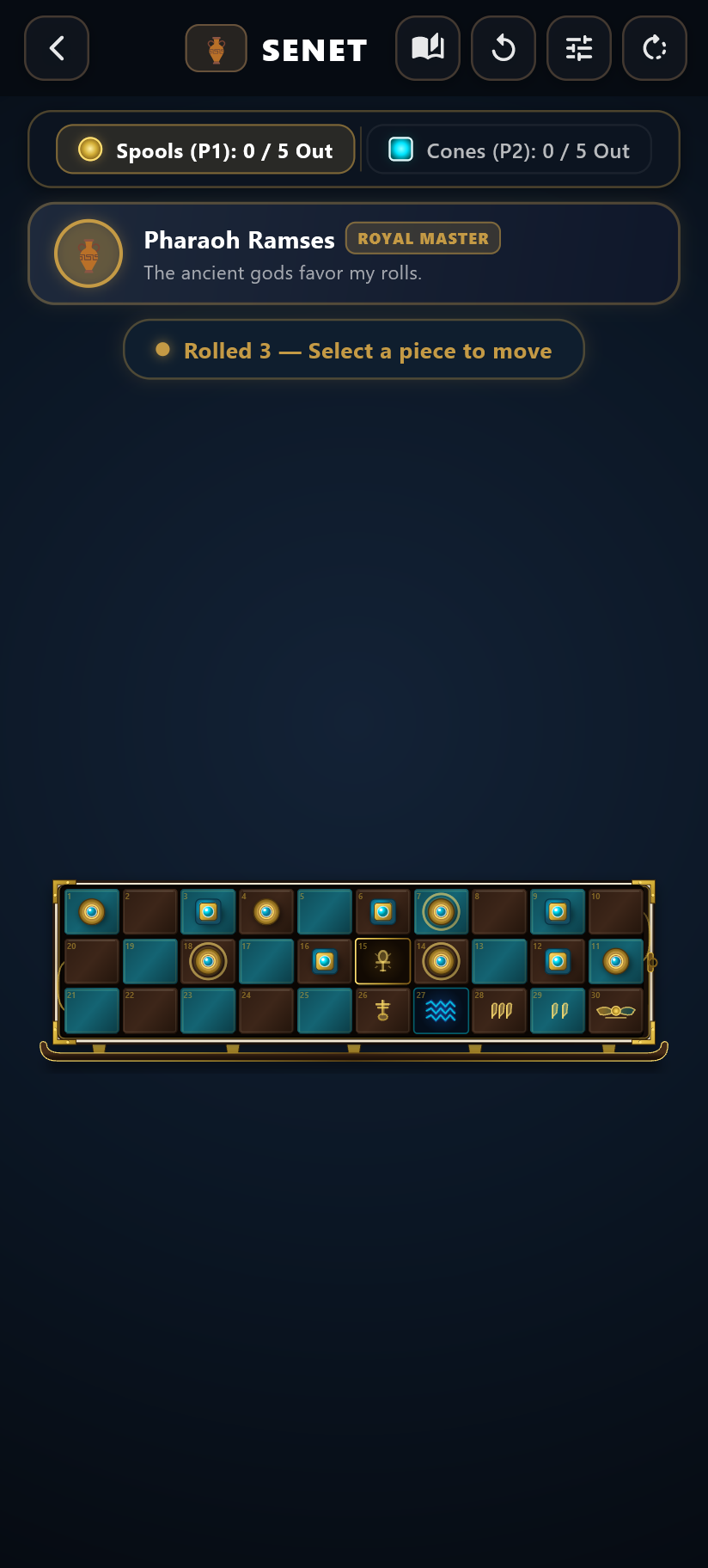
Senet
Buried in the tomb of King Tutankhamun to guide royals through the afterlife. Pawns navigate an S-shaped underworld grid guided by four casting sticks past treacherous hazard squares.
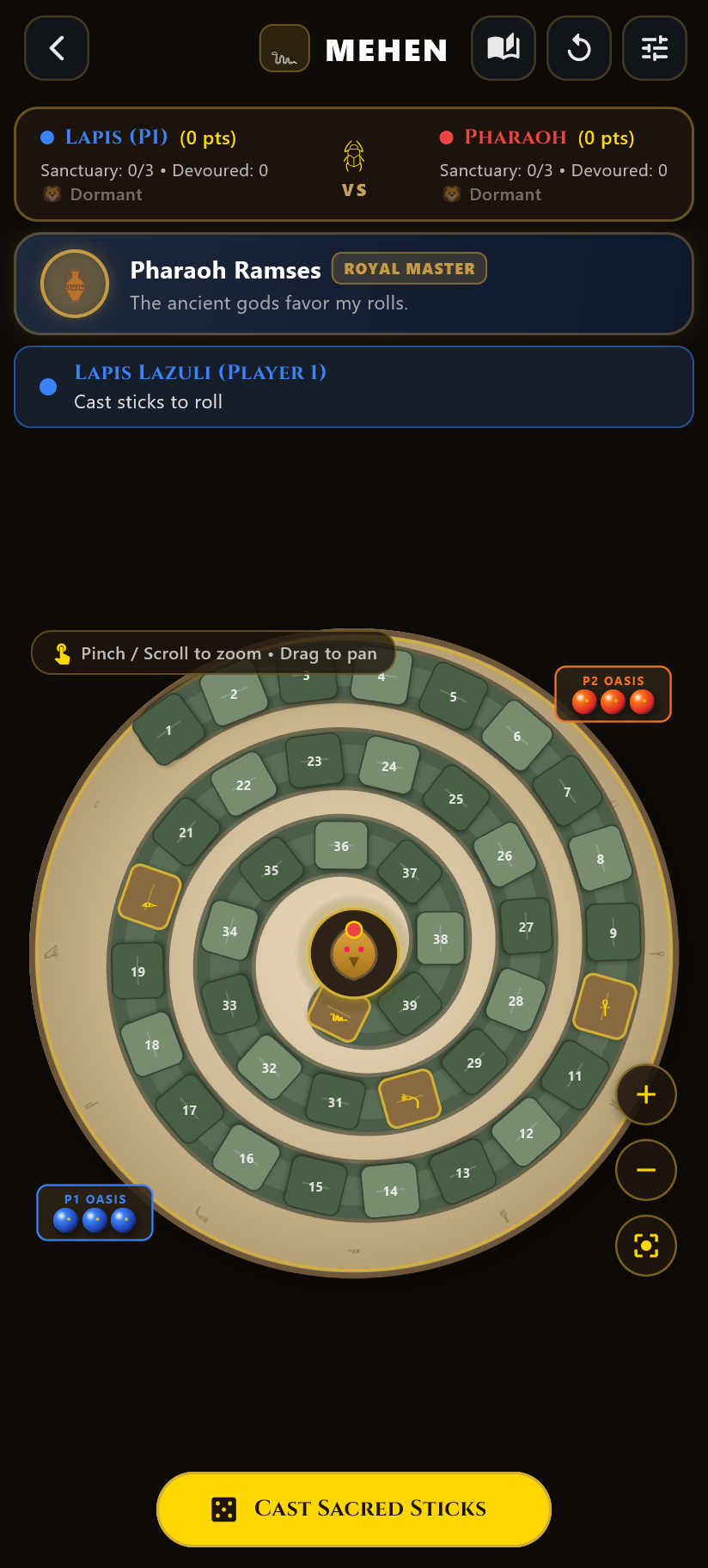
Mehen
Played on a coiled serpent board honoring the protector of Ra. Players race spherical marbles into the serpent's head, unleashing fierce lion guardian pieces to hunt down opposing tokens.
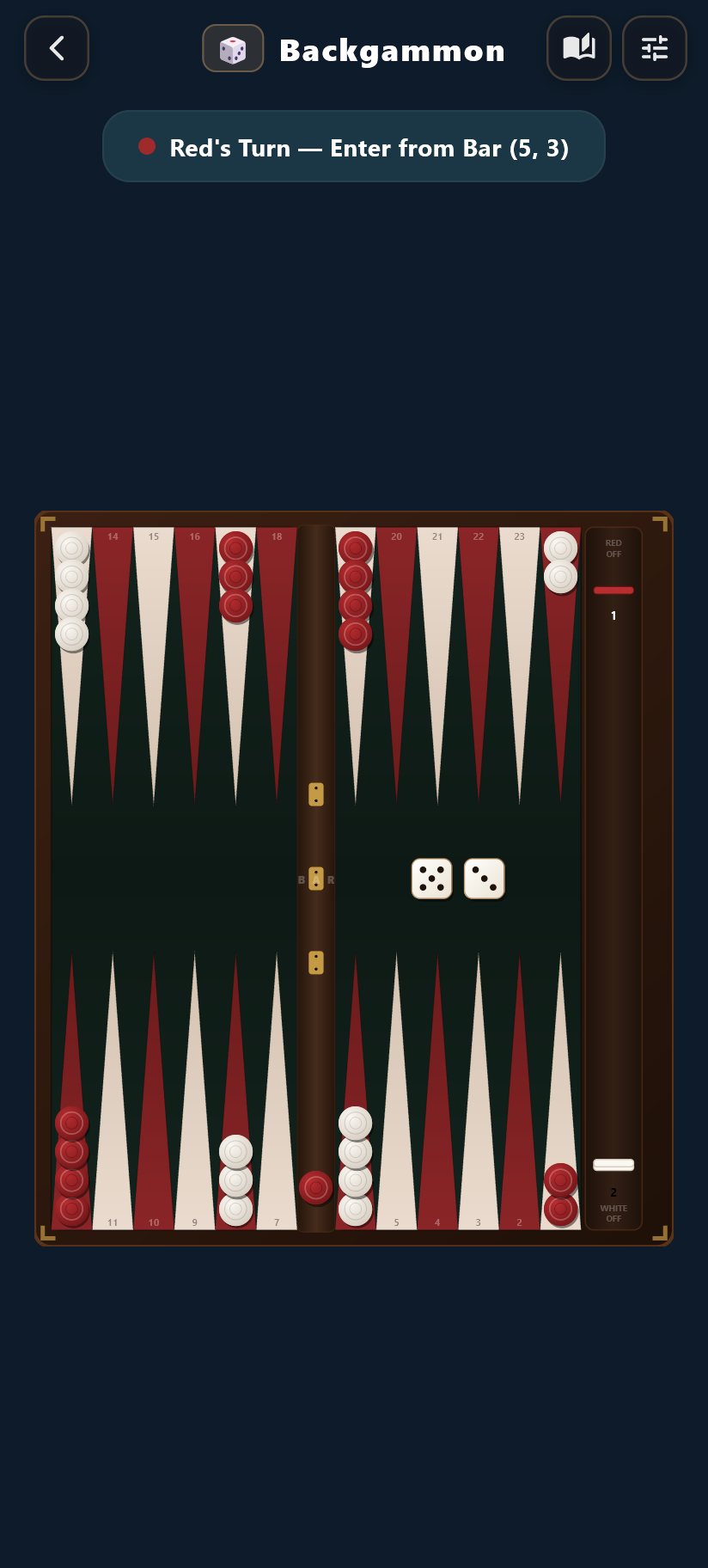
Backgammon
The ultimate race of probability and positioning across 24 points. Balance aggressive blots, tactical prime walls, and hit-to-bar escapes in one of the most enduring games ever created.
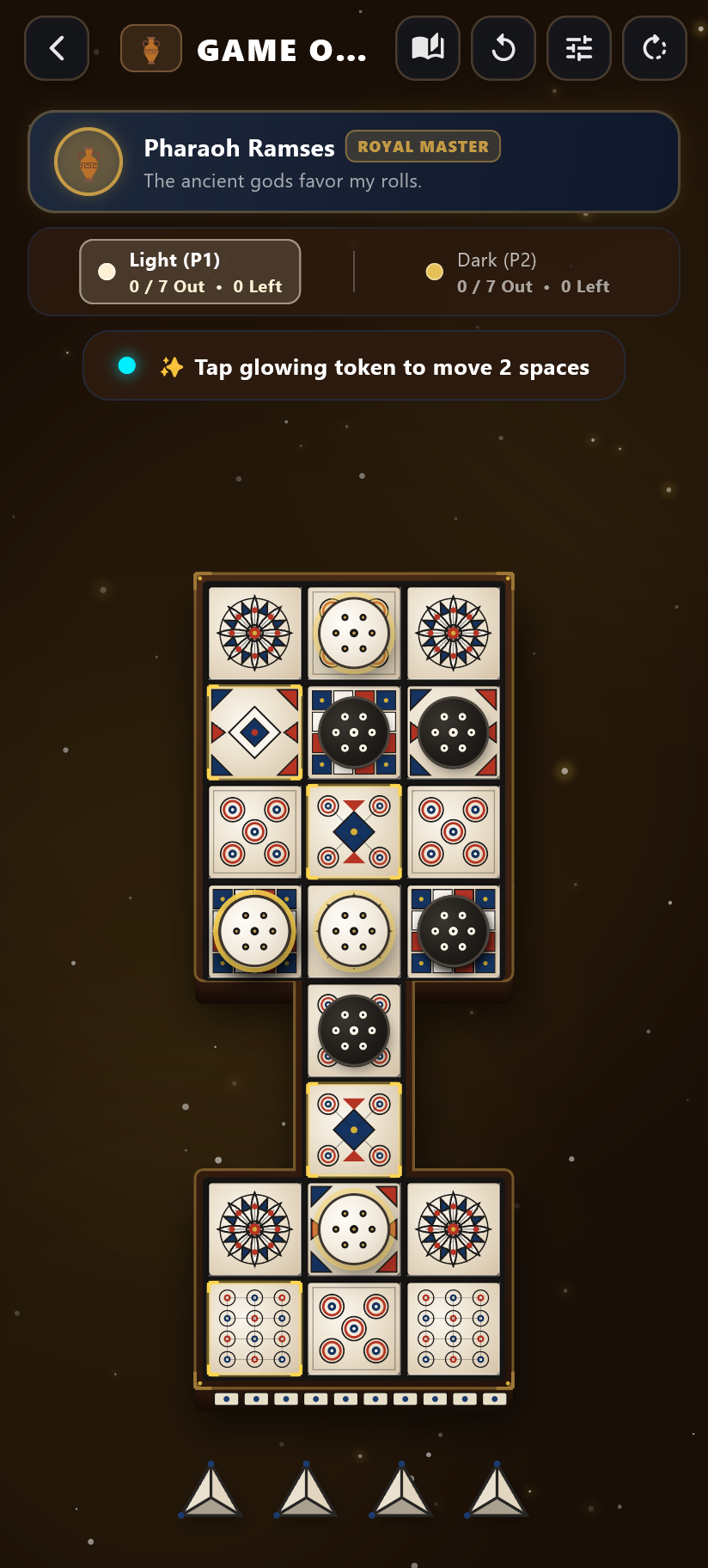
Royal Game of Ur
The catalyst that launched this app! Reconstructed by Dr. Irving Finkel from Babylonian cuneiform tablets, players roll four tetrahedral dice across a rosette-studded bridge.
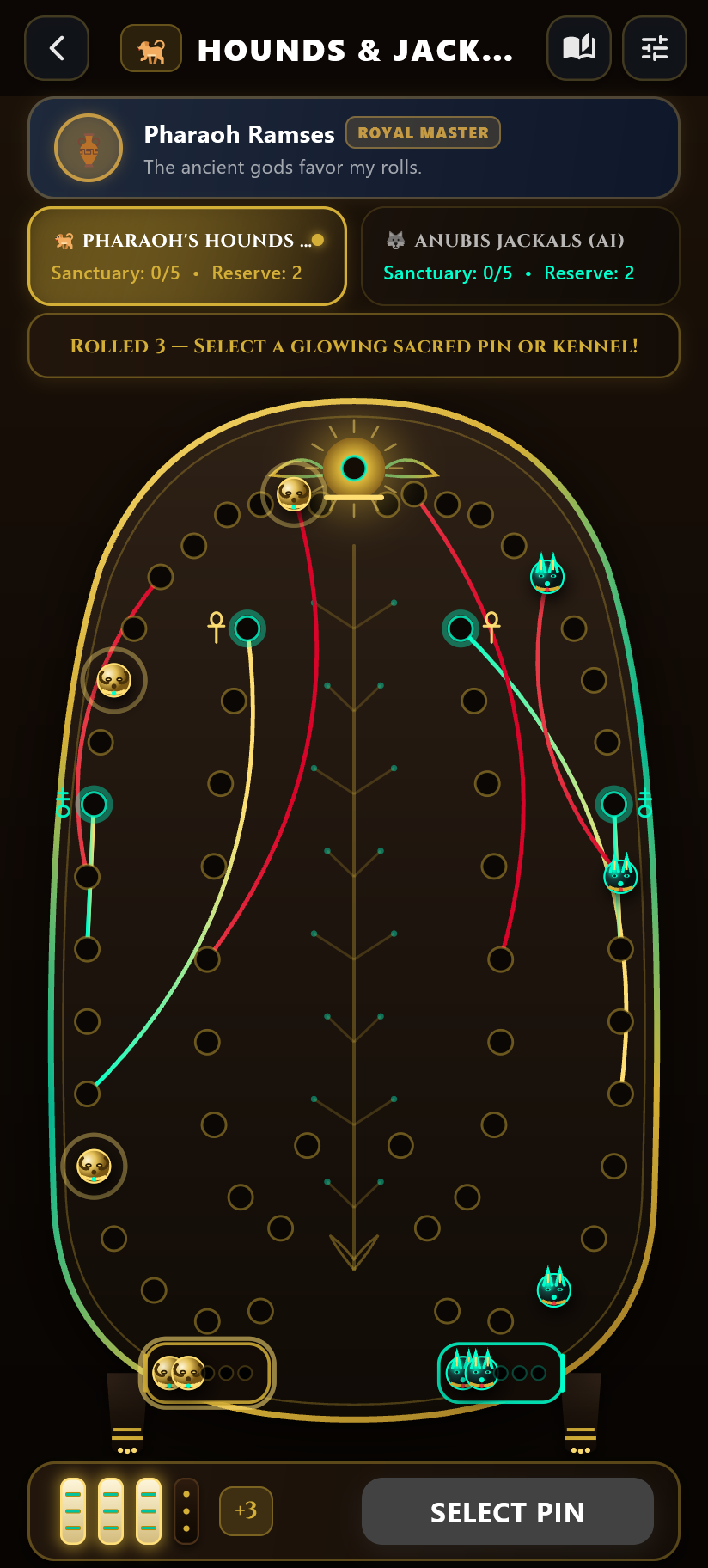
Hounds & Jackals
Found in royal Theban tombs carved with ebony and ivory dog heads. Carved pegs navigate paired tracks with secret interconnected conduits racing toward the goal palm tree.
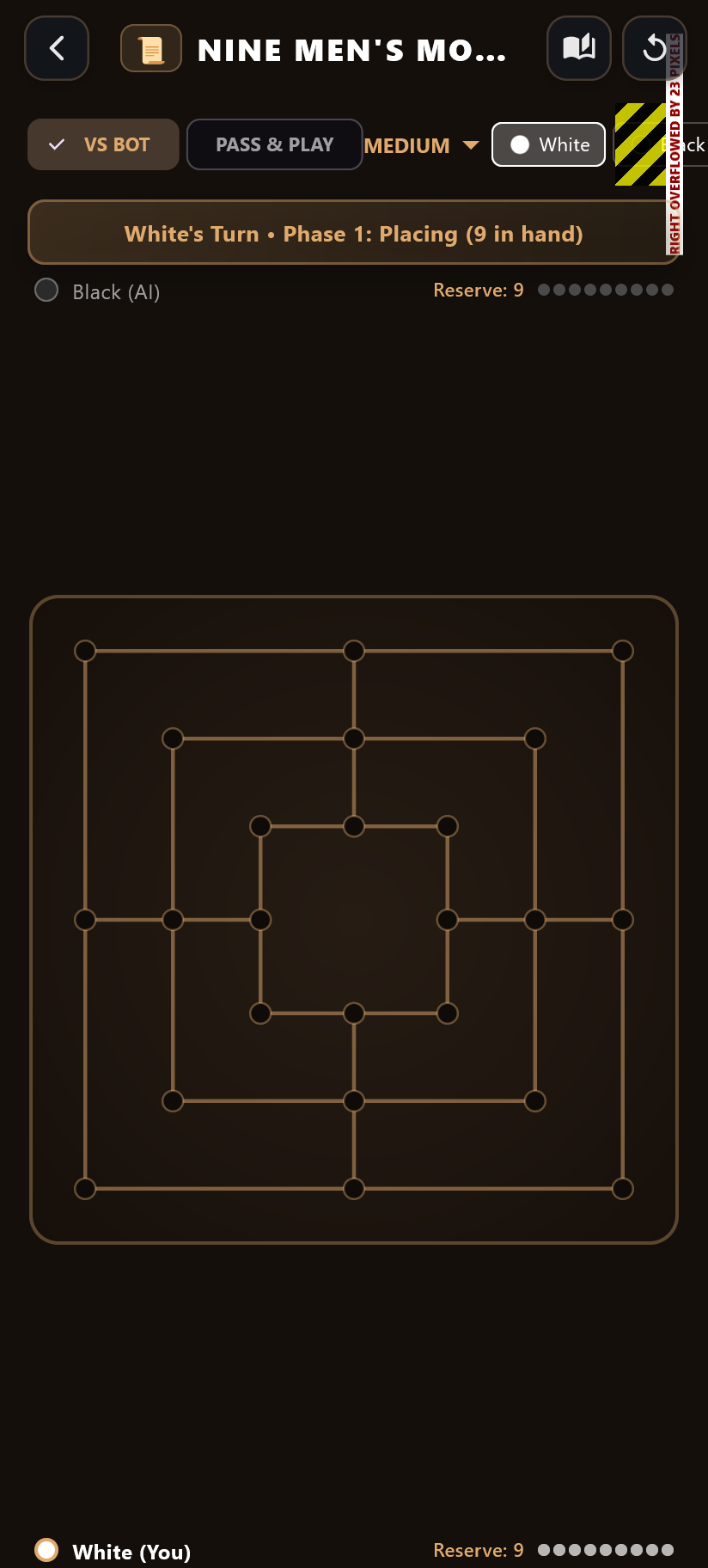
Nine Men's Morris
Scratched into stone steps across Europe and Egyptian temples. Players drop and slide nine counters along concentric squares, forming "mills" of three to capture opposing pieces.

Tic-Tac-Toe (Terni Lapilli)
The timeless three-in-a-row alignment classic. Play either traditional free grid placement or the original Roman variation where players slide three reusable pebbles across the grid.
🏛️ Classical Antiquity (1000 BCE – 500 CE)
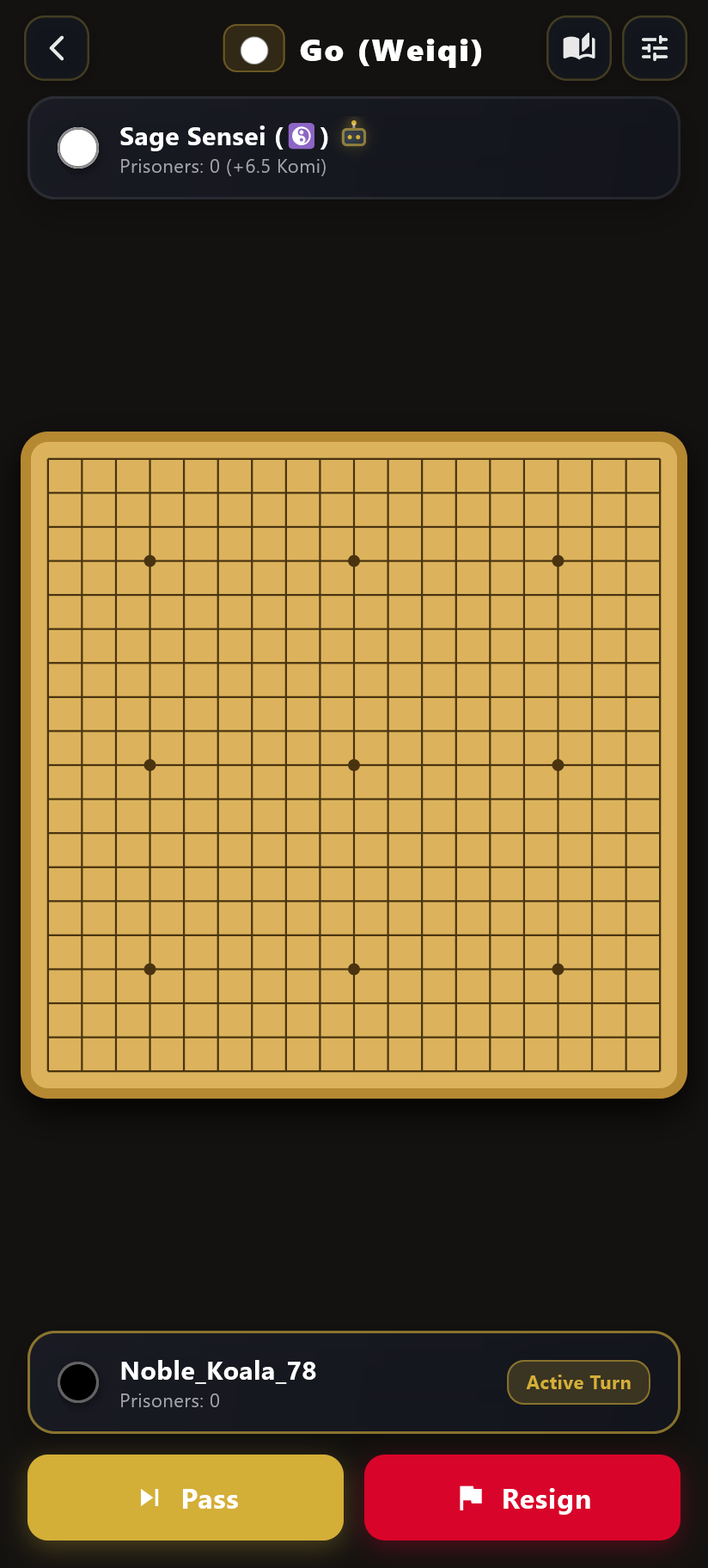
Go (Weiqi)
One of the four traditional scholar arts of imperial China. Playable on 9x9, 13x13, and full 19x19 grids. Encircle empty territory with black and white stones in a game of virtually infinite depth.
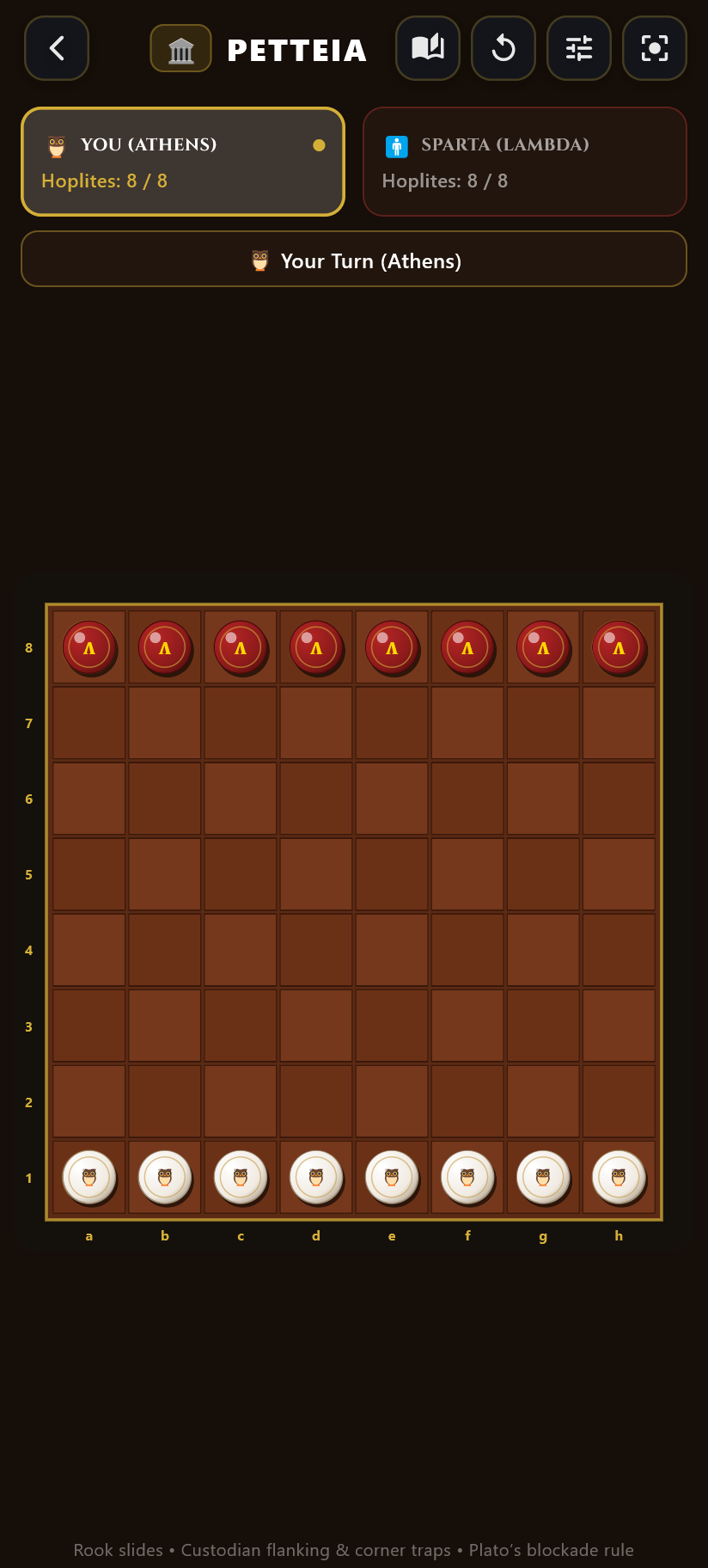
Petteia
Referenced by Homer in the Odyssey and painted on ancient amphorae with Achilles and Ajax. Two armies of stones maneuver across an 8x8 grid utilizing custodial flanking captures.
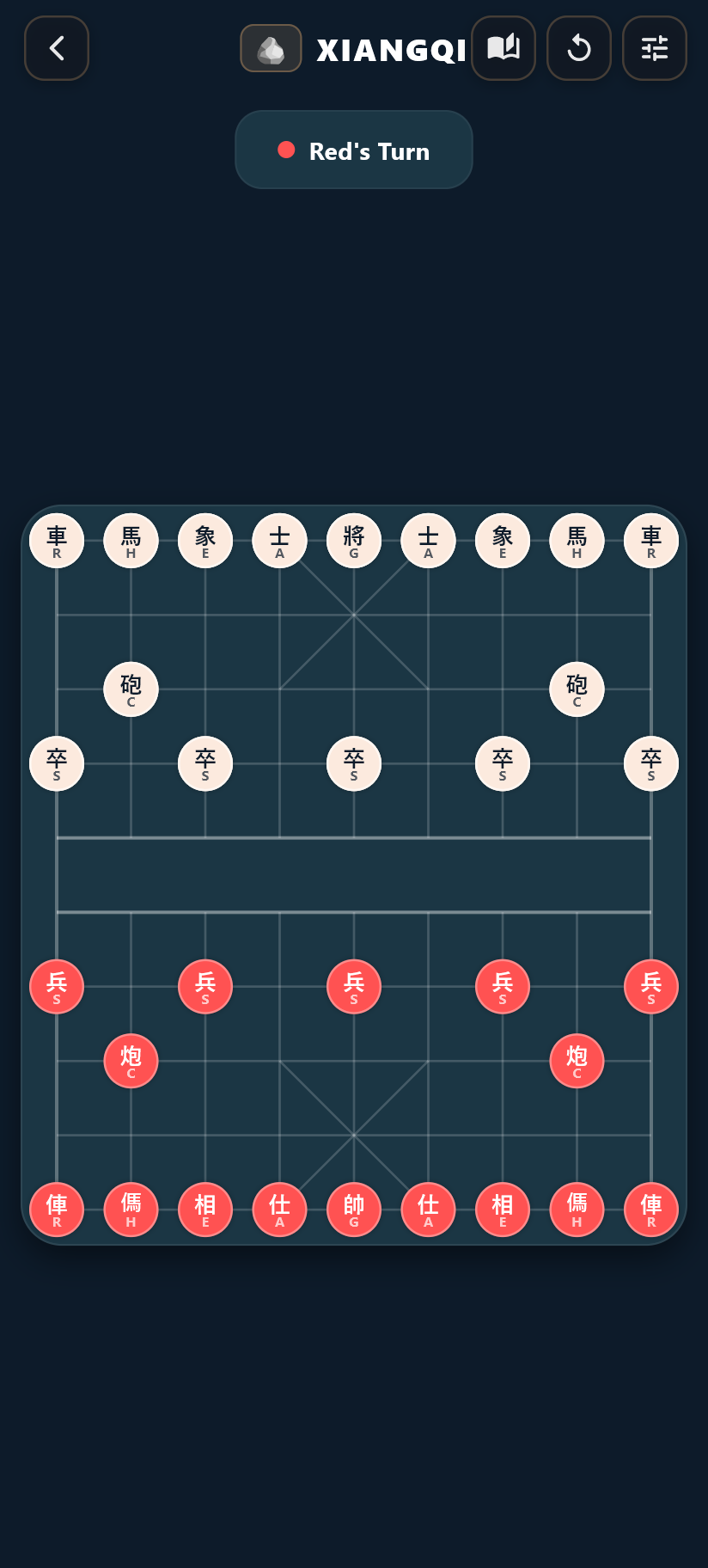
Xiangqi (Chinese Chess)
A dramatic simulation of imperial warfare. Features leaping Cannons that need screens to strike, Chariots charging along lines, and Generals confined to their palace fortress.
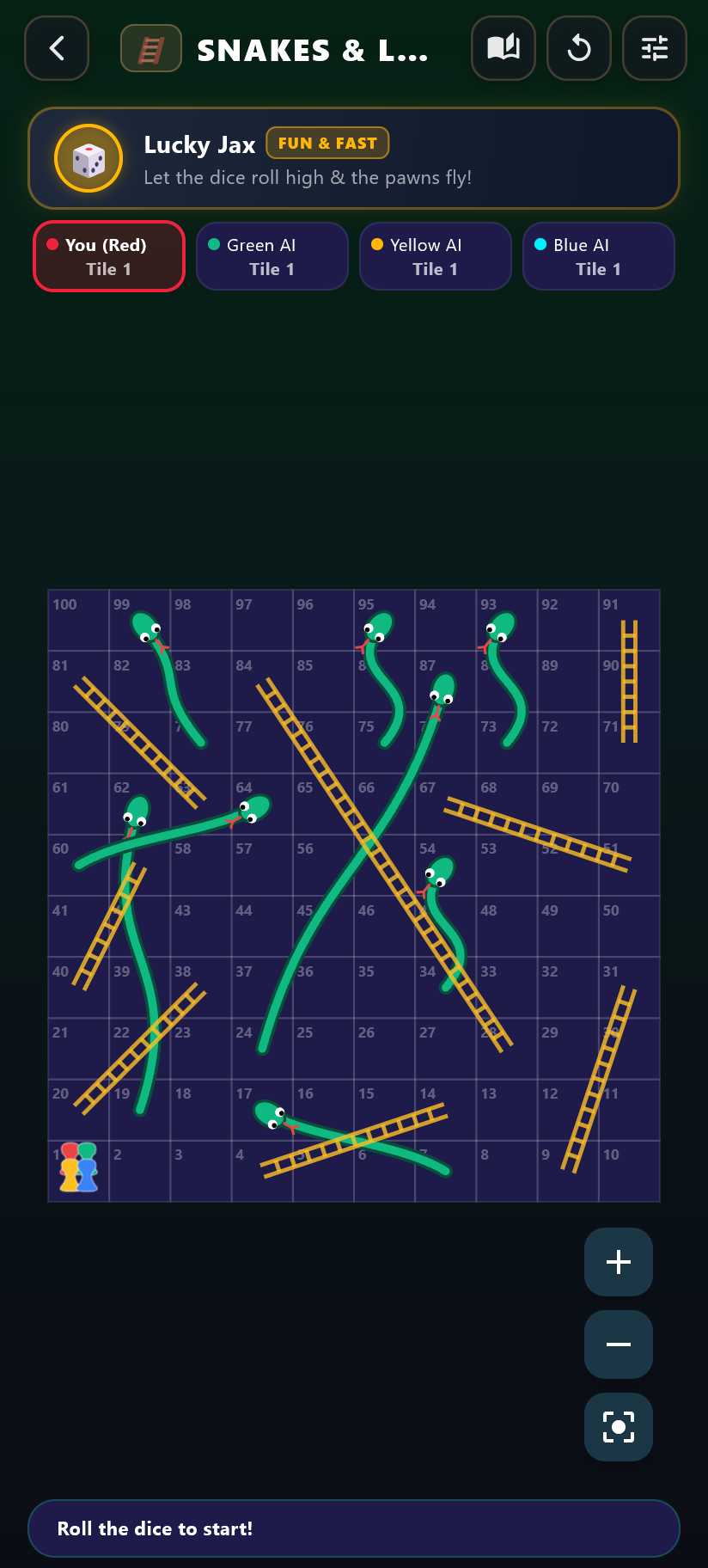
Snakes & Ladders
Originally created as a spiritual meditation on karma. Ladders represented virtuous deeds carrying the soul upward, while serpents represented vices dragging players back downward.
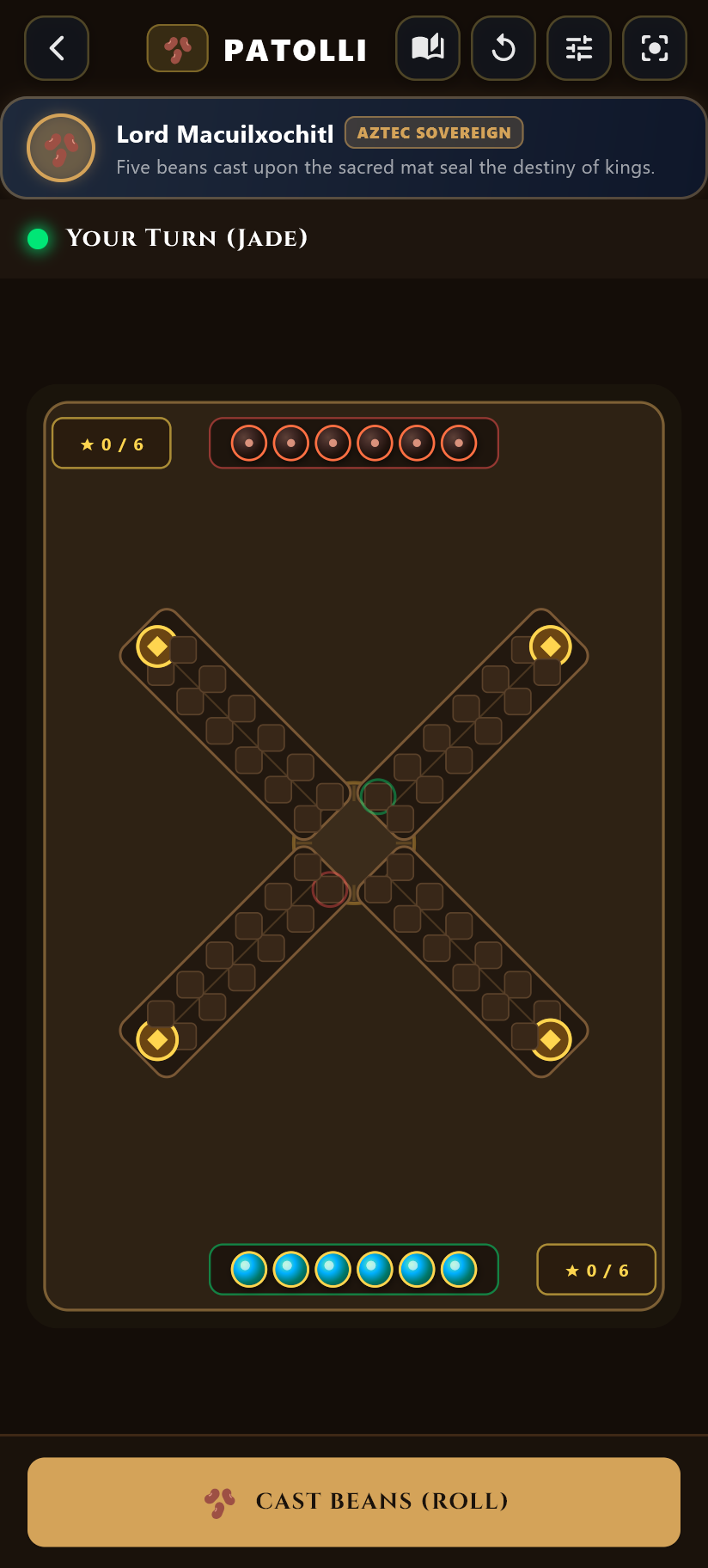
Patolli
Played on a woven cross mat of 52 squares matching the Mesoamerican solar cycle. Cast drilled black beans, navigate the cross arms, and stake wagers under the god Macuilxochitl.
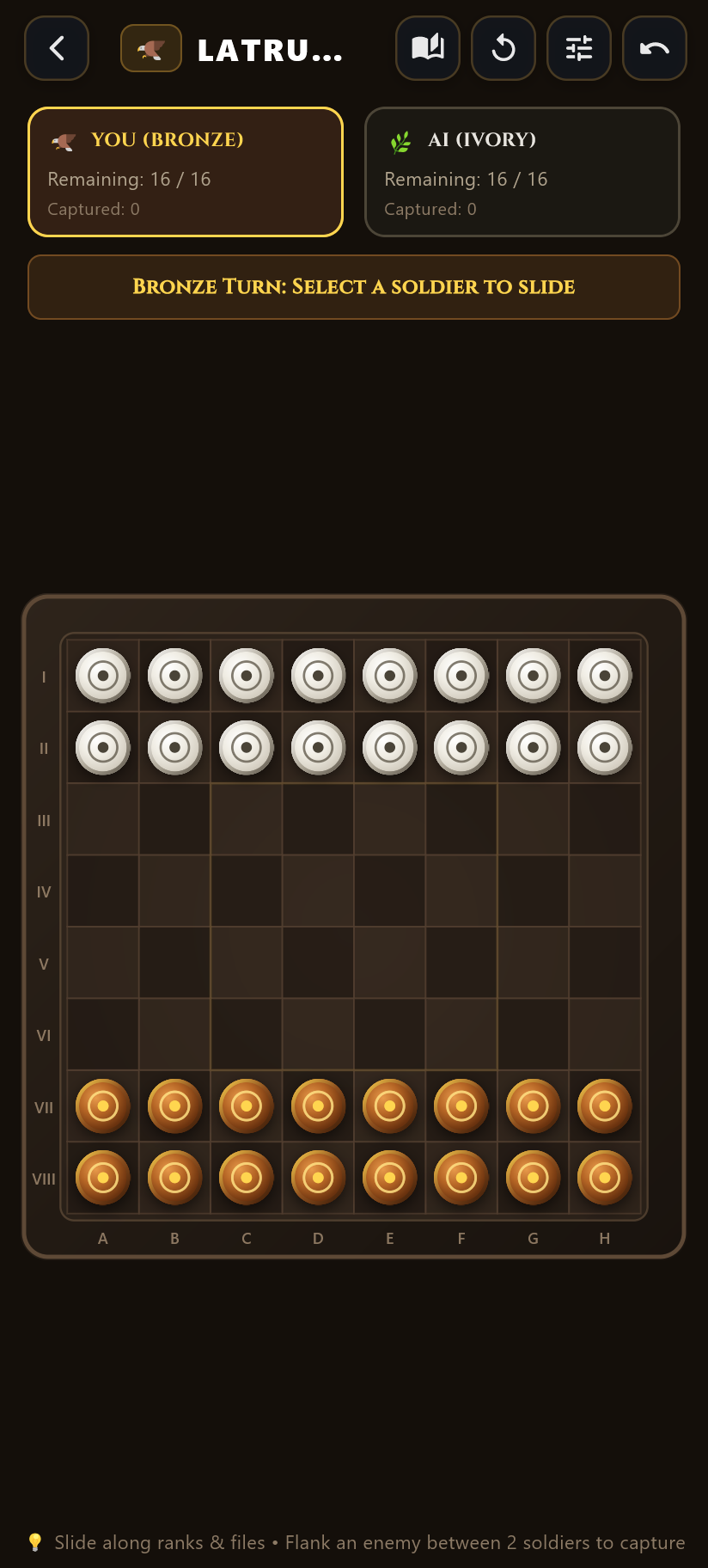
Ludus Latrunculorum
The favorite tactical board game of Roman legionaries across garrison camps. Form coordinated battle lines and surround opposing glass counters to immobilize enemy troops.
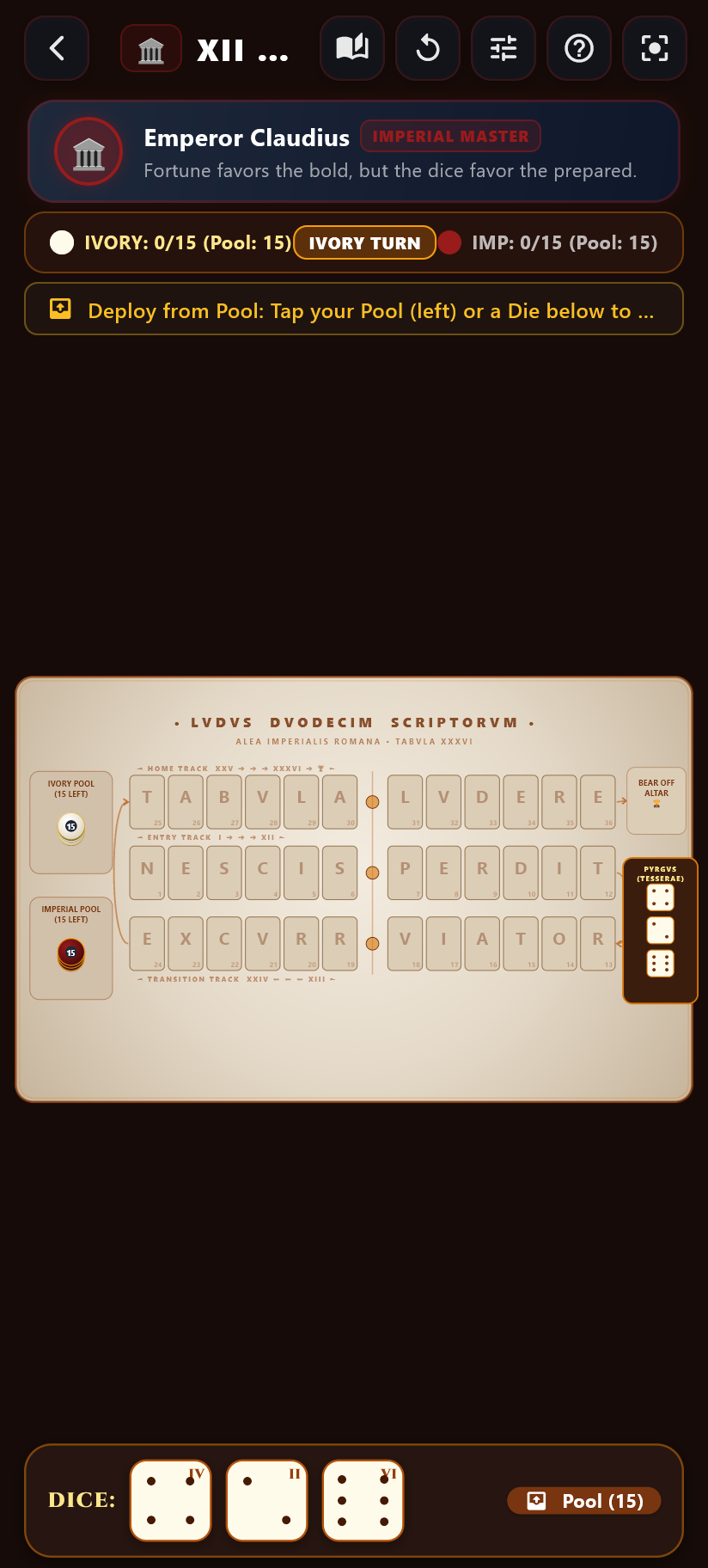
XII Scripta
Carved into tavern tables and bathhouses across Pompeii and Rome. Three parallel rows of twelve letters spell witty epigrams as players roll three dice to race tokens off the board.
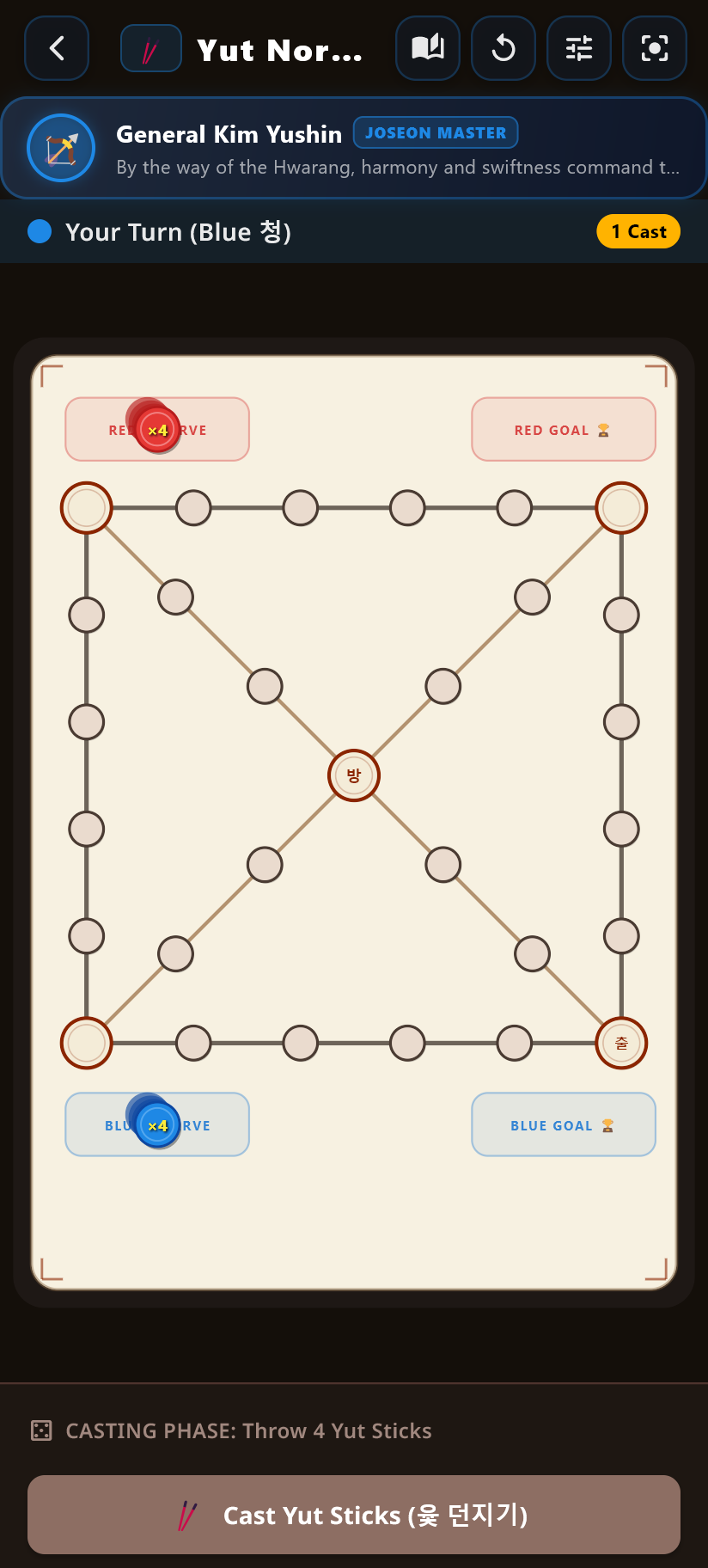
Yut Nori
A lively Korean traditional holiday race. Cast four wooden sticks (yut) to advance tokens around a four-cornered circuit, utilizing diagonal shortcut intersections.
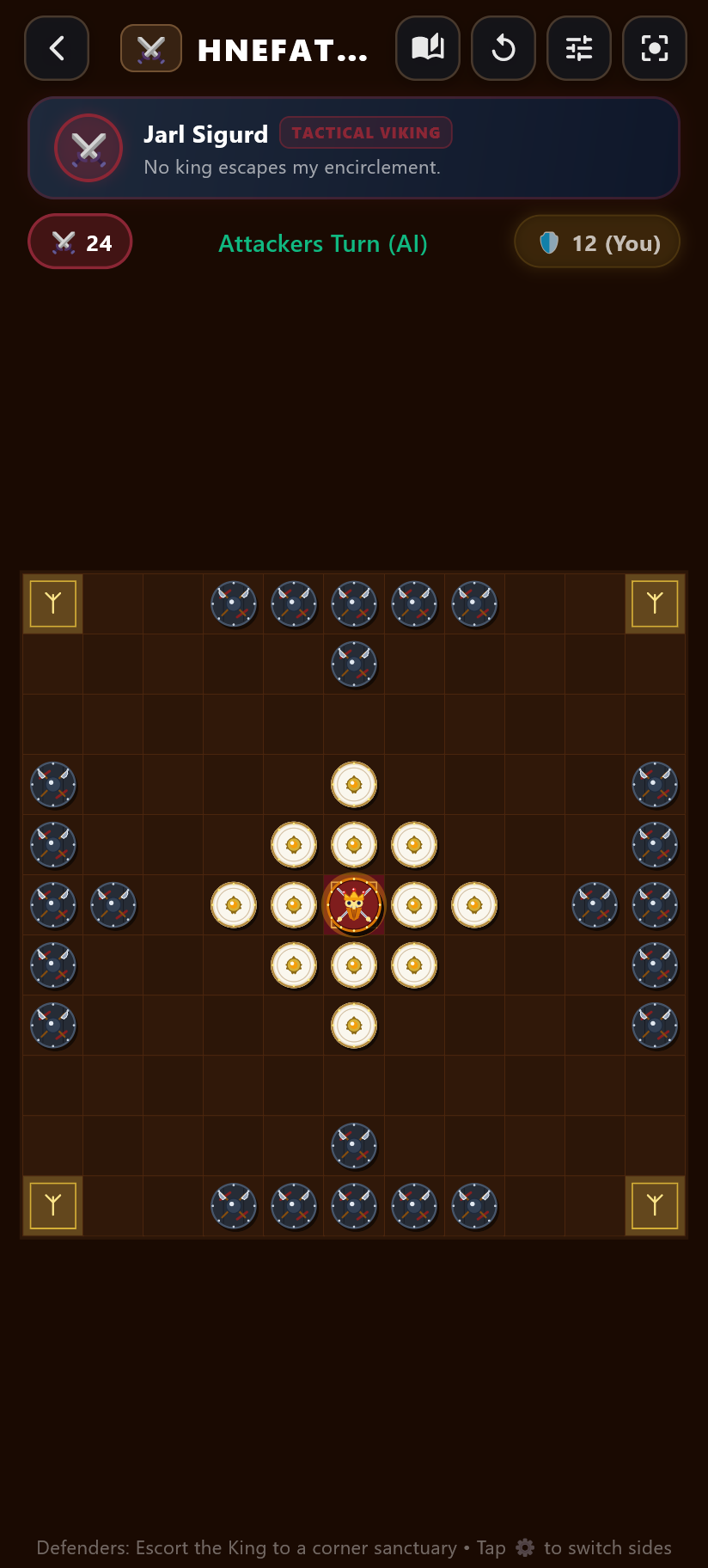
Hnefatafl
The legendary asymmetric Norse epic. A central King and his brave guard are encircled by 24 attacking raiders. The King must break through the encirclement to reach corner sanctuaries.
⚔️ Medieval & Silk Road (500 – 1500 CE)
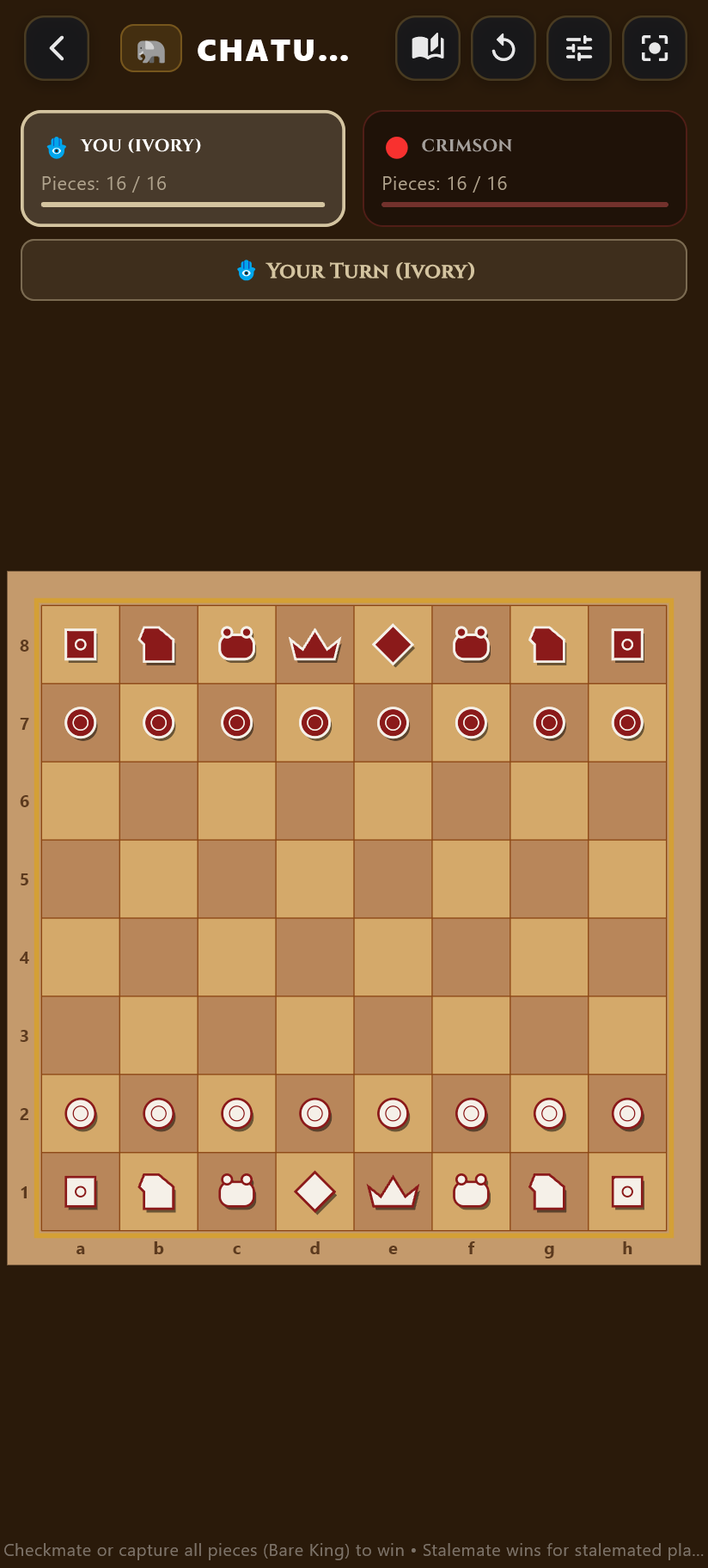
Chaturanga
The grand matriarch of all chess variants. Command the four military branches of ancient India: Foot Soldiers, War Horses, Elephants, and Chariots alongside the Raja.
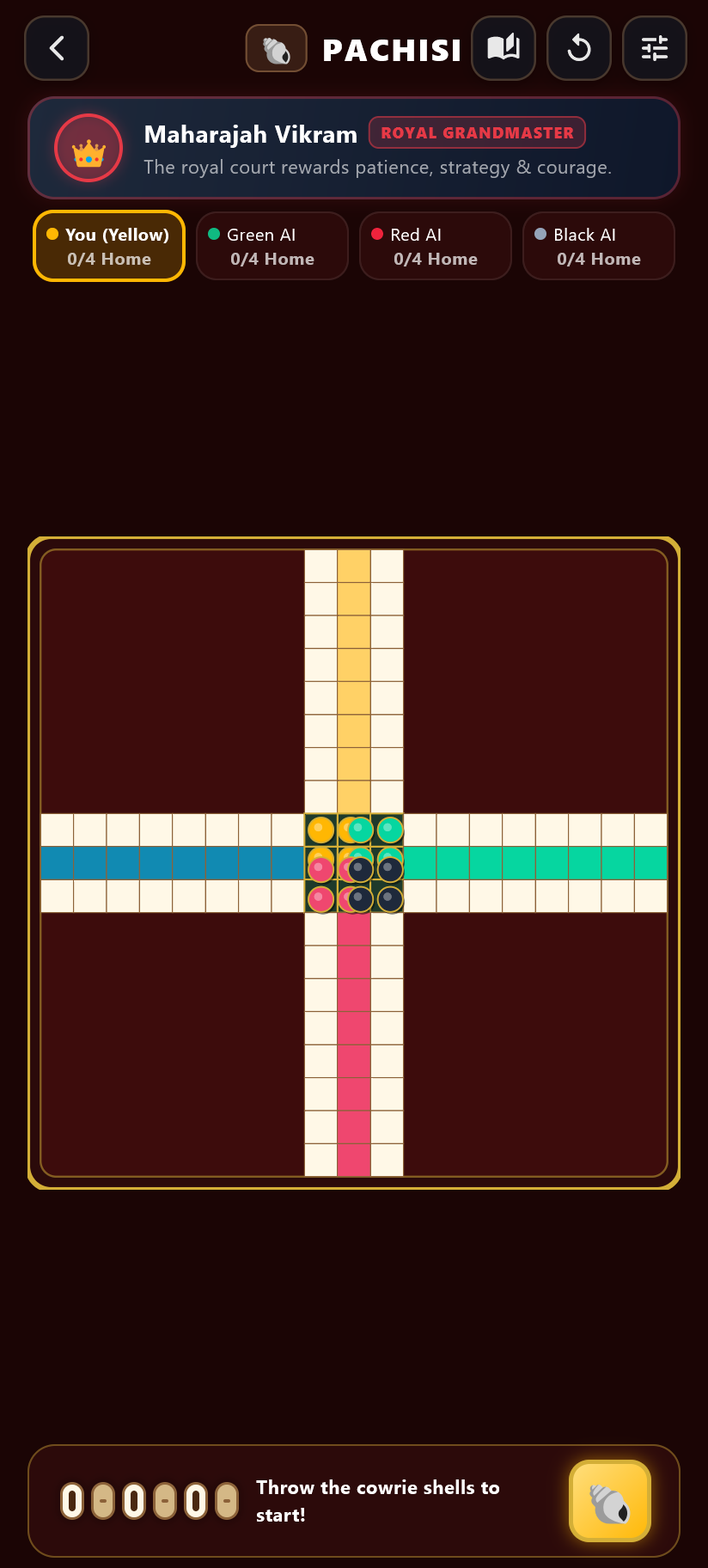
Pachisi (Chaupar)
The national game of India and progenitor of Ludo. Cast cowrie shells to move tokens around an embroidered cloth cross, capturing opponents and escorting four pawns to the central Charkoni.
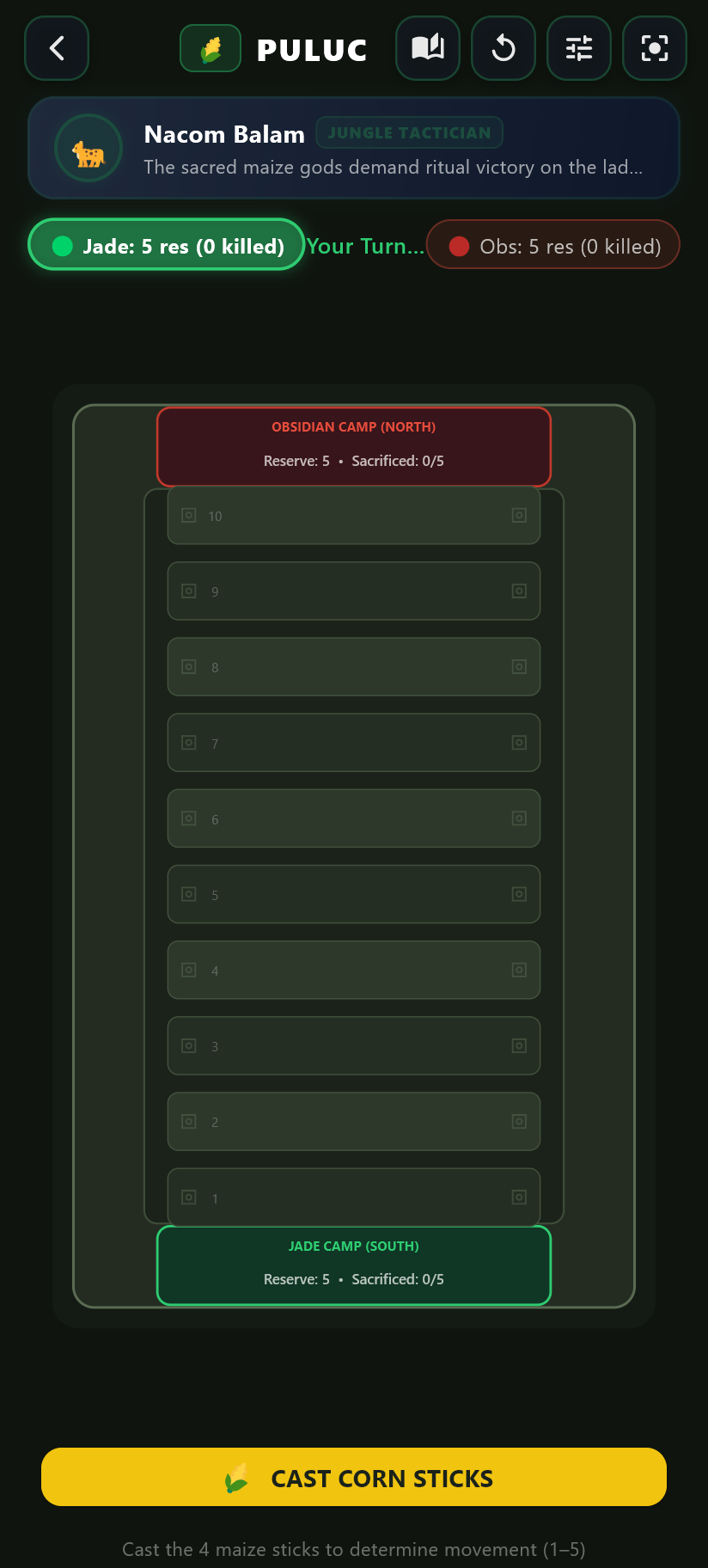
Puluc (Boolik)
Played by Highland Maya warriors using split corn kernels. March across linear battlefield rungs, capturing enemy warriors by landing on top of them and hauling captives home.
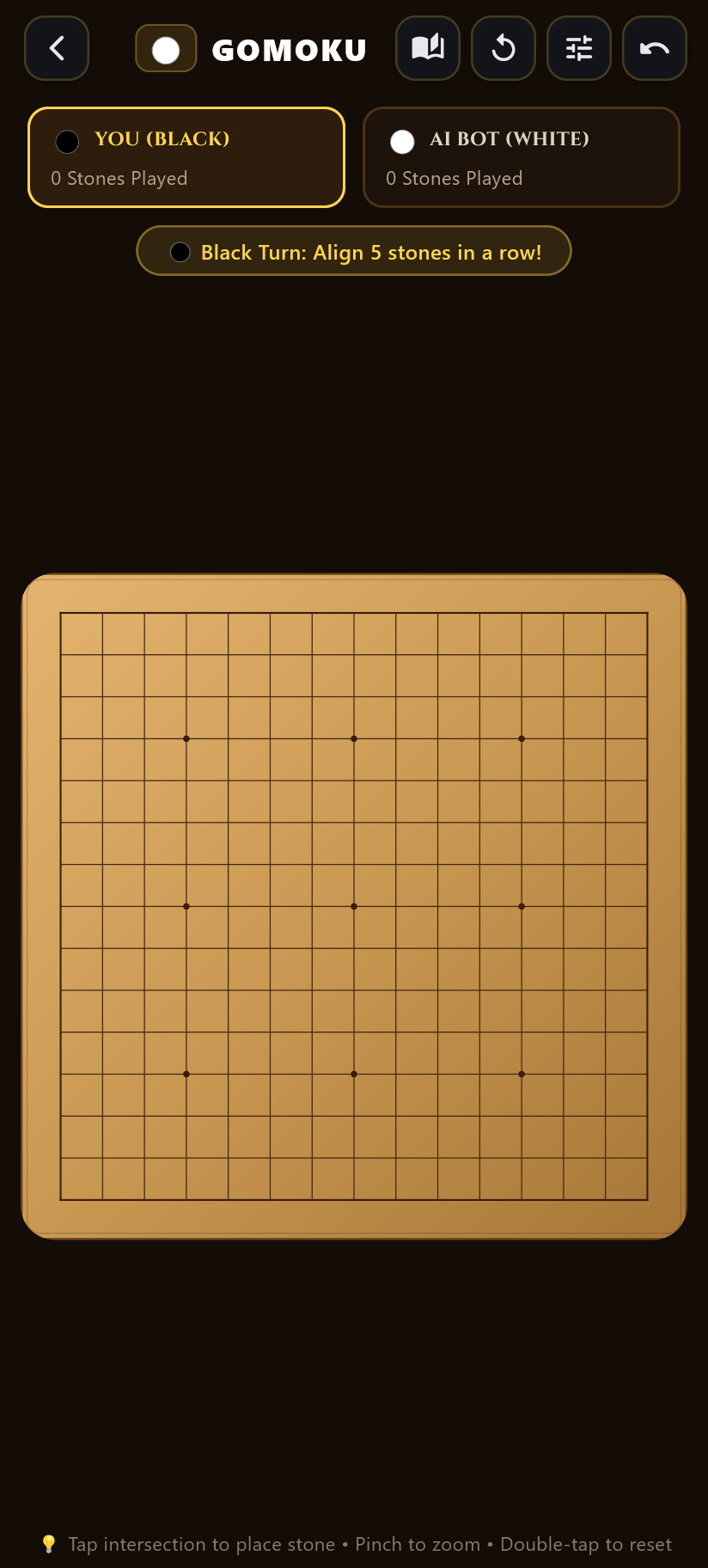
Gomoku
Pure tactical alignment on a Go grid. Players alternate placing black and white stones, maneuvering to create an unbroken row of five while urgently defending against opponent threats.
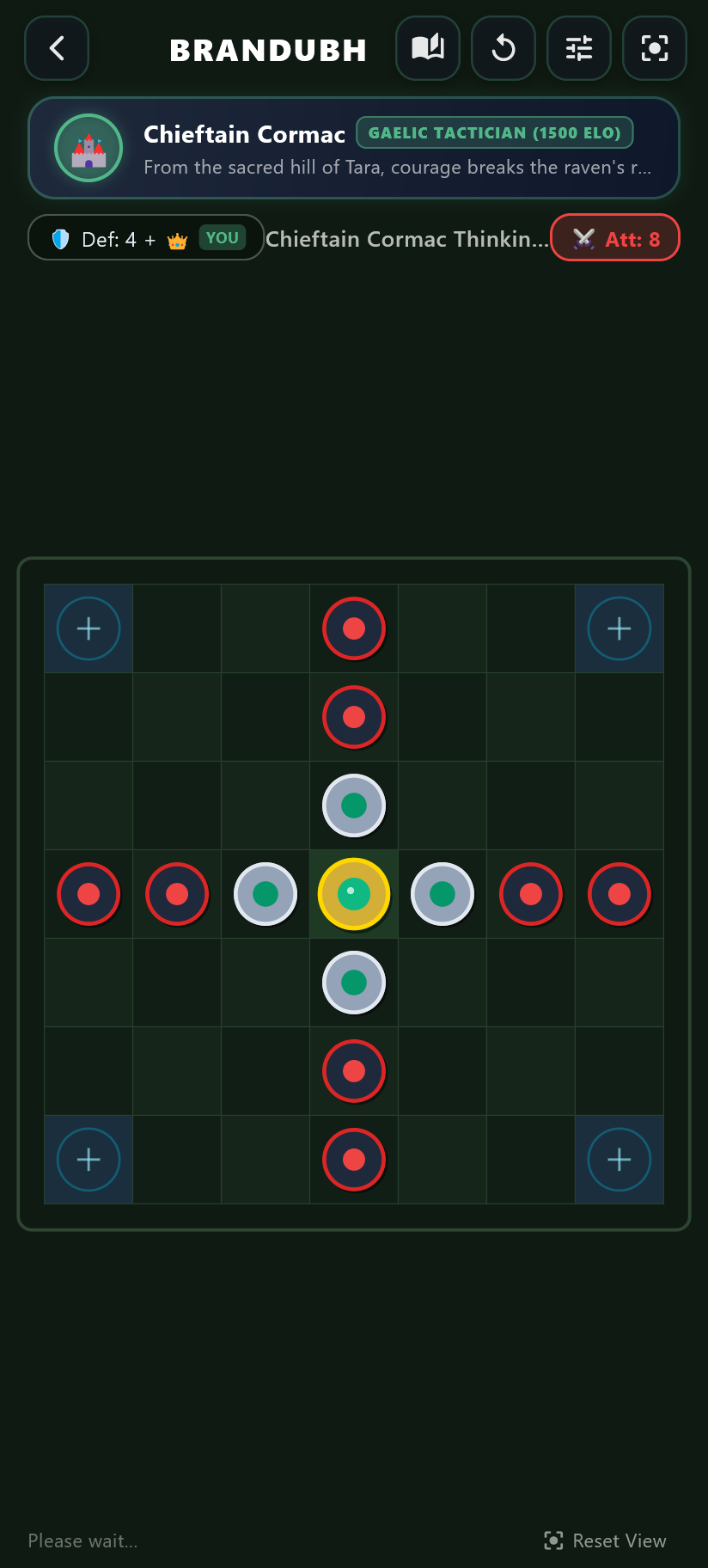
Brandubh
Celebrated in ancient Gaelic bardic poetry. A compact 7x7 board where an Irish High King and four loyal defenders fight to escape eight encroaching invaders.
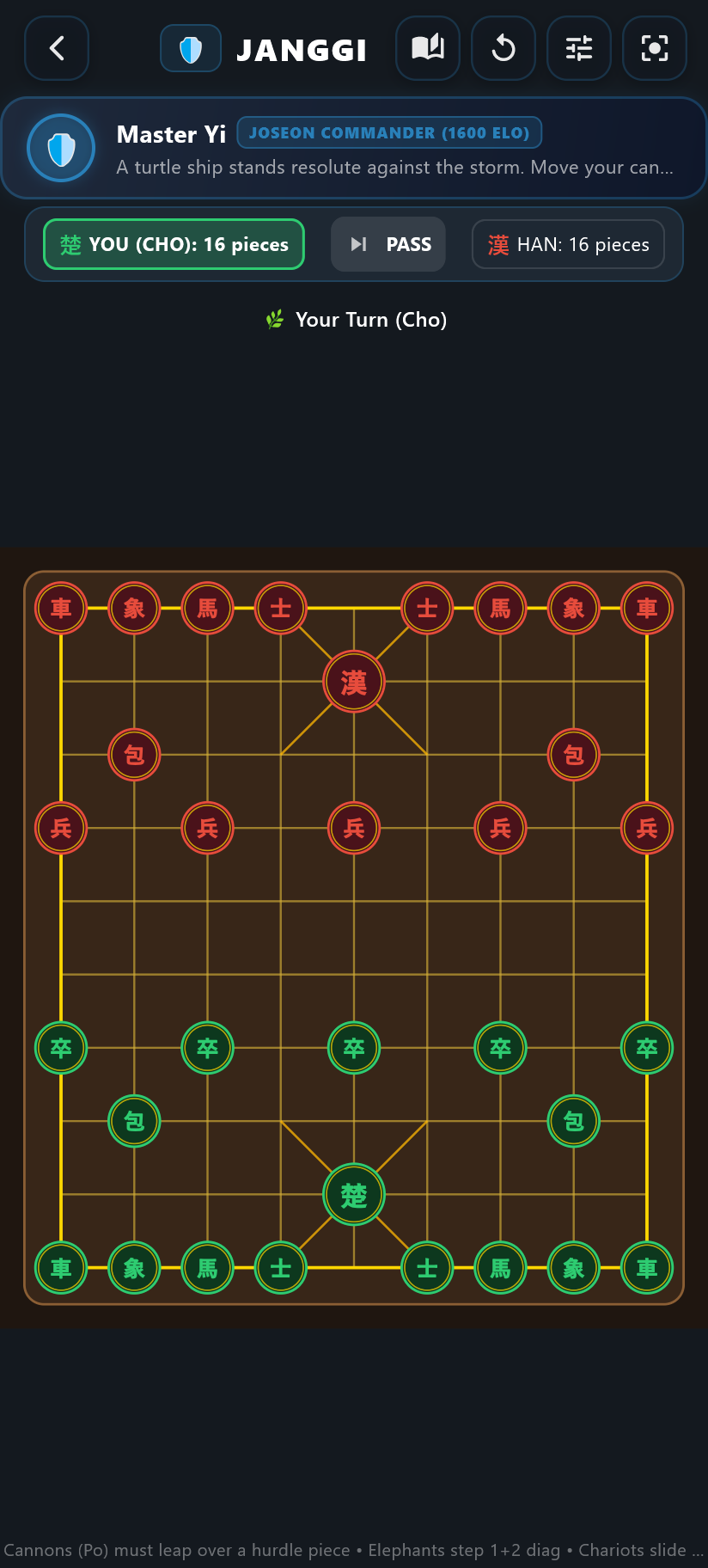
Janggi
Korean chess featuring expansive royal palaces, versatile jumping cannons that fly across fortress diagonals, and pre-match piece transposition choices.
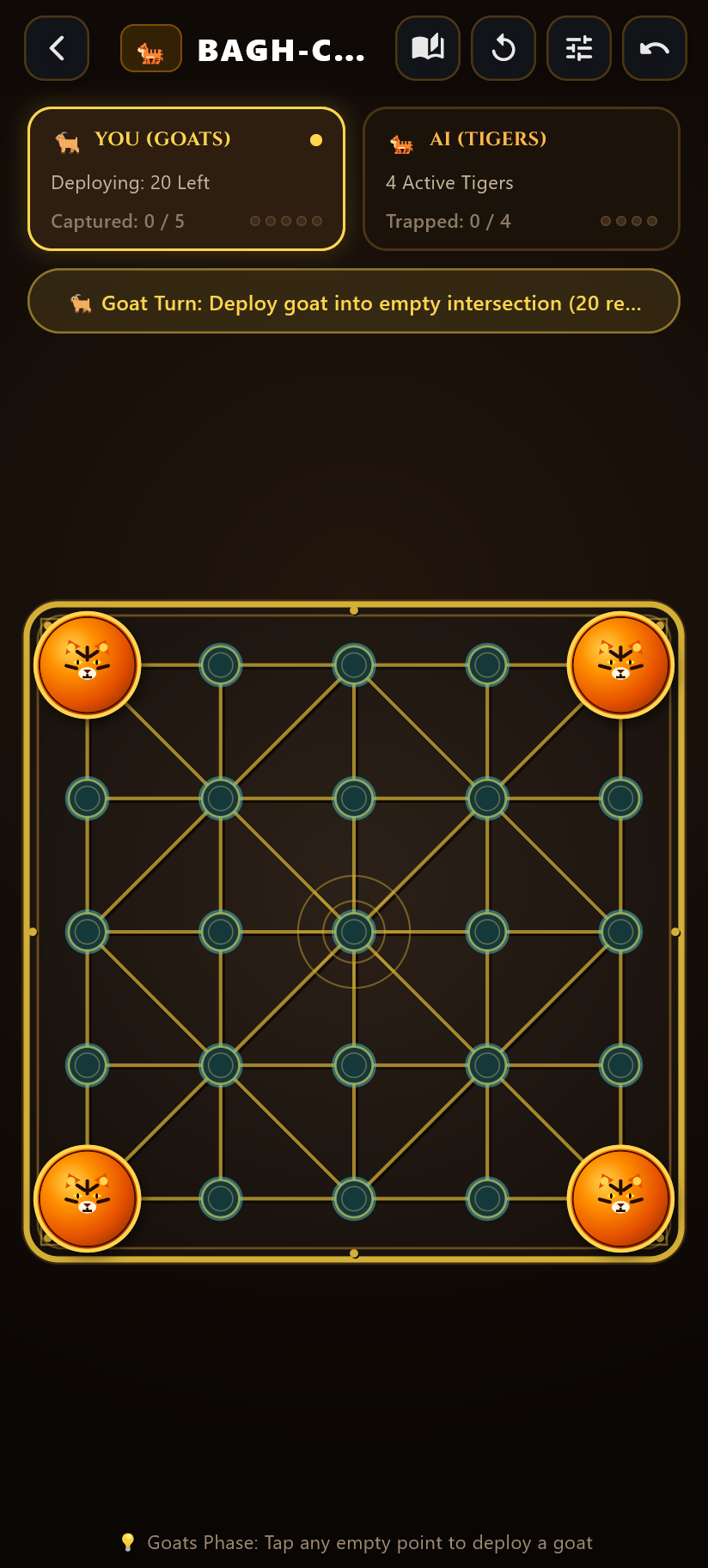
Bagh-Chal
An asymmetric Himalayan predator-prey duel. One player commands 4 prowling tigers seeking leaping captures, while the other coordinates 20 goats to pen the predators in.
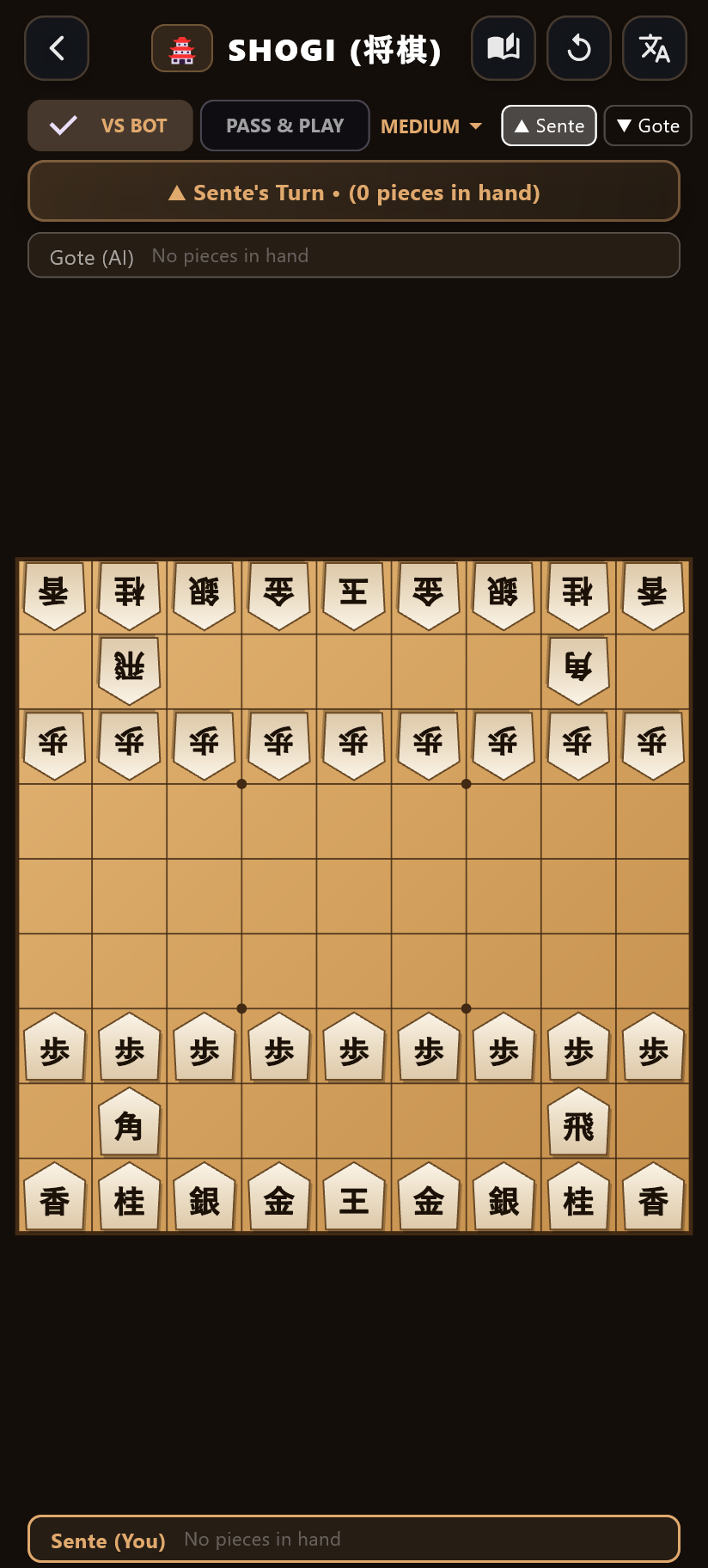
Shogi
Japanese chess featuring its revolutionary Drop Rule: captured enemy pieces become mercenaries you can deploy anywhere on the board, leading to explosive tactical attacks.
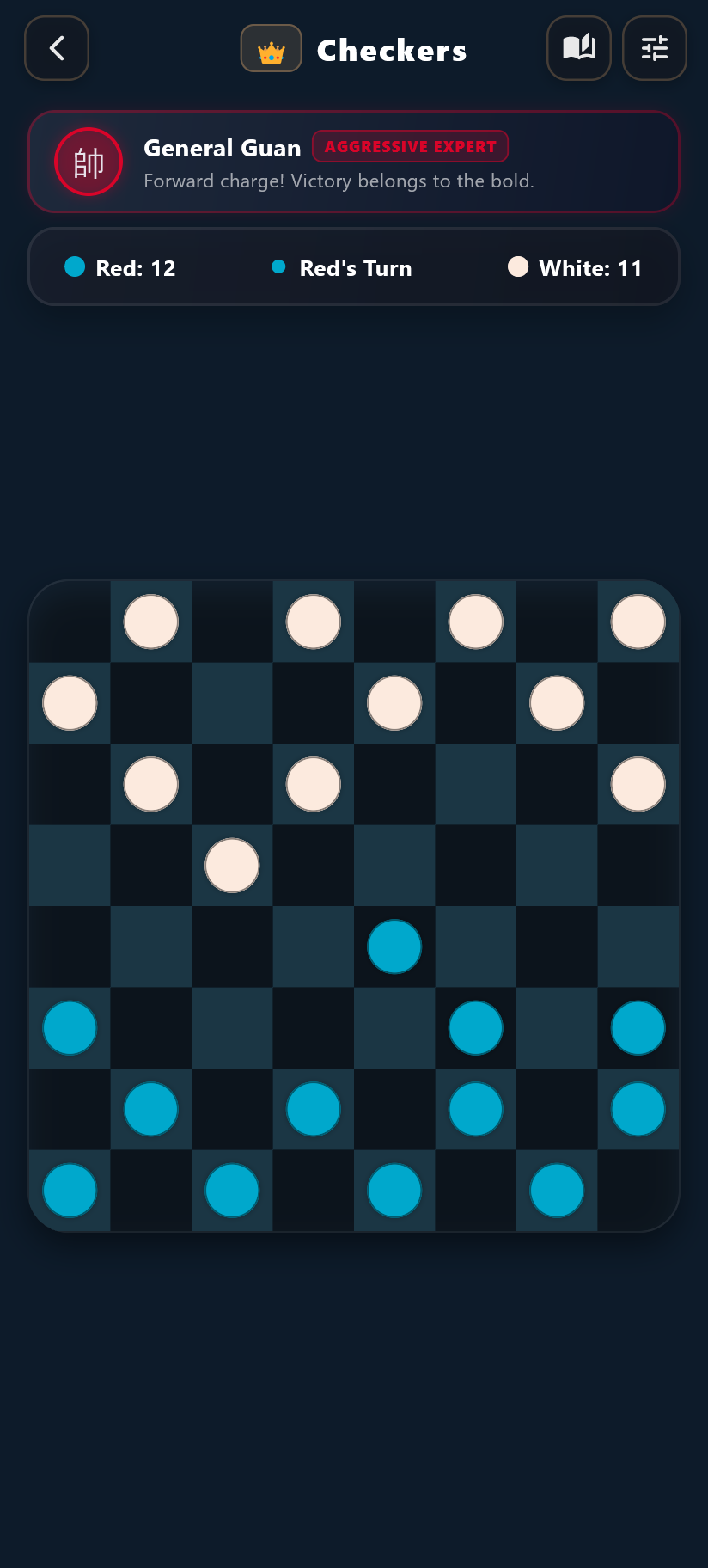
Checkers (Draughts)
Born from transplanting Alquerque leaps onto a 64-square checkered board. Easy to learn, yet hiding deep combinations of forced multi-jump chains and king promotions.
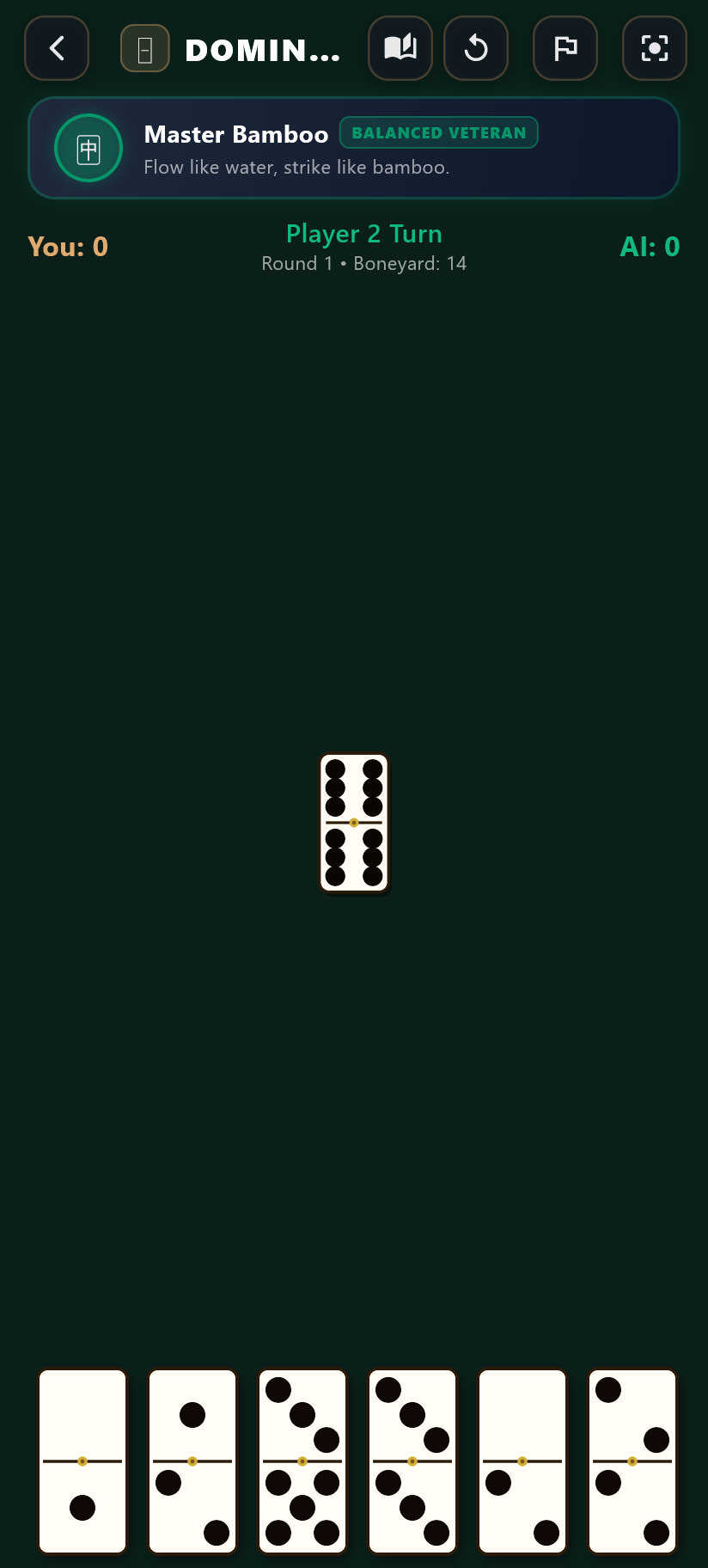
Dominoes
Created from pairs of rolled dice engraved on bone and ivory tiles. Match pips at open chain ends in Block and Draw modes, keeping your hand hidden and counting dots.
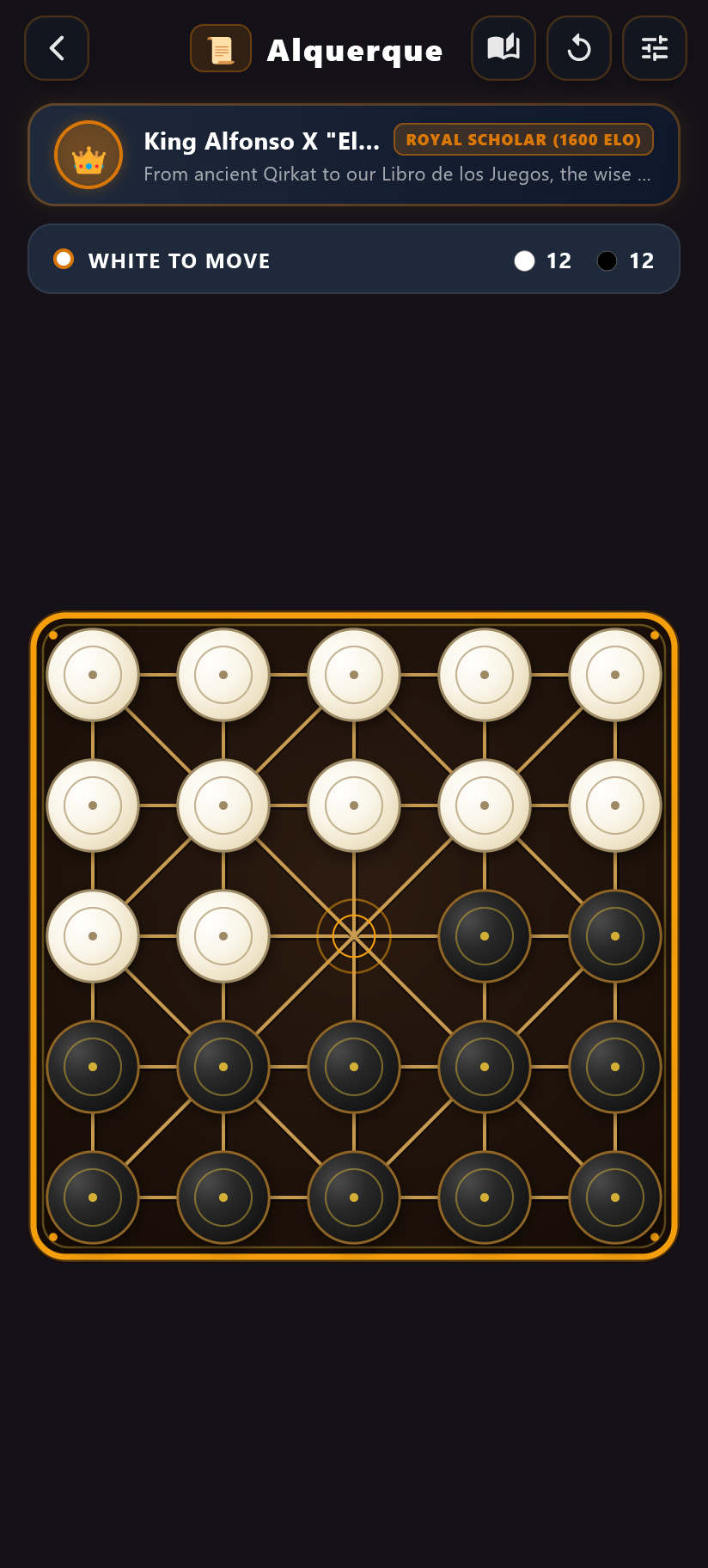
Alquerque (Qirkat)
Preserved in King Alfonso X's magnificent 13th-century illuminated manuscript. The true tactical father of modern Draughts, with 12 pieces per side leaping along grid lines.
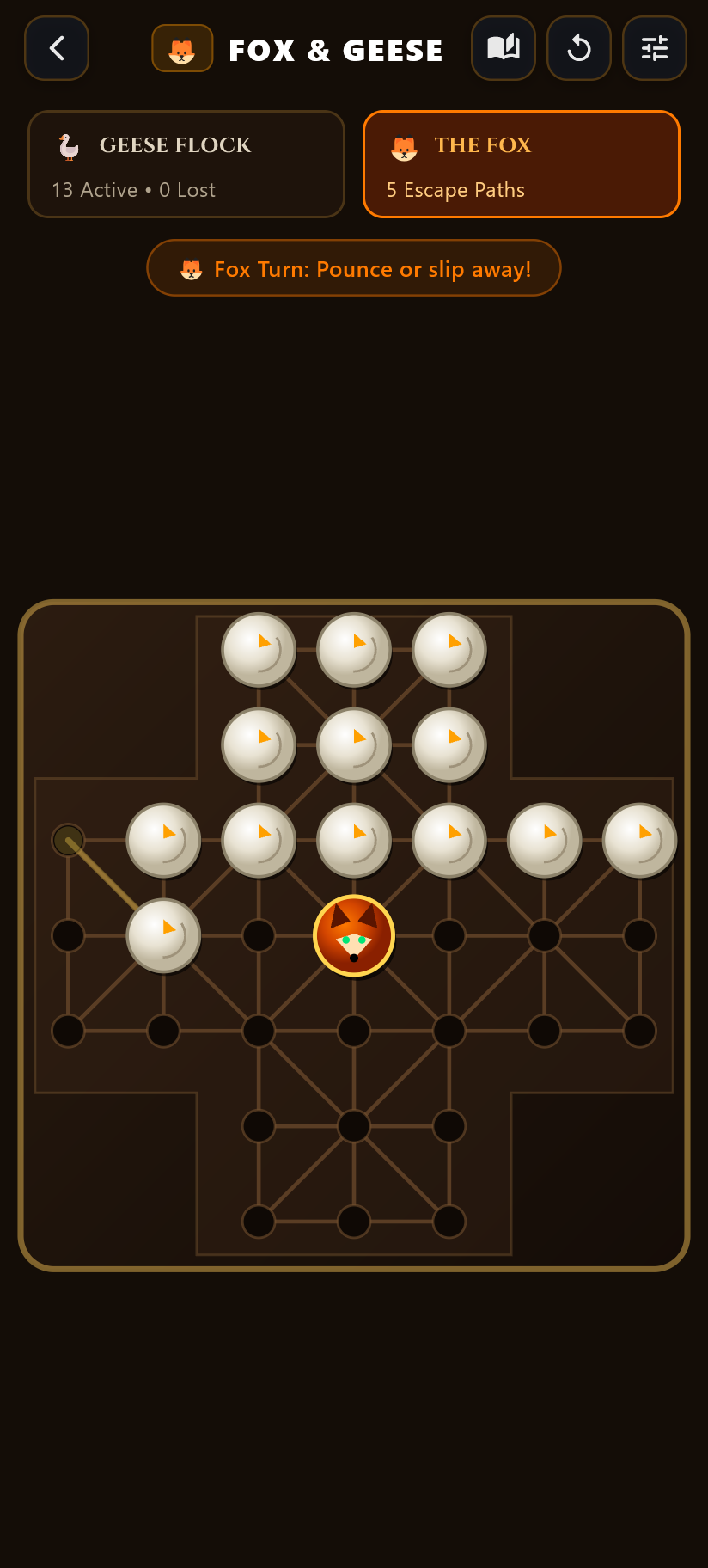
Fox & Geese
An asymmetric medieval hunt on a cross-shaped board. A lone hungry Fox tries to jump and capture unwary birds, while a flock of 13 Geese aims to box the Fox into a corner.
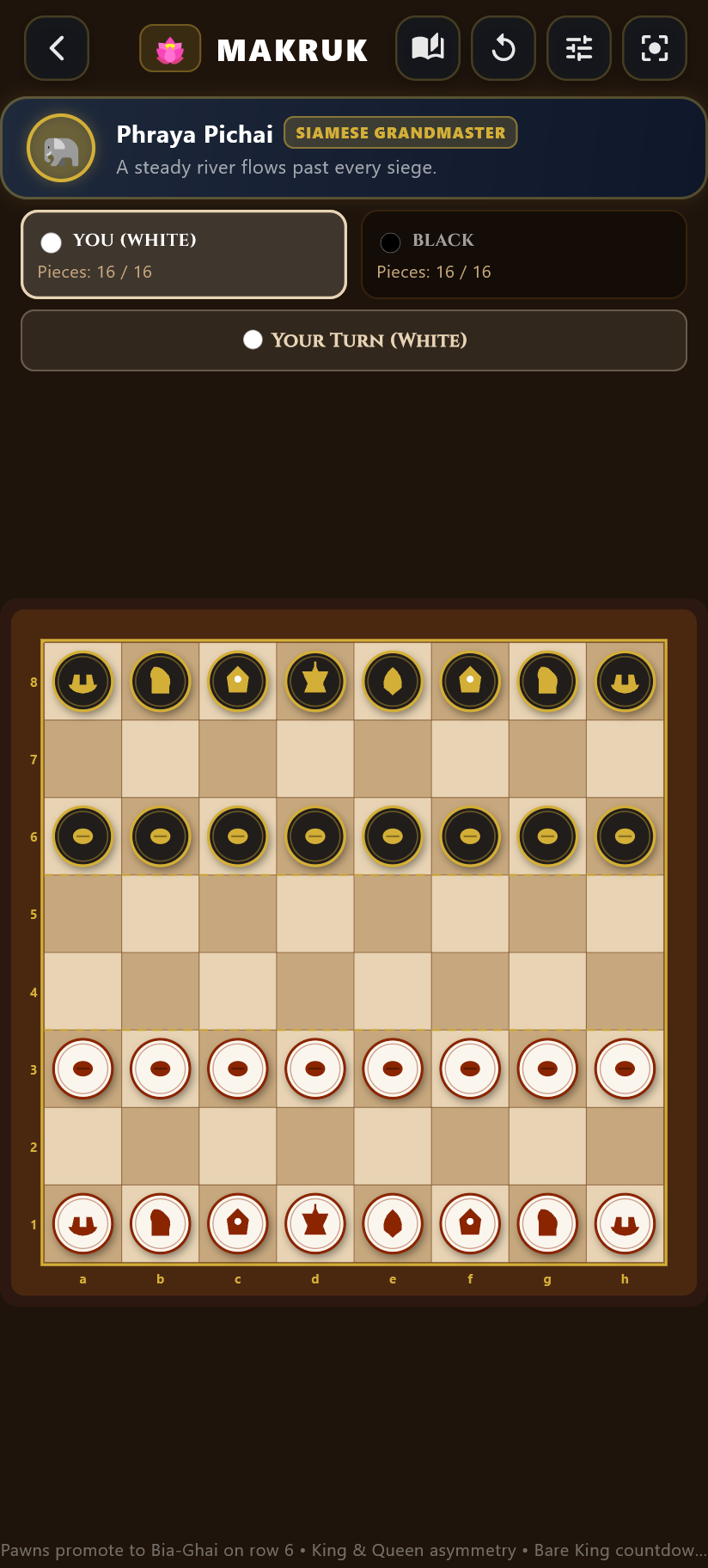
Makruk
The closest living descendant to ancient Indian Chaturanga. Pawns start on the 3rd rank, leading to thoughtful positional battles with Seeds, Nobles, and War Elephants.
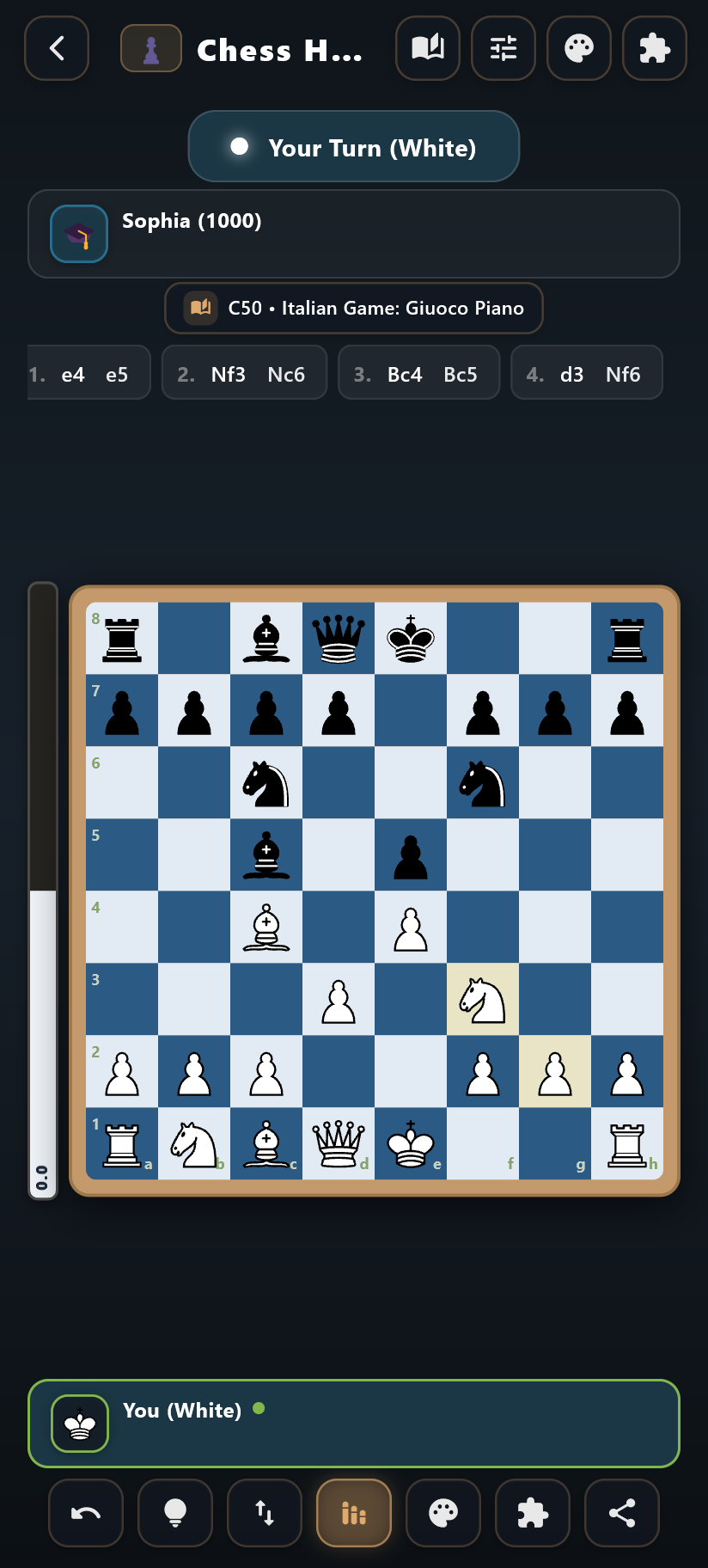
Chess
The classic game of kings and grandmasters. Features Stockfish 16 engine analysis, opening book moves, tactical checkmate puzzles, and full offline play.
⛵ Early Modern (1500 – 1900 CE)
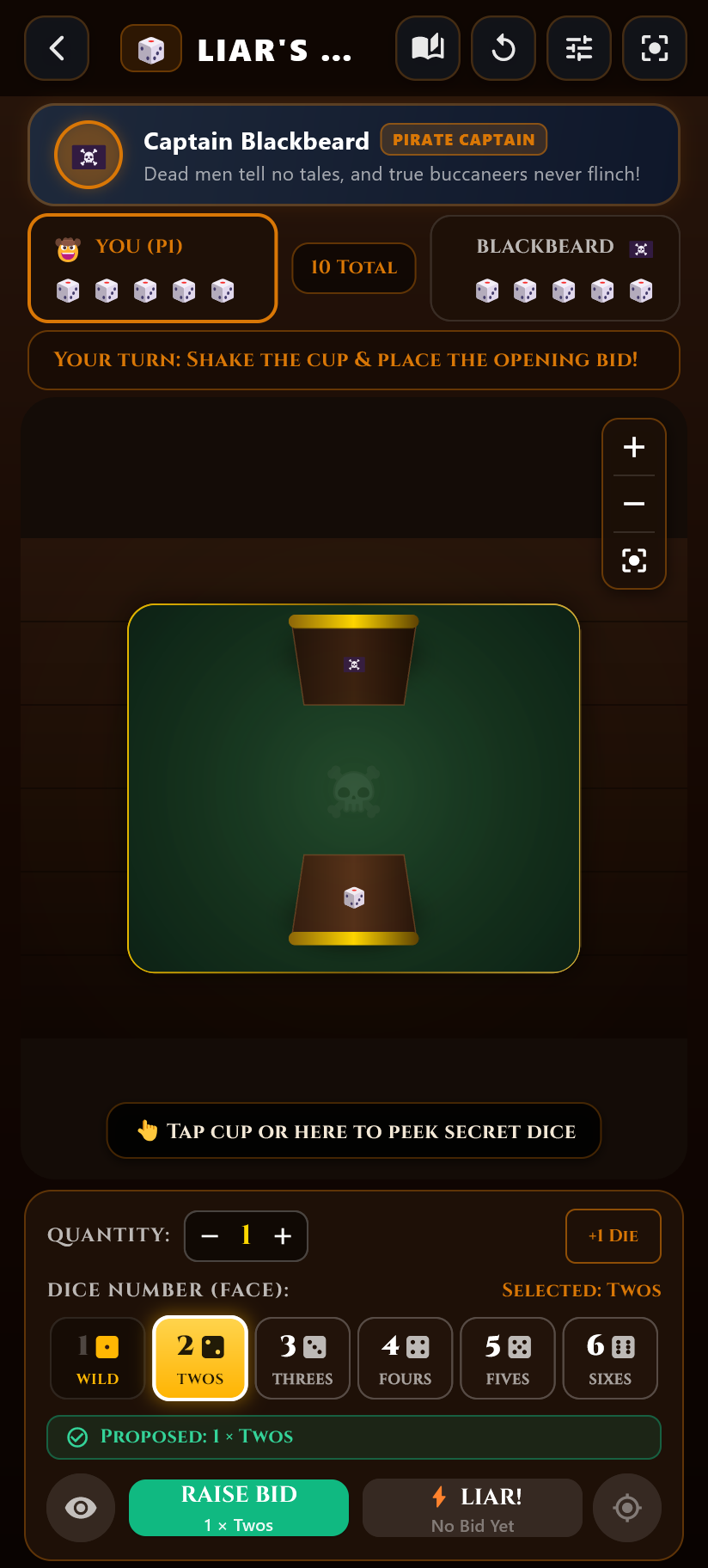
Liar's Dice
A game of psychology and hidden probabilities. Shake dice under leather cups, raise bids on table-wide face totals, and call your opponent's bluff before losing your dice.
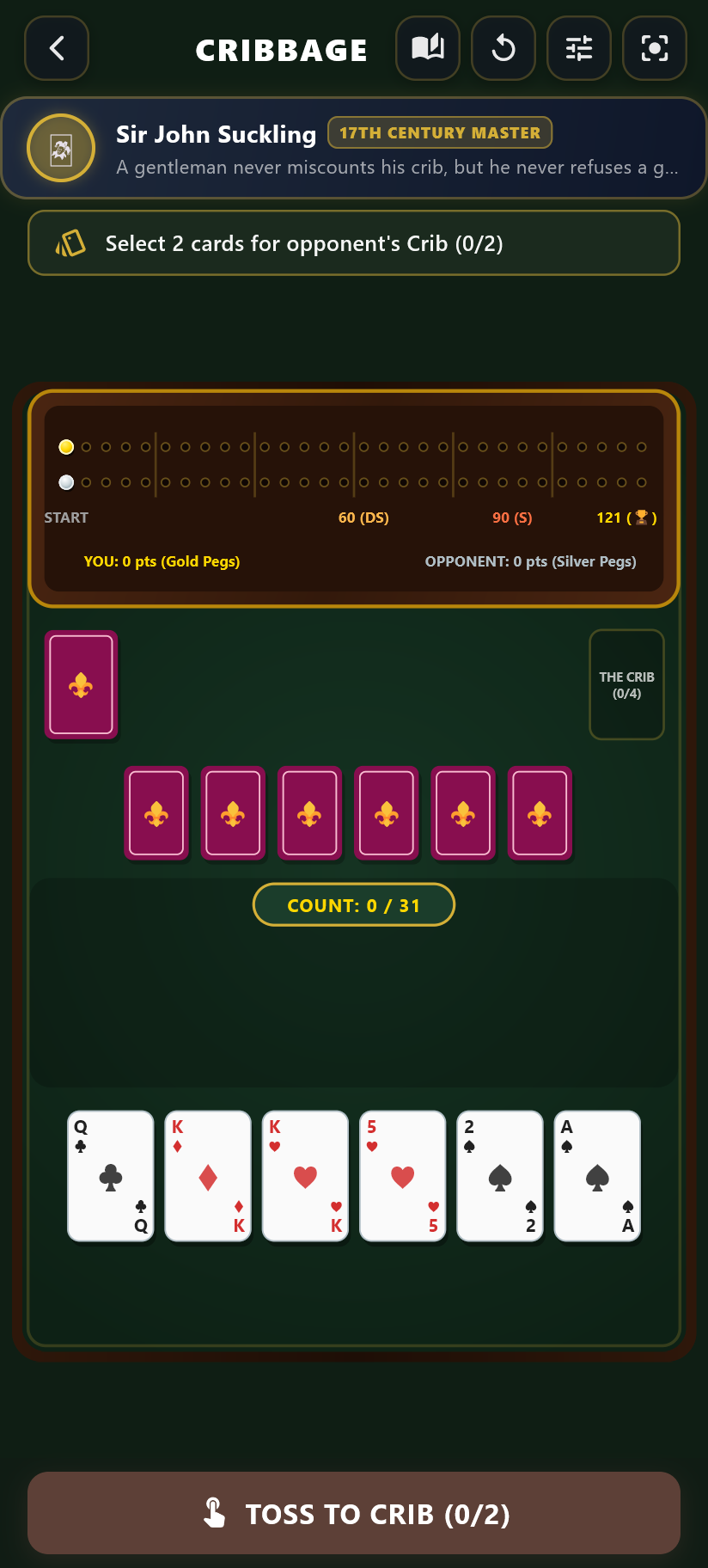
Cribbage
Invented by English poet Sir John Suckling. Combine card combinations for Fifteen-Twos, Runs, and Pairs while leapfrogging scoring pegs along a carved wooden track.
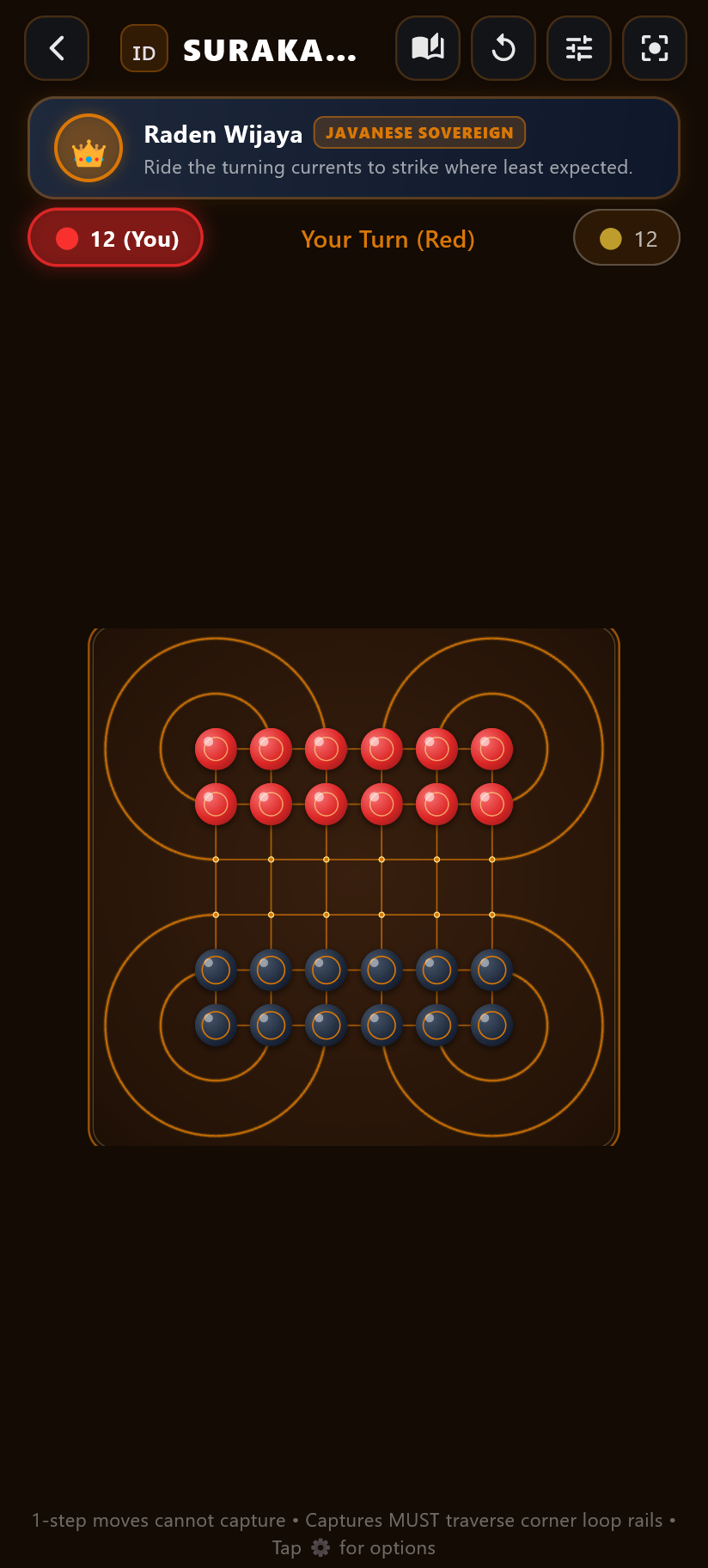
Surakarta
Named after the royal city of Surakarta in central Java. Pieces slide on a 6x6 grid, but can only capture enemies by looping completely around circular corner tramway tracks!
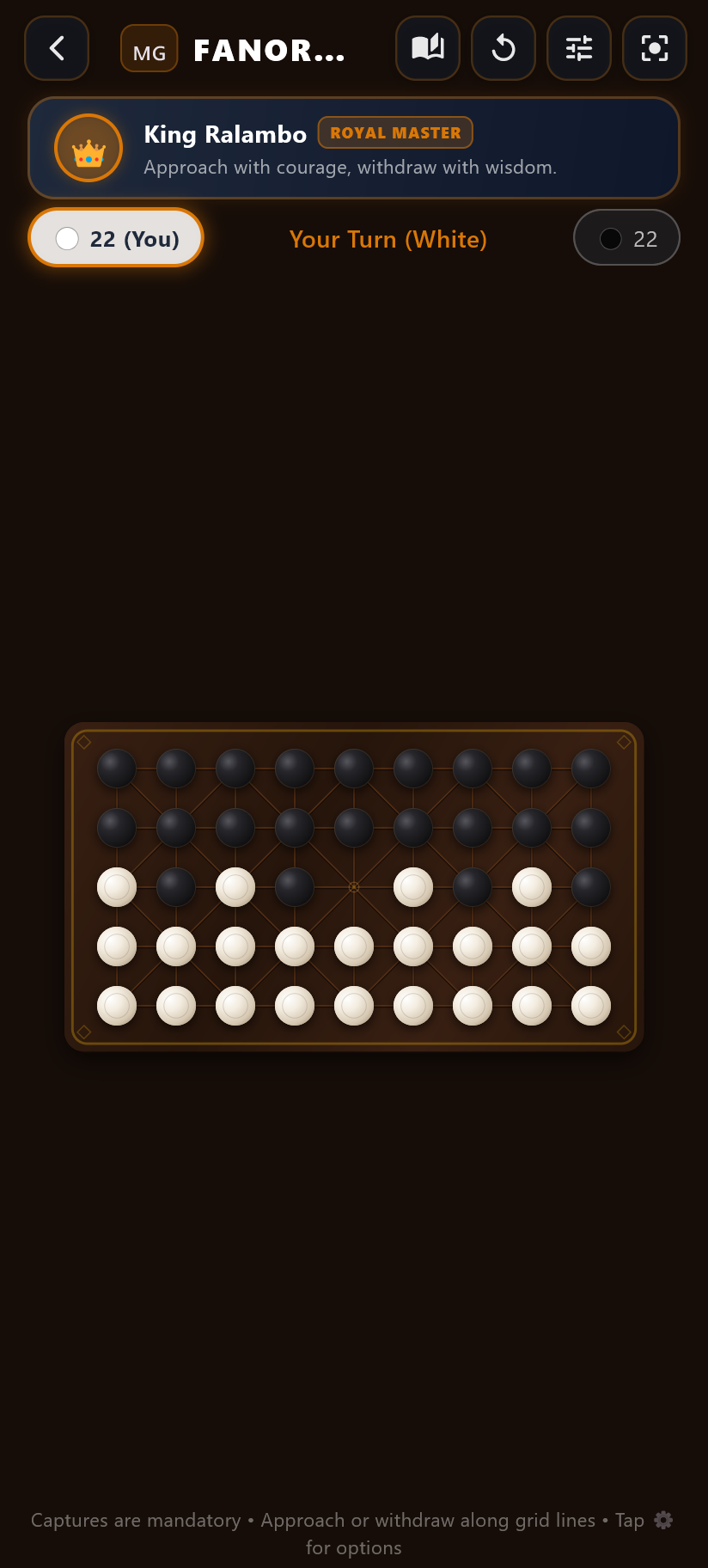
Fanorona
The national game of Madagascar, once used to train royal generals. Captures are executed not by landing on pieces, but by either approaching or withdrawing from enemies.
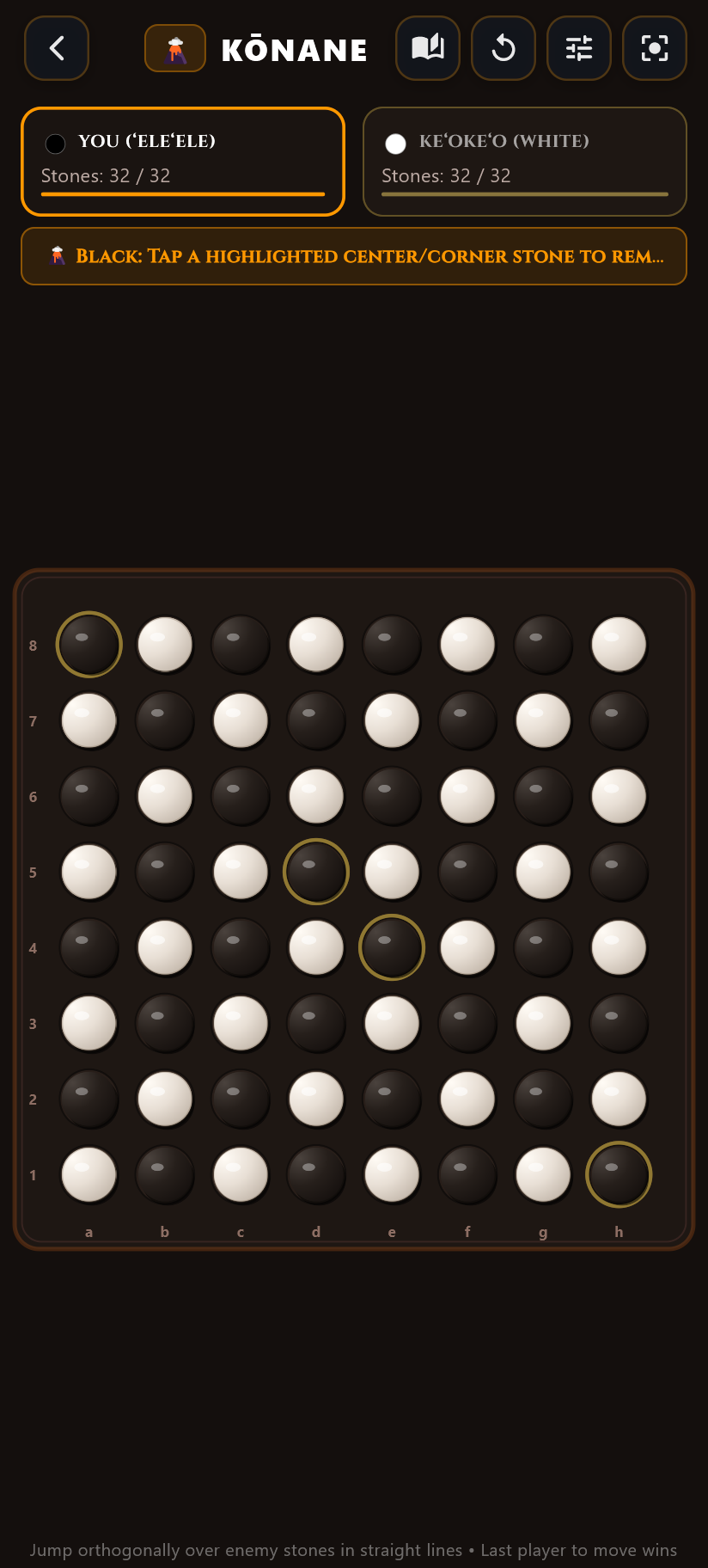
Kōnane
Played on black basalt lava slabs with black lava and white coral stones. Kings and chiefs leaped over enemy stones in straight lines until one player had no moves left.
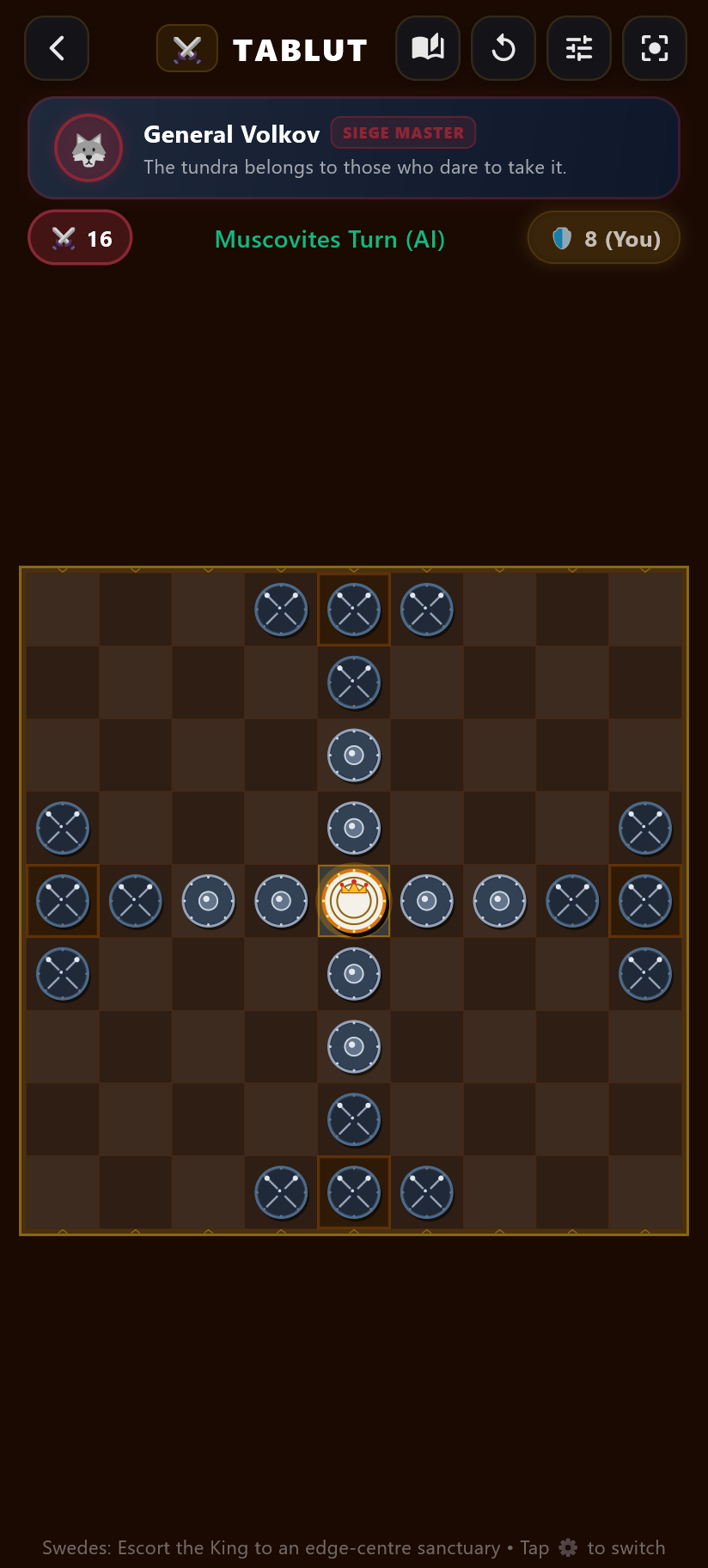
Tablut
Documented by botanist Carl Linnaeus during his 1732 expedition to Arctic Lapland. The Swedish King escapes from his central throne through an ambush of 16 raiders.
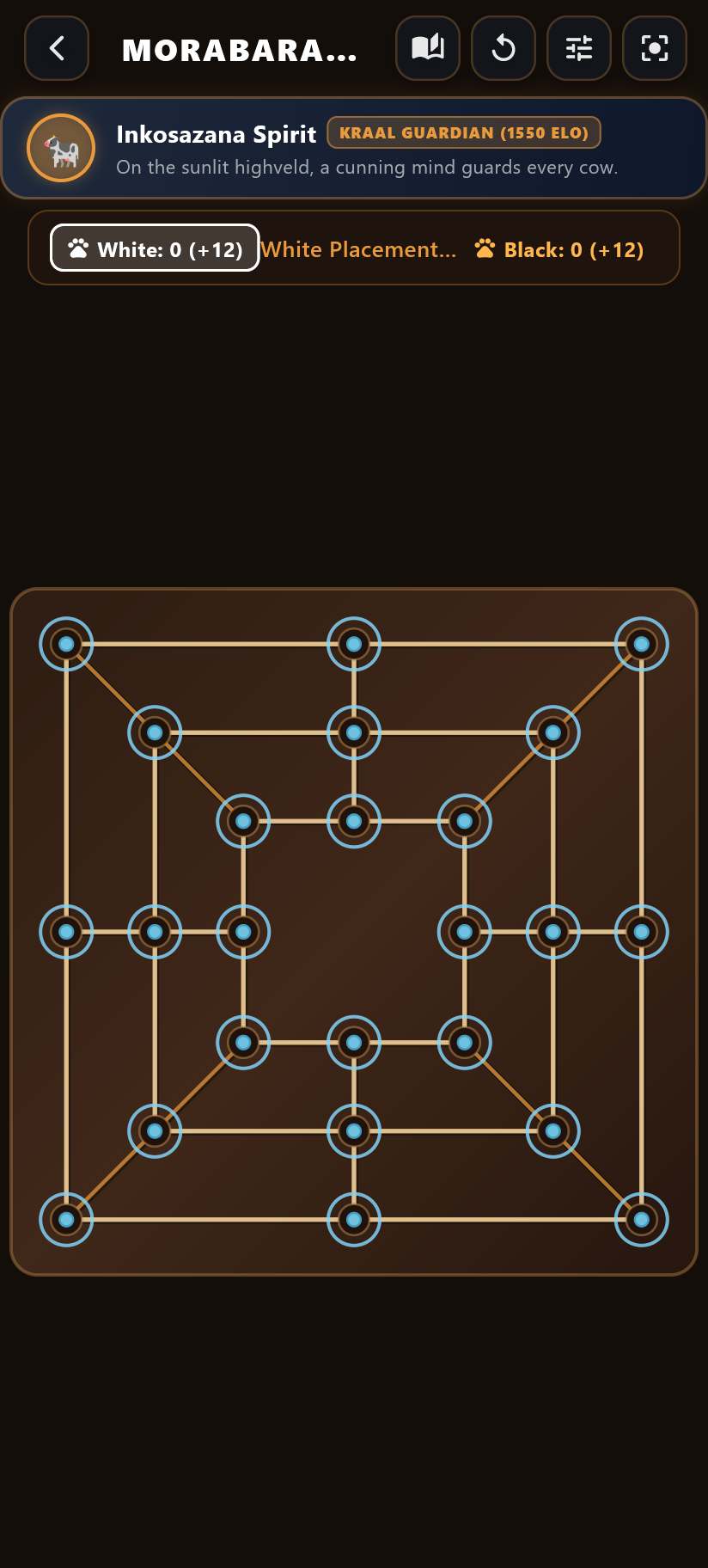
Morabaraba
Traditionally played on flat stones by herdboys in South Africa and Lesotho. Place and slide 12 "cows" along three concentric squares with diagonal lines to shoot opponent cows.
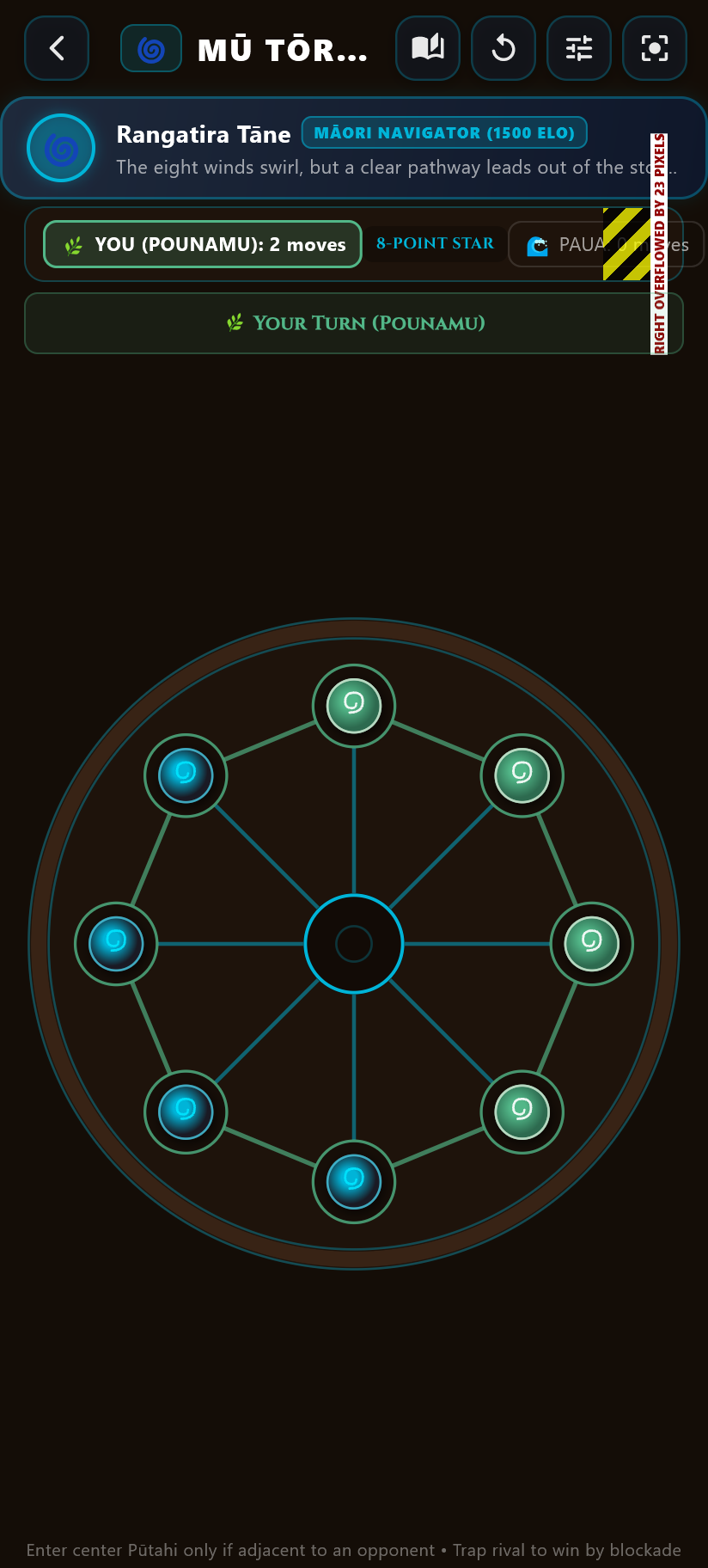
Mū Tōrere
A dazzling game of circular geometry played on an 8-pointed star. Pieces can only enter the central vortex if adjacent to an enemy piece, requiring clever traps to blockade opponents.
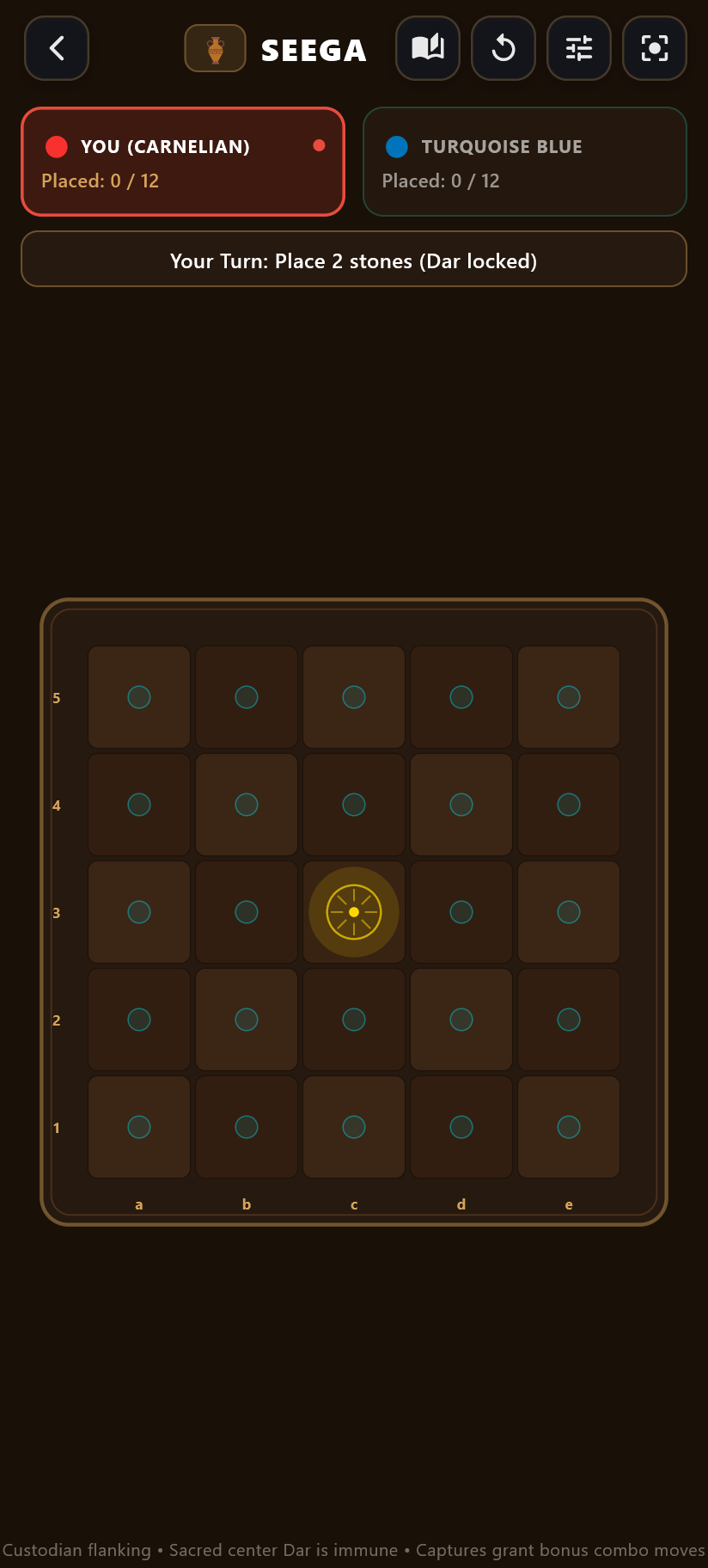
Seega
Played in desert sand dunes using pebbles. Armies are dropped onto a 5x5 board leaving only the center square vacant, followed by furious custodial ambush strikes.
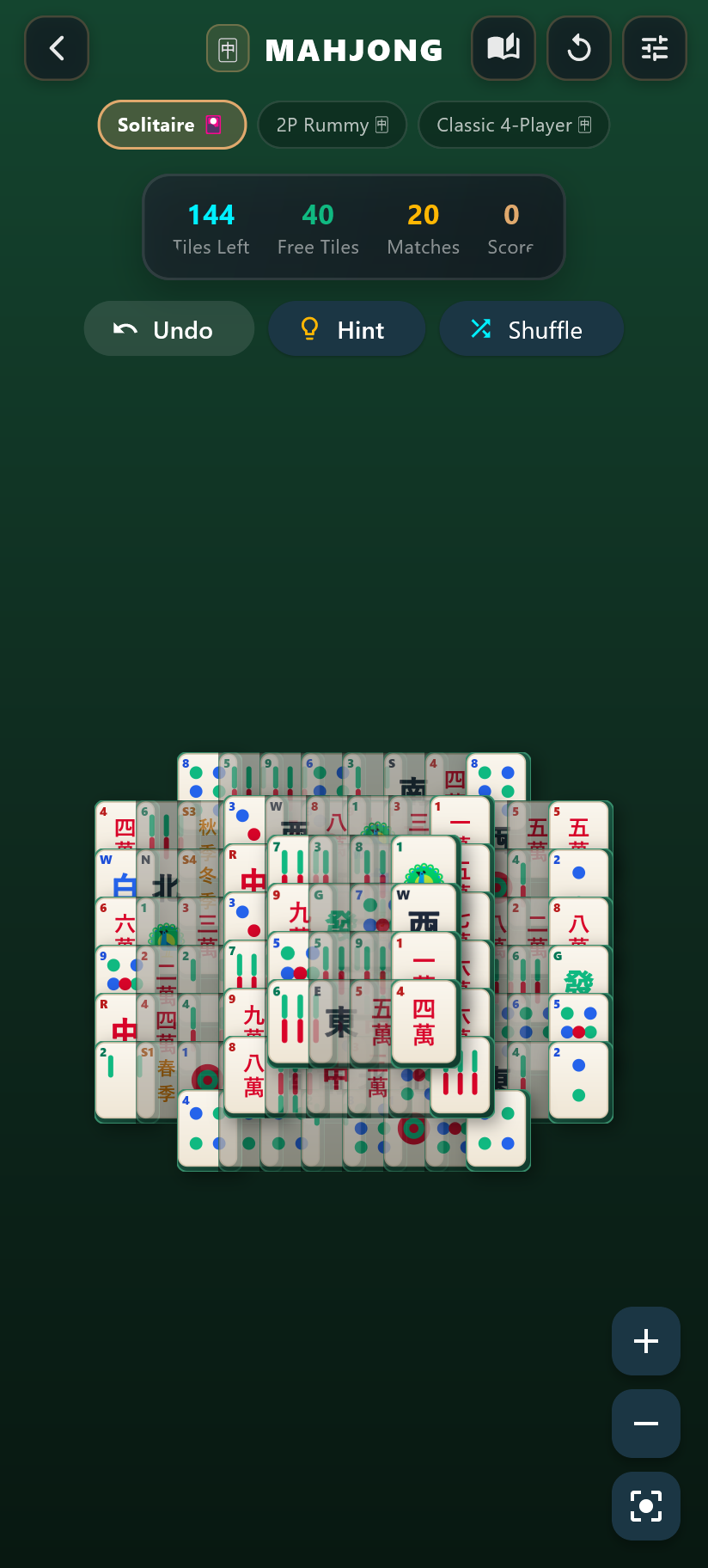
Mahjong
The iconic Chinese tile-matching masterwork. Features 144 beautifully rendered bone and bamboo tiles across 3 modes: Solitaire 3D, 2-Player Rummy, and full 4-Player Japanese Riichi.
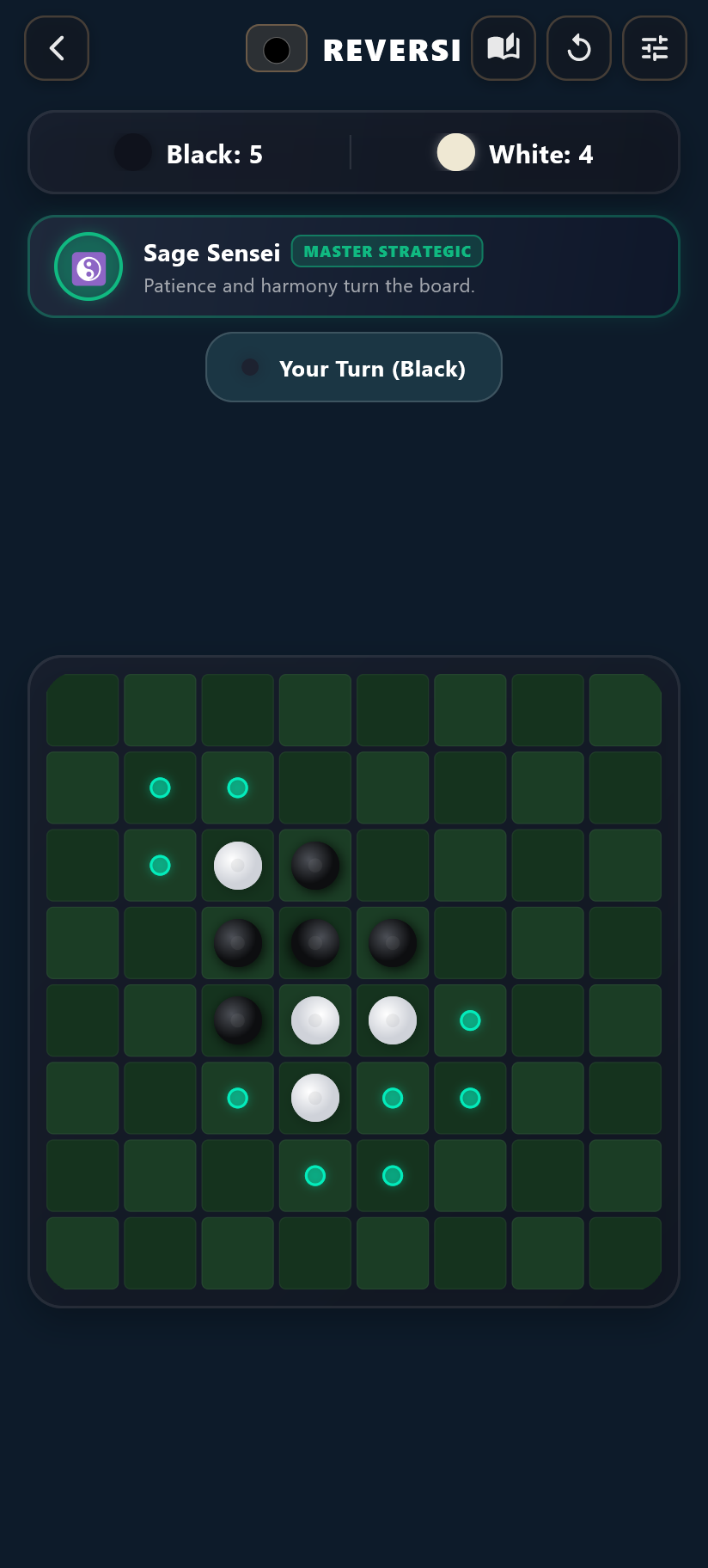
Reversi
"A minute to learn, a lifetime to master." Trap opposing disks between your own to flip entire horizontal, vertical, and diagonal rows in sudden dramatic reversals of fortune.
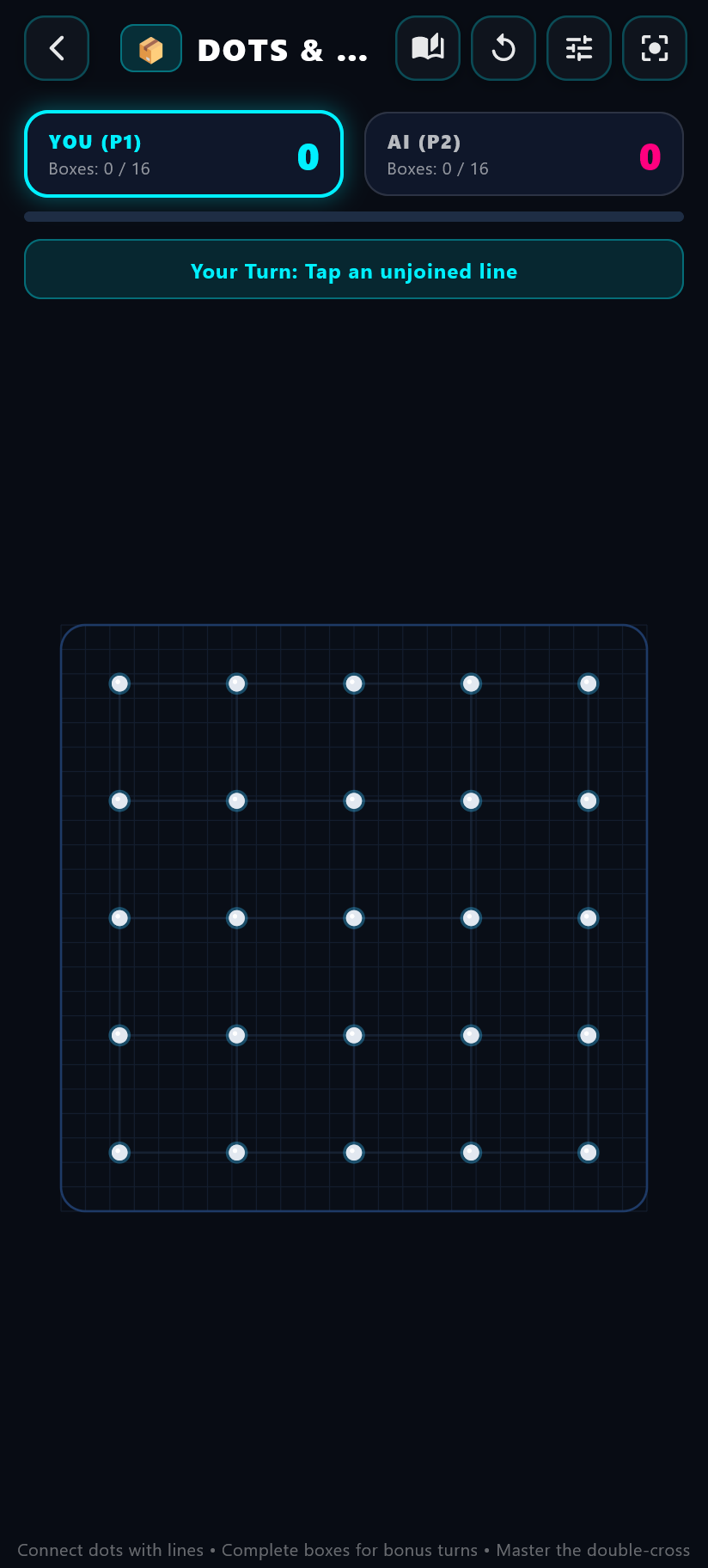
Dots & Boxes
Created by the brilliant French mathematician Édouard Lucas. Connect adjacent dots with lines; closing the 4th wall of any 1x1 box claims it and gives you another turn for chain cascades.
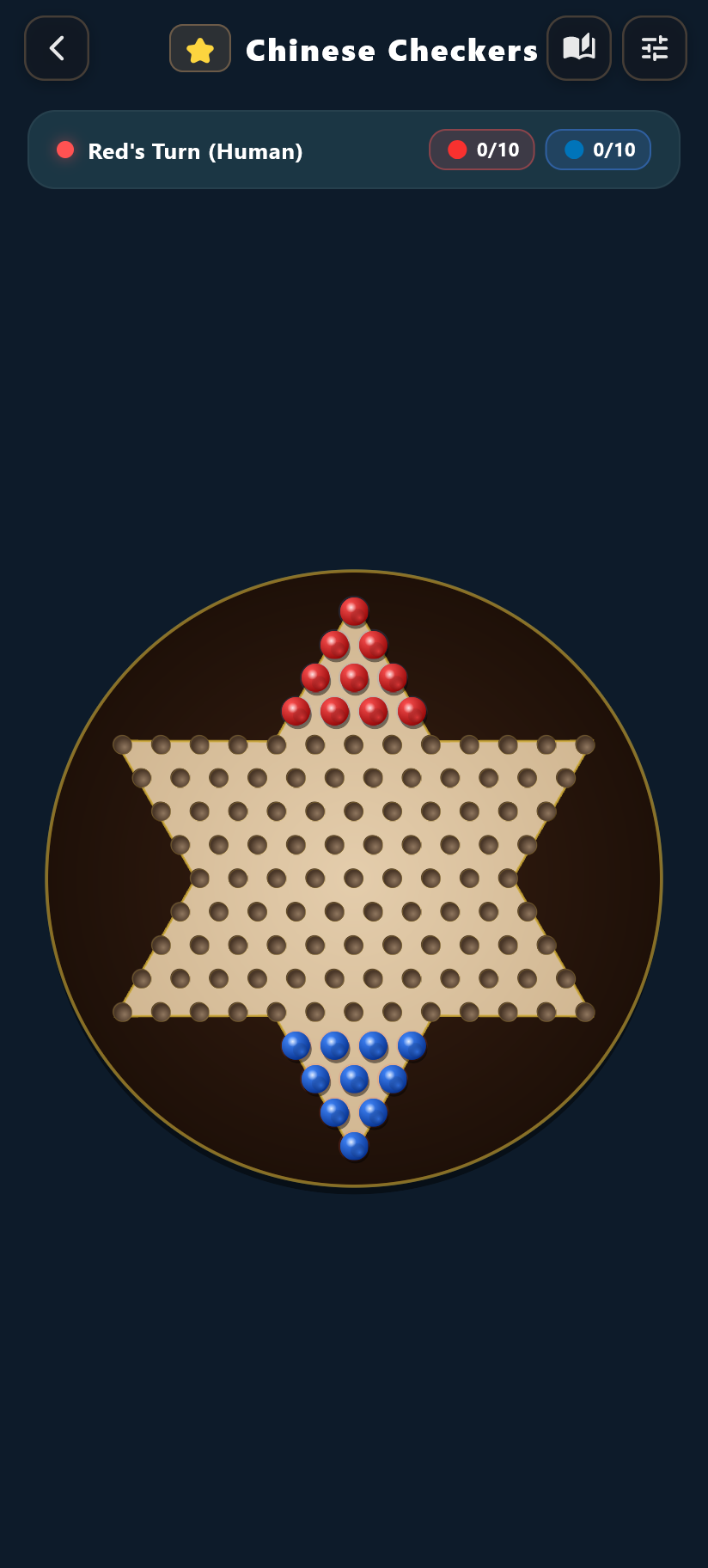
Chinese Checkers
Invented in Germany under the name Sternhalma (star halma). Hop marbles across a 121-intersection hexagram star to be the first to occupy the destination star corner.
💡 20th Century & Beyond (1900 – Present)
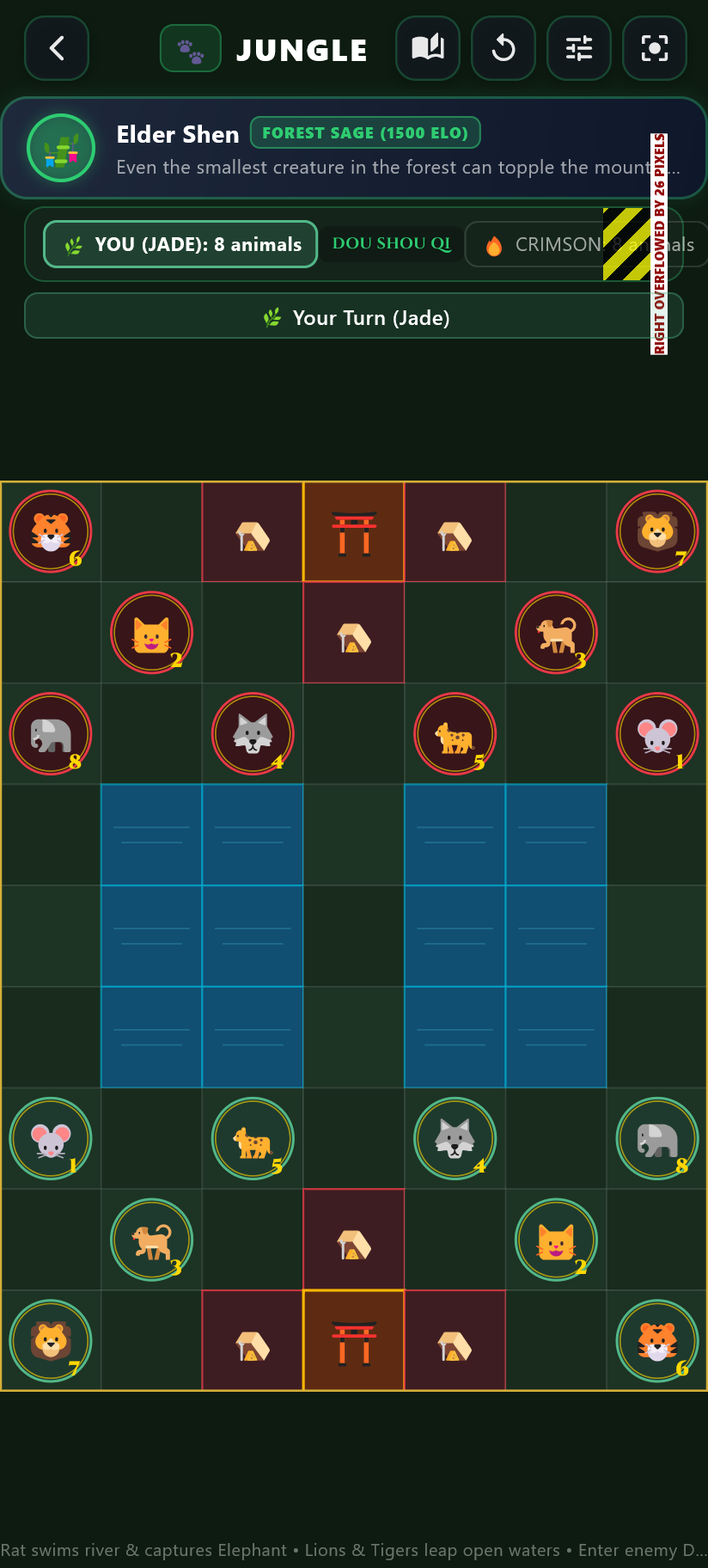
Jungle (Dou Shou Qi)
Command 8 animal ranks across rivers, traps, and dens. The tiny Rat can swim and defeat the mighty Elephant, while Lions and Tigers leap clean across the central river.
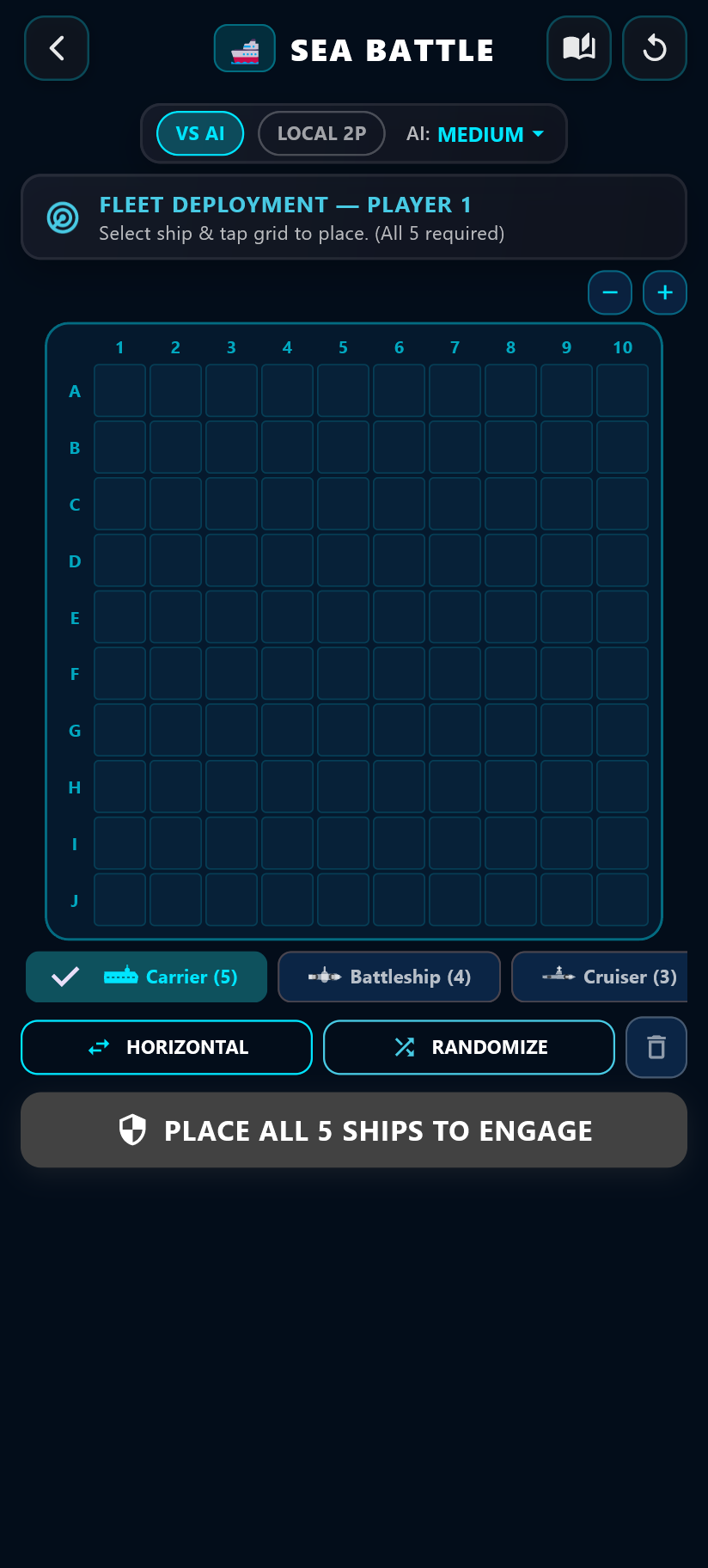
Sea Battle
The legendary naval radar combat game. Secretly position your armada of carriers, battleships, cruisers, subs, and destroyers, firing blind salvos into the fog of war.

Hex
Invented independently by polymath Piet Hein and Nobel laureate John Nash. Race to connect opposite sides of a hexagonal board with an unbroken chain—proven to have zero draws!
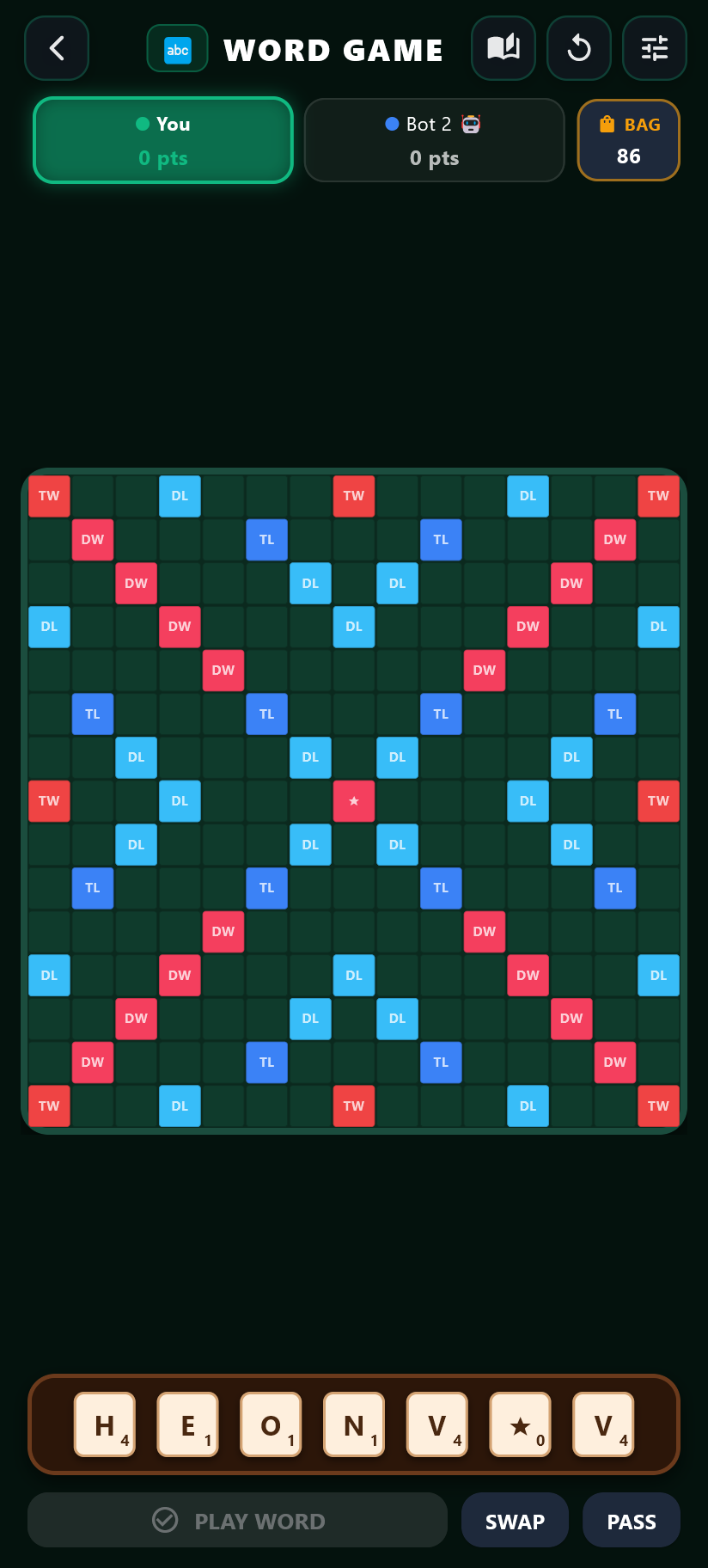
Word Game
Draw 7 letter tiles and construct intersecting crossword puzzles on a 15x15 grid. Hit Double/Triple Letter and Word multipliers and score 50-point Bingo bonuses using the ENABLE1 dictionary.
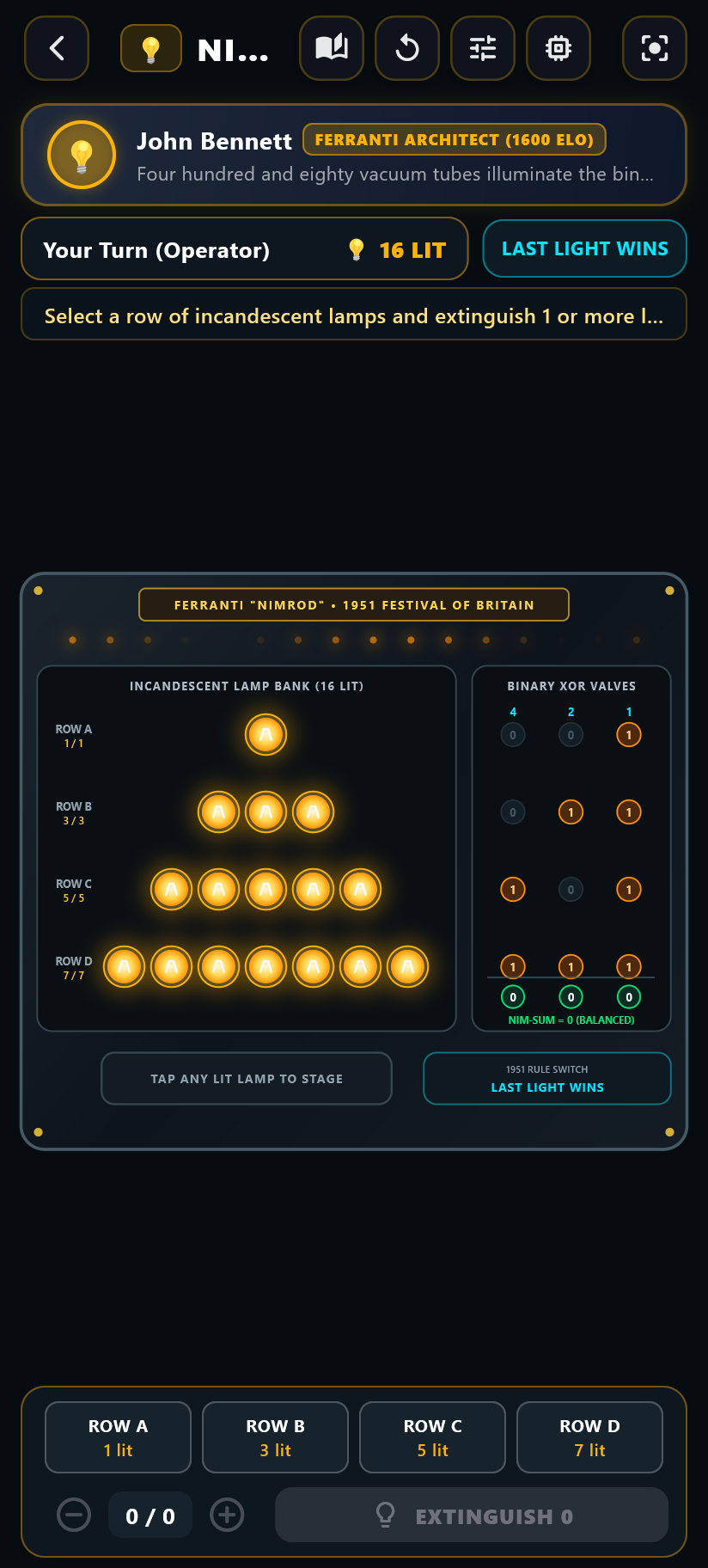
Nimrod
Built by Ferranti as a room-sized vacuum tube machine designed solely to play Nim against exhibition attendees (including Alan Turing!). Remove tokens from heaps using binary XOR math.
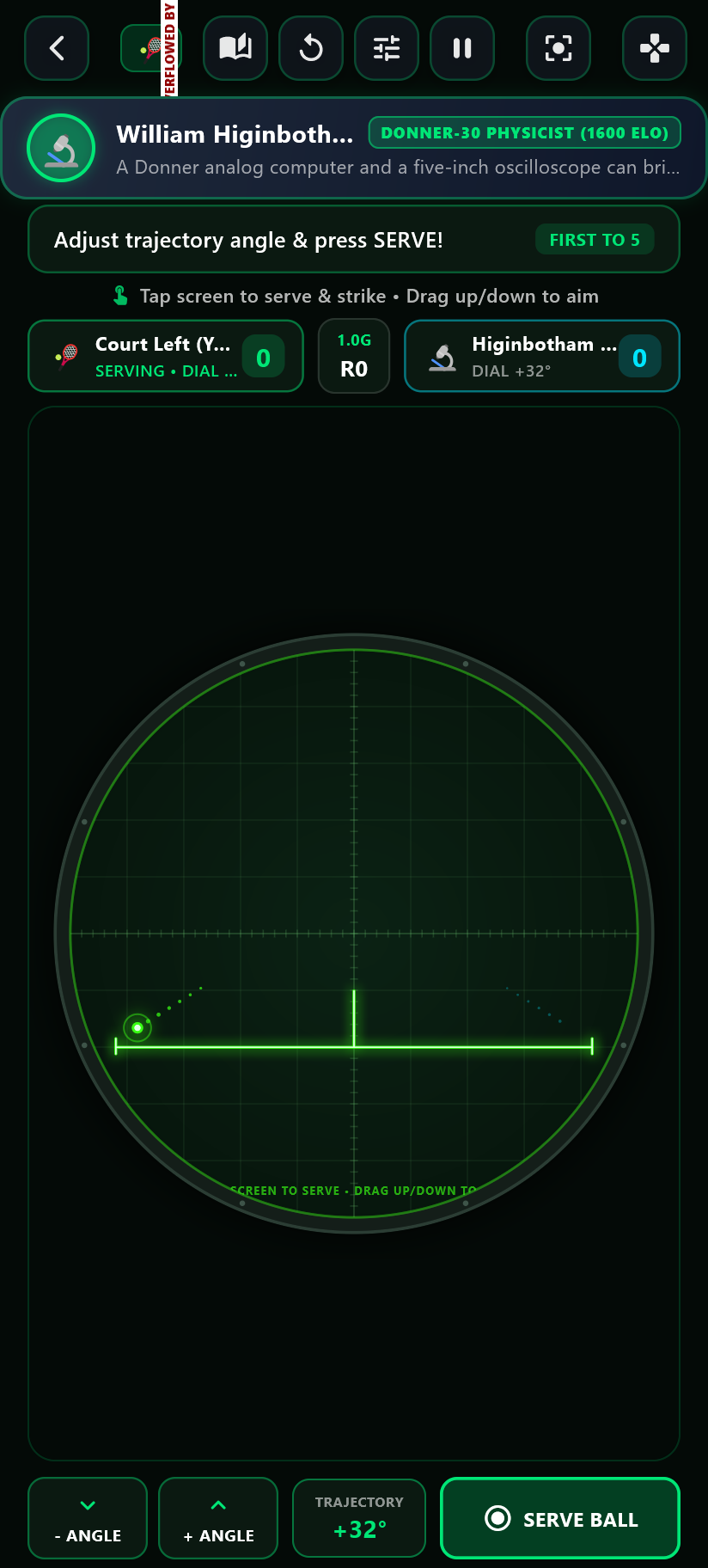
Tennis for Two
Created by physicist William Higinbotham on a Donner Model 30 analog computer and a 5-inch oscilloscope screen. Adjust ball trajectory over a simulated net years before Pong existed.
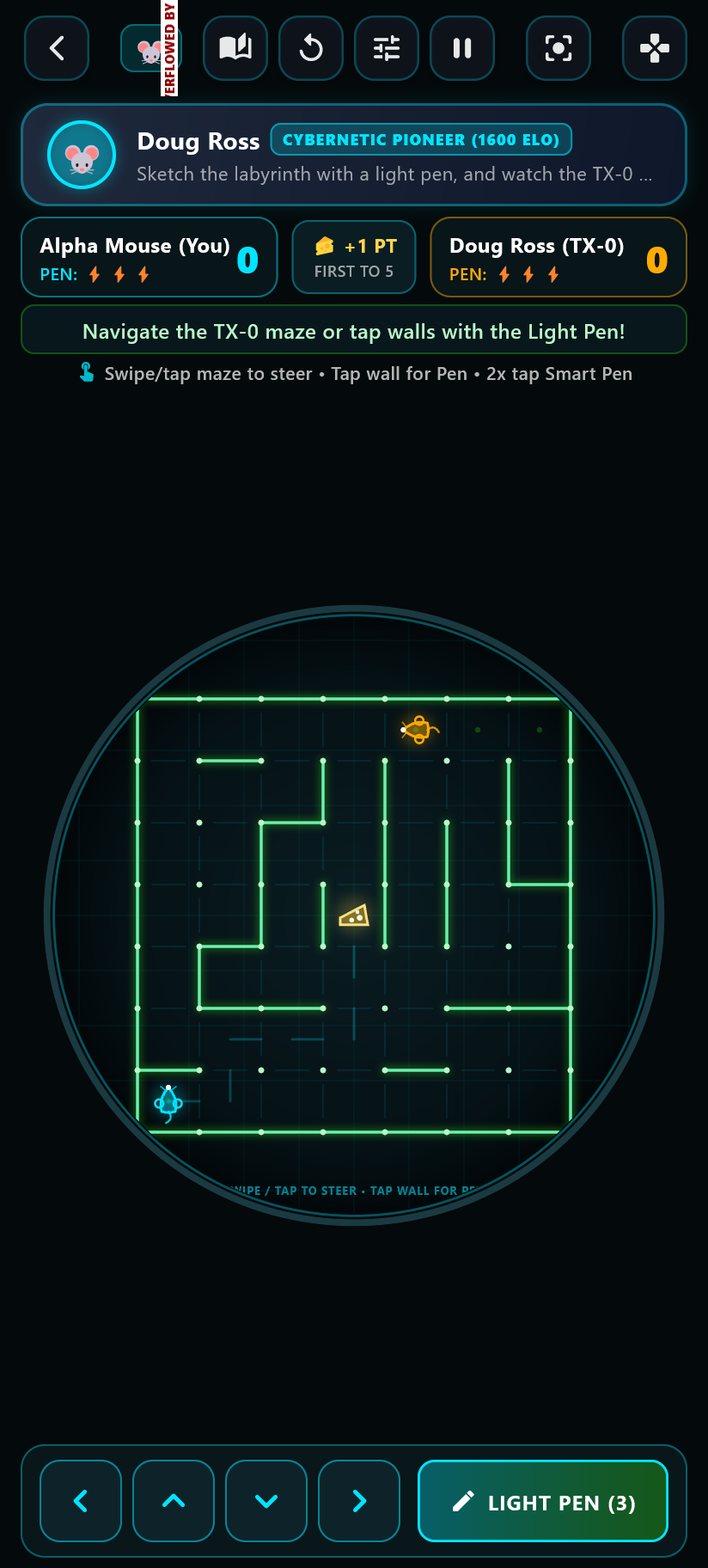
Mouse in the Maze
Programmed by Doug Ross and John Ward on the transistorized MIT TX-0 computer. Draw labyrinth walls and cheese wedges on a vector display while a cybernetic mouse navigates the maze.

Spacewars
Written by Steve Russell, Martin Graetz, and Wayne Wiitanen on DEC's PDP-1. Pilot the Wedge and Needle starships in zero-gravity orbital combat around a deadly gravitational star.
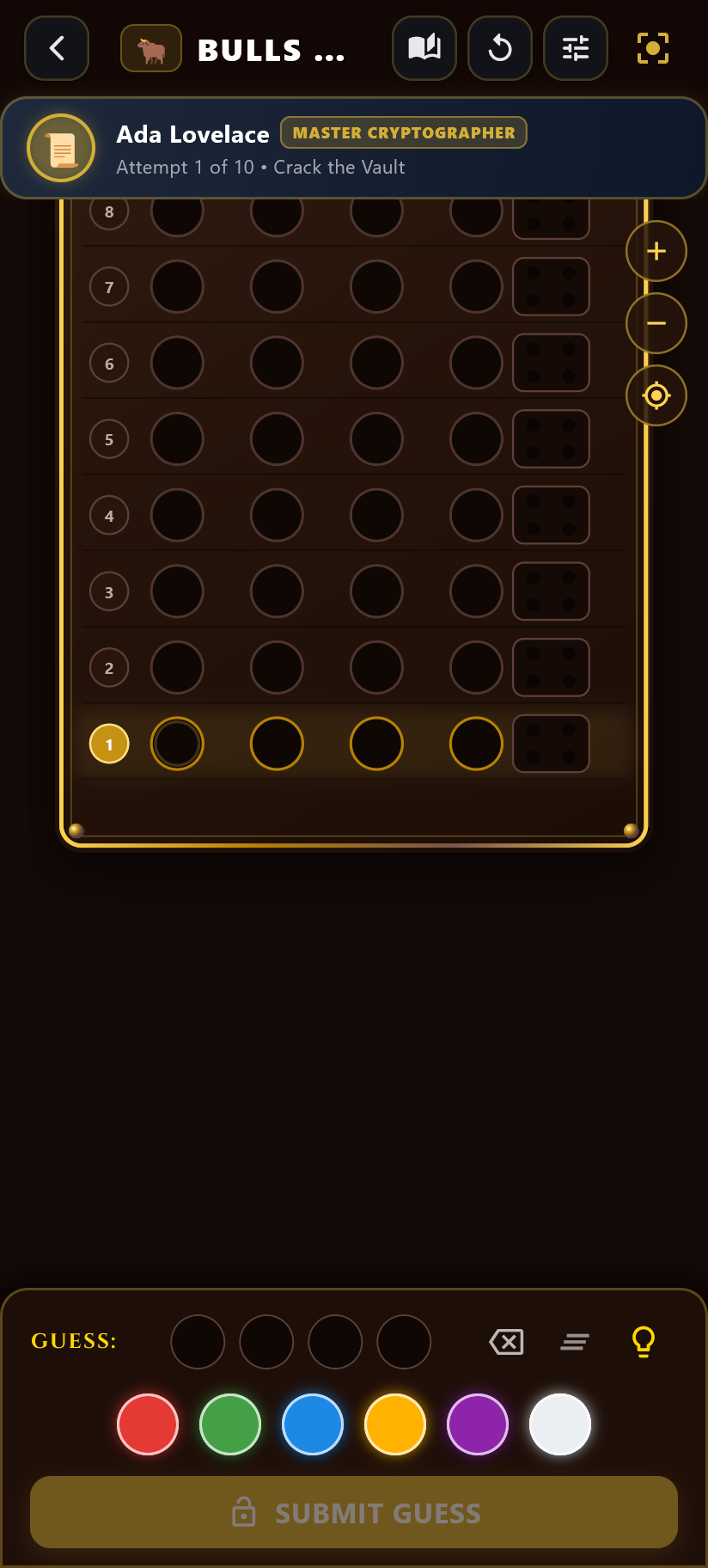
Bulls & Cows
The pencil-and-paper codebreaking game that inspired Mastermind. Guess a secret sequence—Bulls reveal correct numbers in exact positions, while Cows indicate numbers misplaced.

Moon Lander
Crafted by Jack Burness for DEC's GT40 vector display. Manage thruster burn, attitude angle, and fuel consumption to pilot the Apollo Lunar Module safely onto rugged lunar terrain.
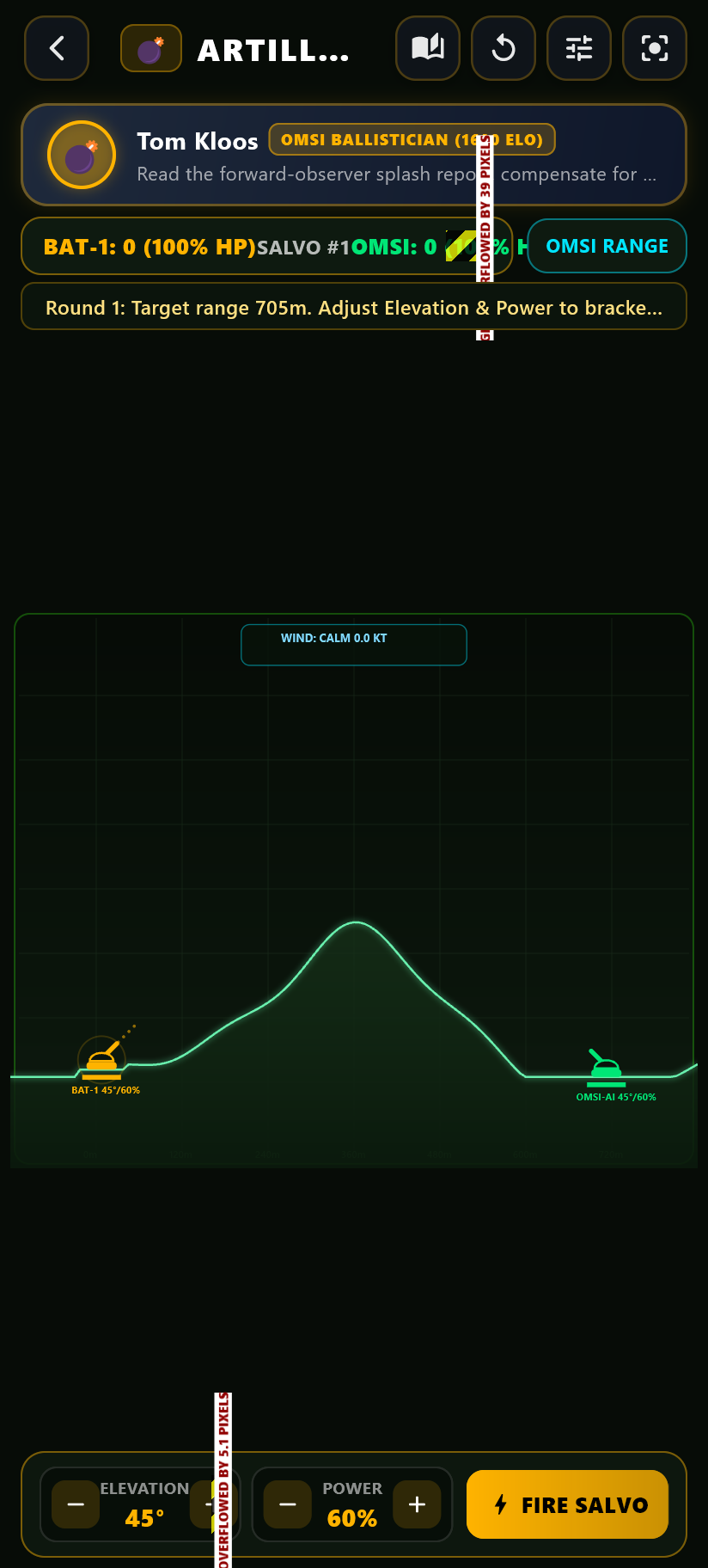
Artillery
The direct mechanical forefather of Scorched Earth and Worms. Calculate turret angle, propellant charge, and fluctuating crosswinds to land shells across procedural peaks.
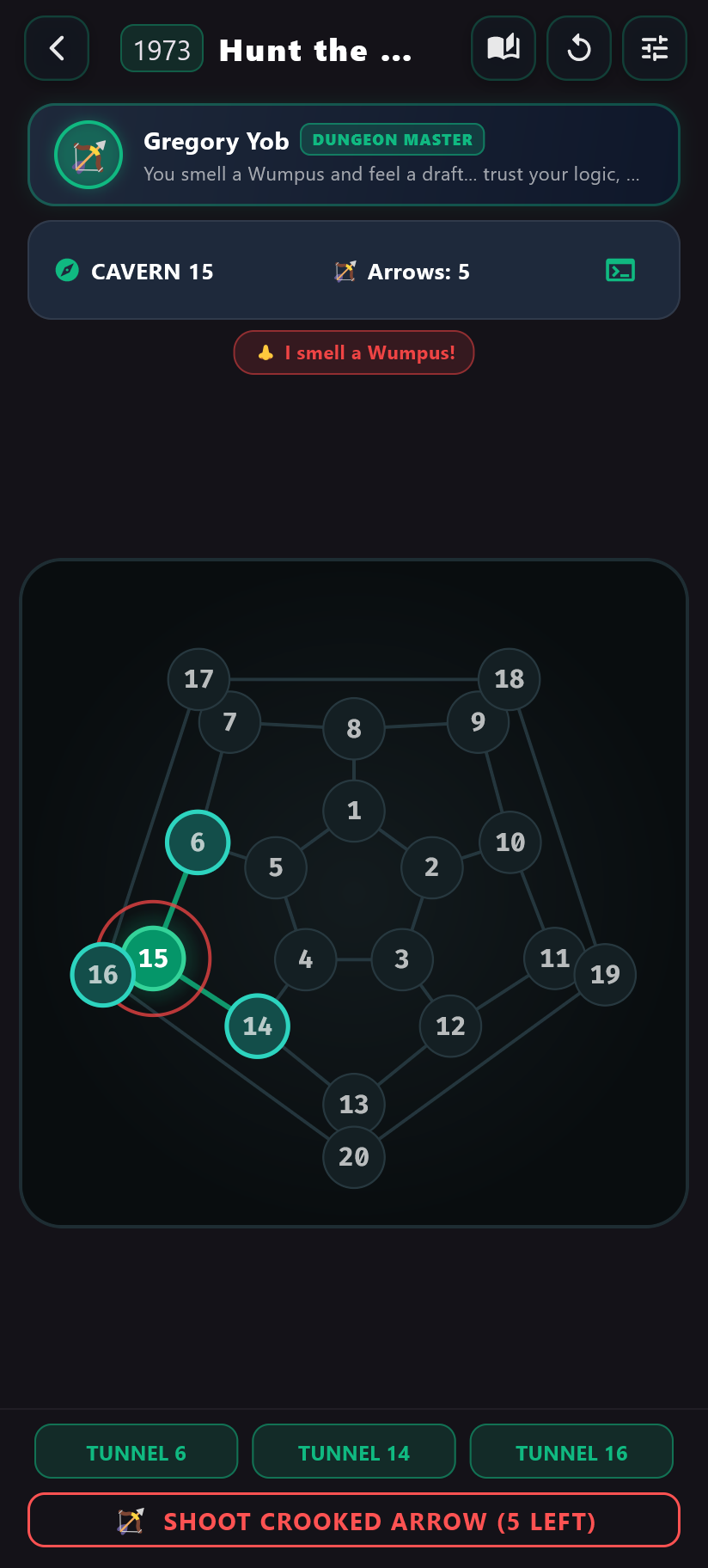
Hunt the Wumpus
A foundational early text adventure. Navigate 20 interconnected dodecahedral caves, detecting bottomless pits by drafts and bats by squeaks, before firing a crooked arrow into the beast's lair.
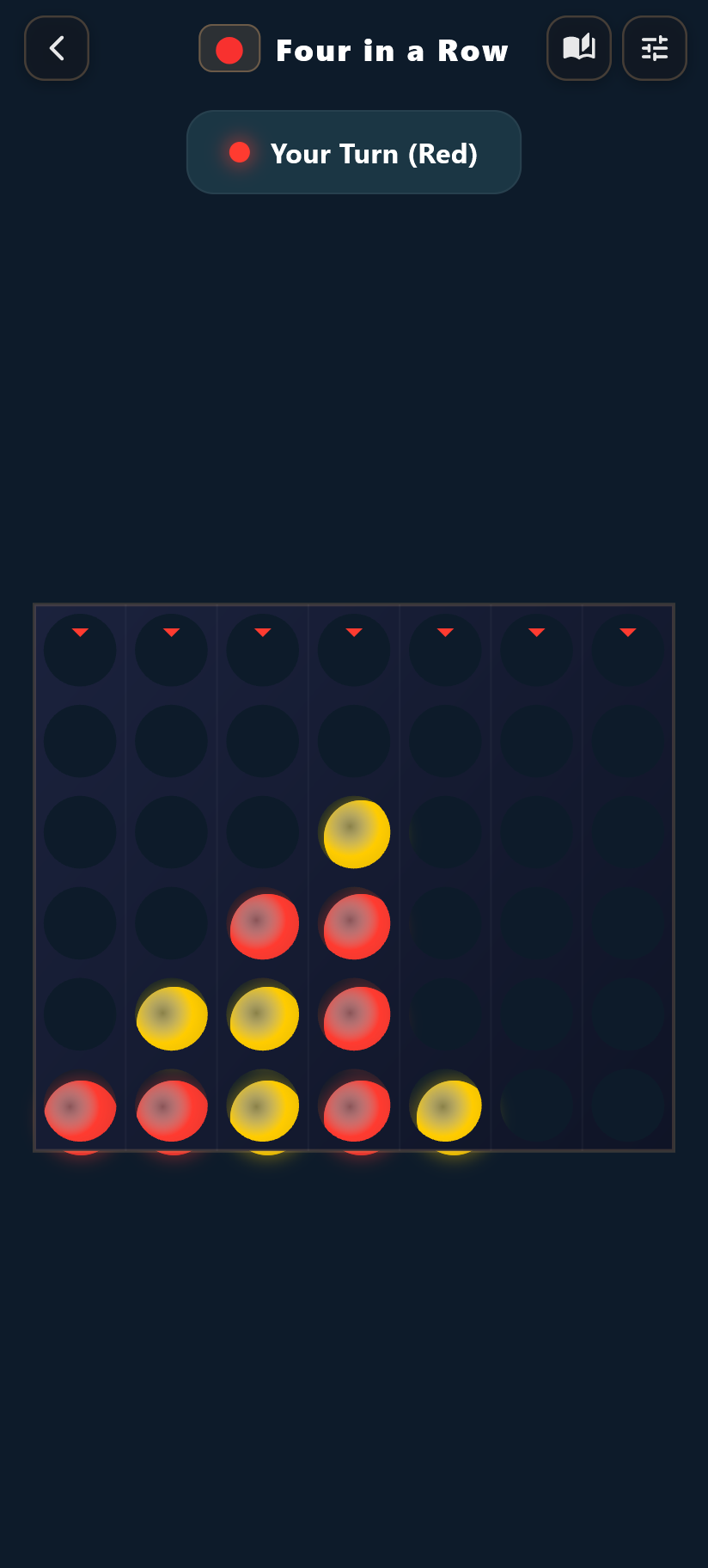
Four in a Row
The beloved vertical disc drop classic. Players take turns slotting colored tokens into a 7x6 upright grid, racing to complete a four-in-a-row horizontally, vertically, or diagonally.
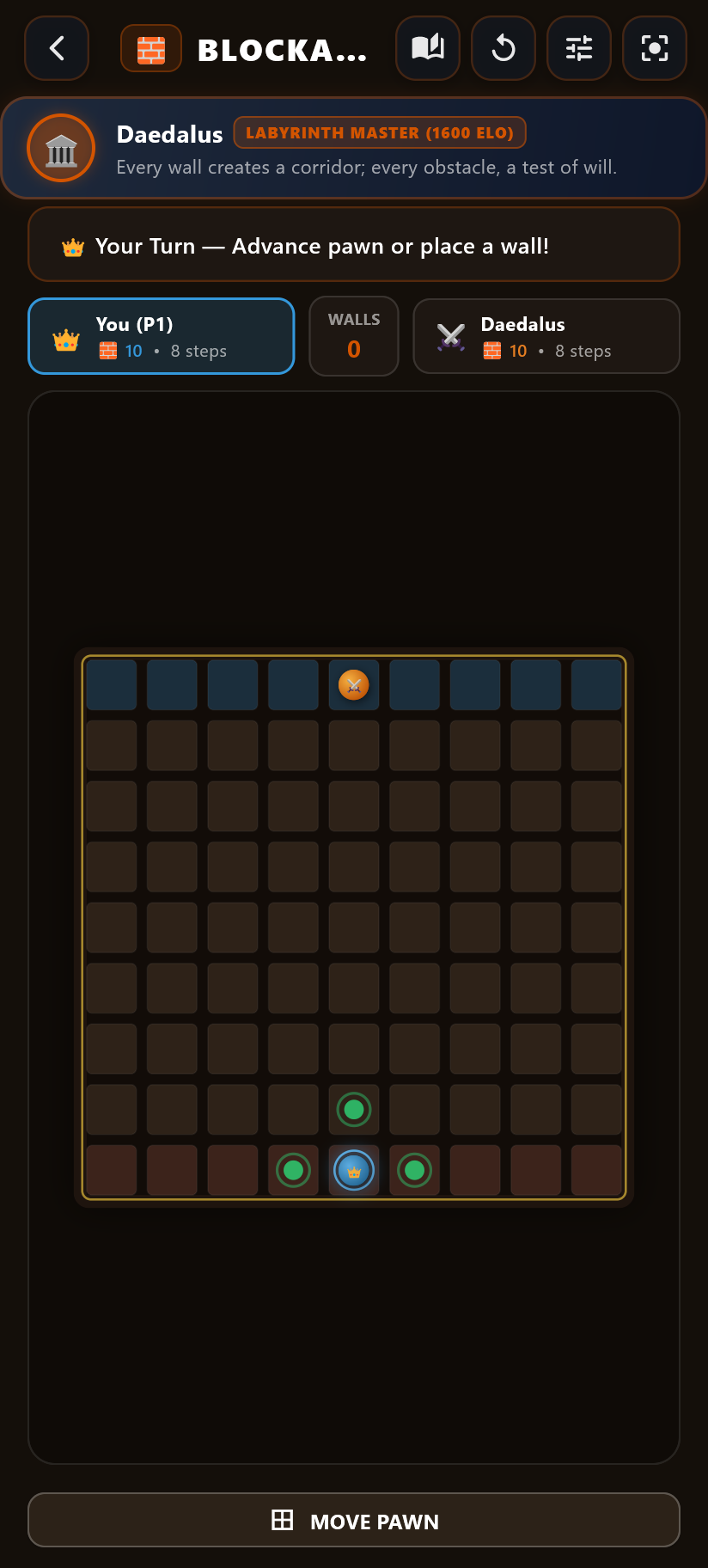
Blockade
The direct precursor to the modern classic Quoridor. Race pawns across the board while deploying wooden barrier walls to force your opponent into frustrating detours without fully blocking them.
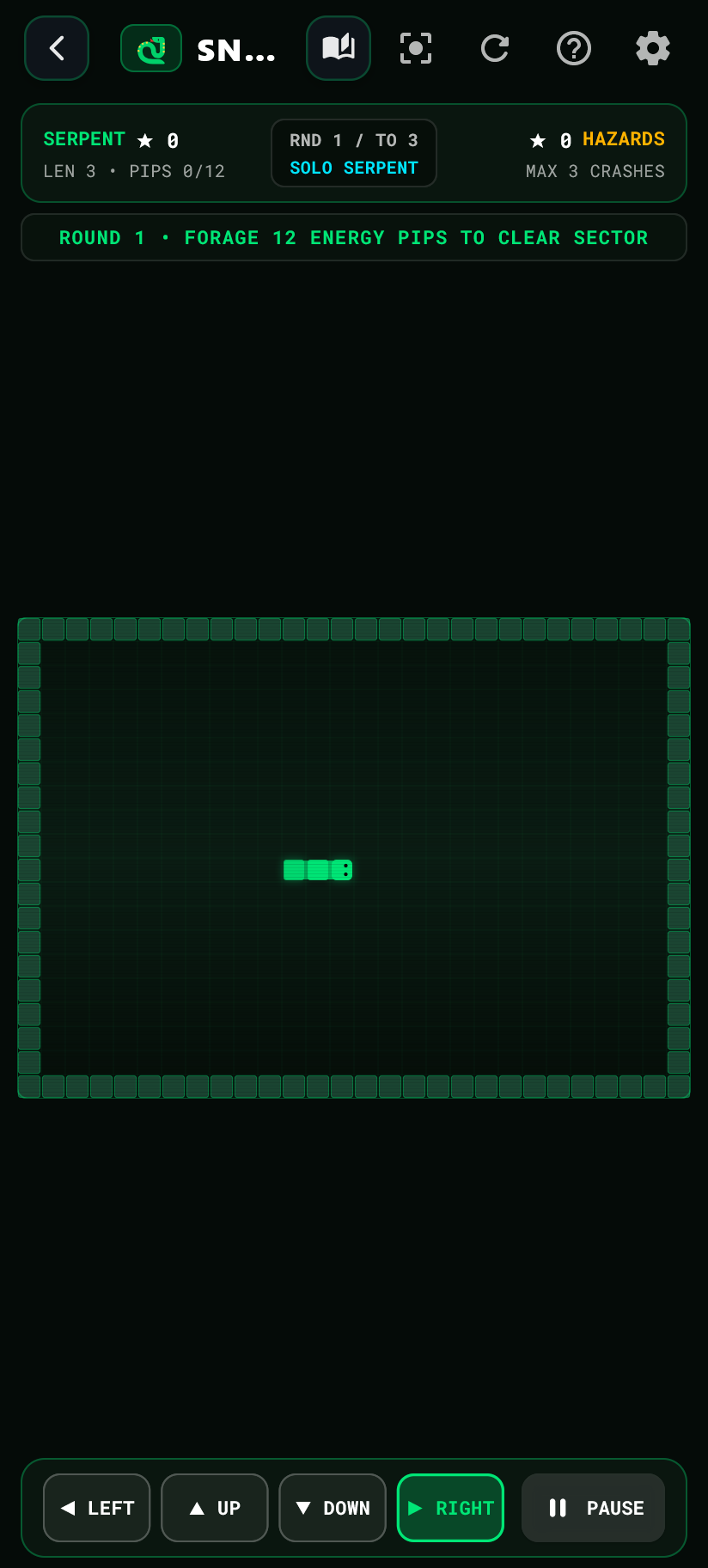
Snake
Born in the 1976 Gremlin arcade game Blockade and played by billions on early Nokia handsets. Steer an ever-growing serpent to gobble pellets without crashing into walls or your own tail.
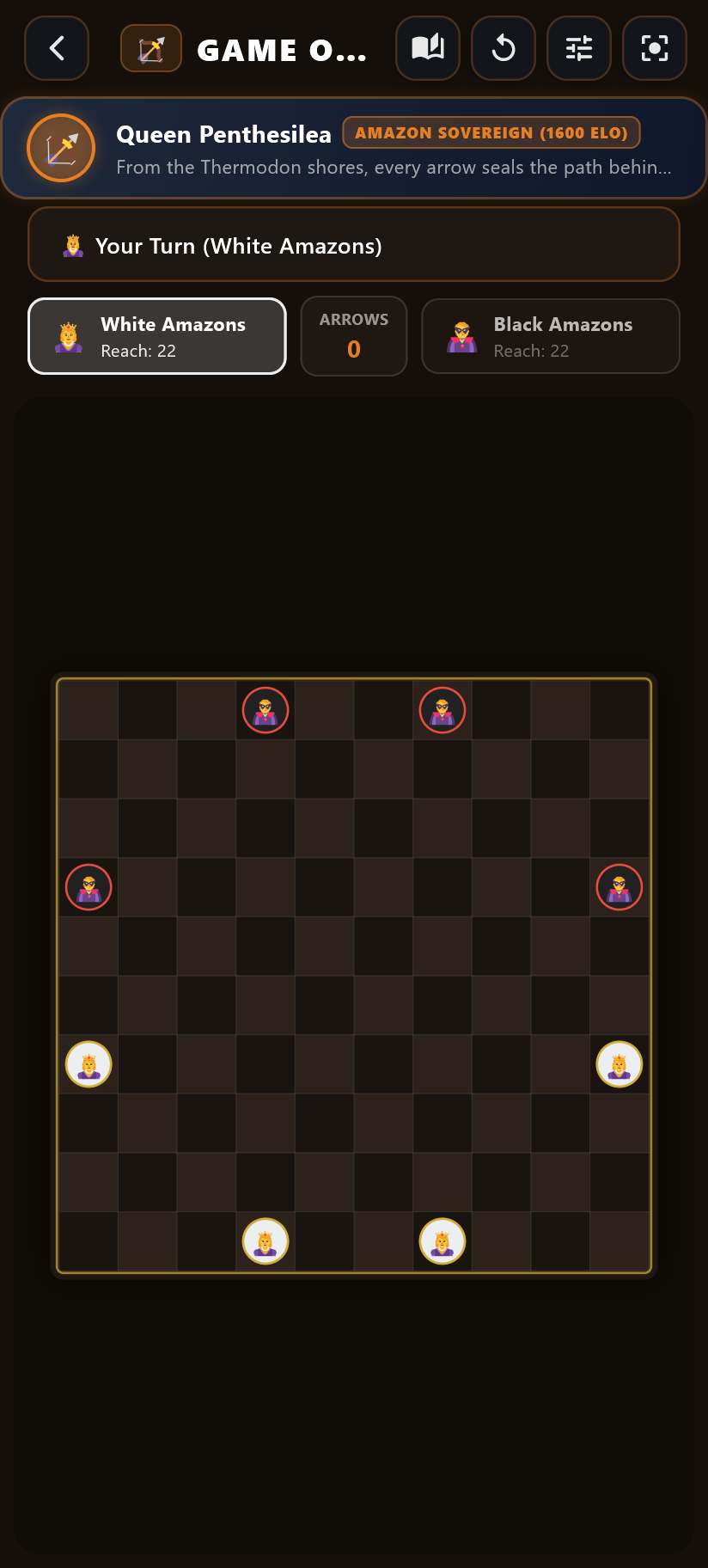
Game of the Amazons
Command 4 Amazon Queens on a 10x10 board. Queens slide in any orthogonal or diagonal direction, then fire a flaming arrow to permanently incinerate that square into an impassable block.
🎯 Wrapping Up
Looking back at my post in August when I had only just got Chess and Ur working, it's pretty funny how much this grew. What started out as a pun turned into searching for and implementing 60 games from scratch, picking up the history behind them as I went, and finding a few new favorites along the way.
If you have some time and want to try any of them out, give the app a go!
If there's an interesting classic or historical game you think I should add, feel free to let me know!